Benefits of Translation-Compatible XML and IDML Files in Publishing Projects

File Preparation Can Determine the Success of a Localization Project

Many publishing projects encounter delays long before translation begins. Documents created without structured file formats often require manual text extraction, repeated formatting corrections, and additional desktop publishing work after translation. These difficulties lengthen delivery times and raise production costs.

Translation-compatible XML and IDML files help simplify multilingual publishing by providing structured, editable content that integrates more efficiently with modern localization workflows. Properly prepared files support consistent formatting, smoother collaboration, and faster document production.

XML and IDML publishing
Why Translation-Compatible File Formats Matter

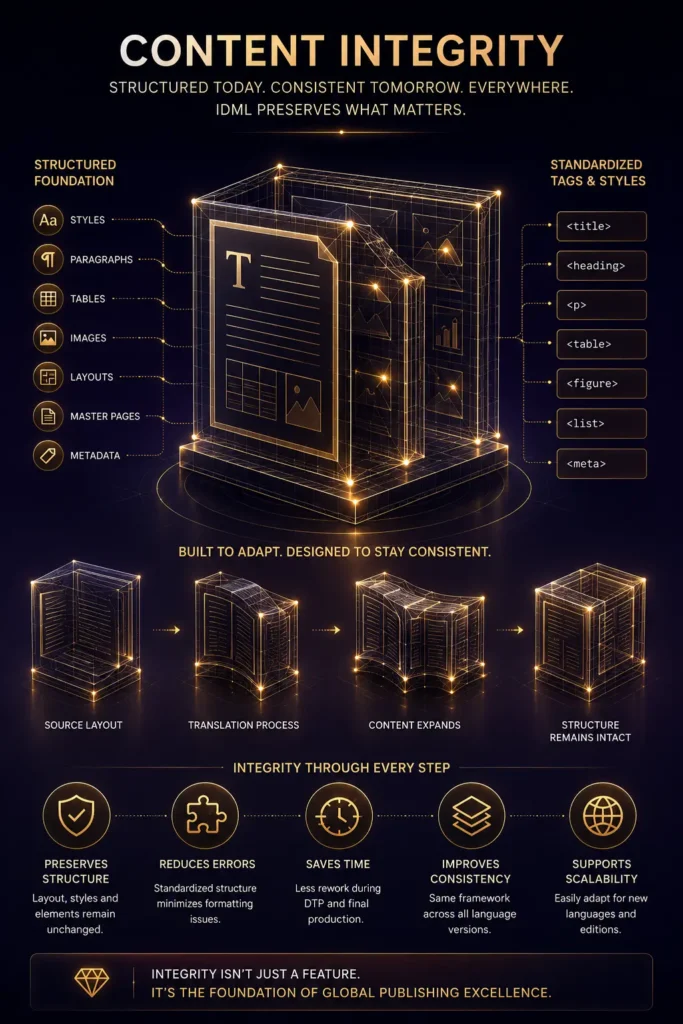
Localization is more than translating words. Publishing teams must preserve layouts, styles, tables, graphics, and document structure across every language edition. Structured file formats help separate content from presentation, making documents easier to process throughout the publishing lifecycle.

Using translation-compatible XML and IDML files helps organizations:

  • Reduce manual content handling
  • Preserve document structure
  • Improve workflow consistency
  • Simplify content updates
  • Support efficient quality assurance

This structured approach minimizes production challenges while improving overall publishing efficiency.

Understanding XML and IDML in Publishing

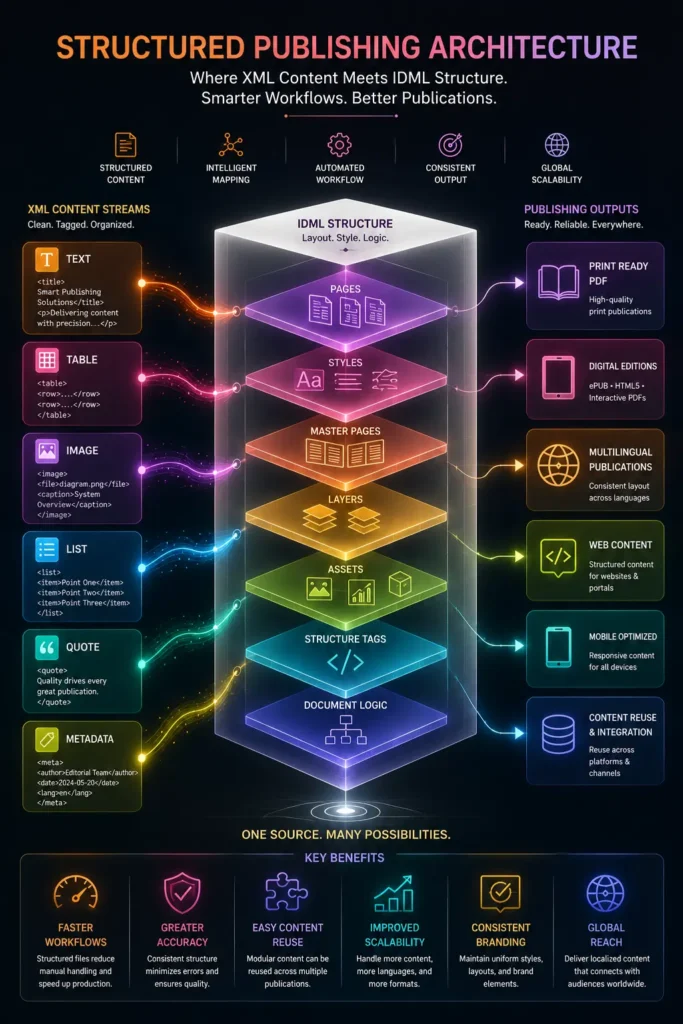
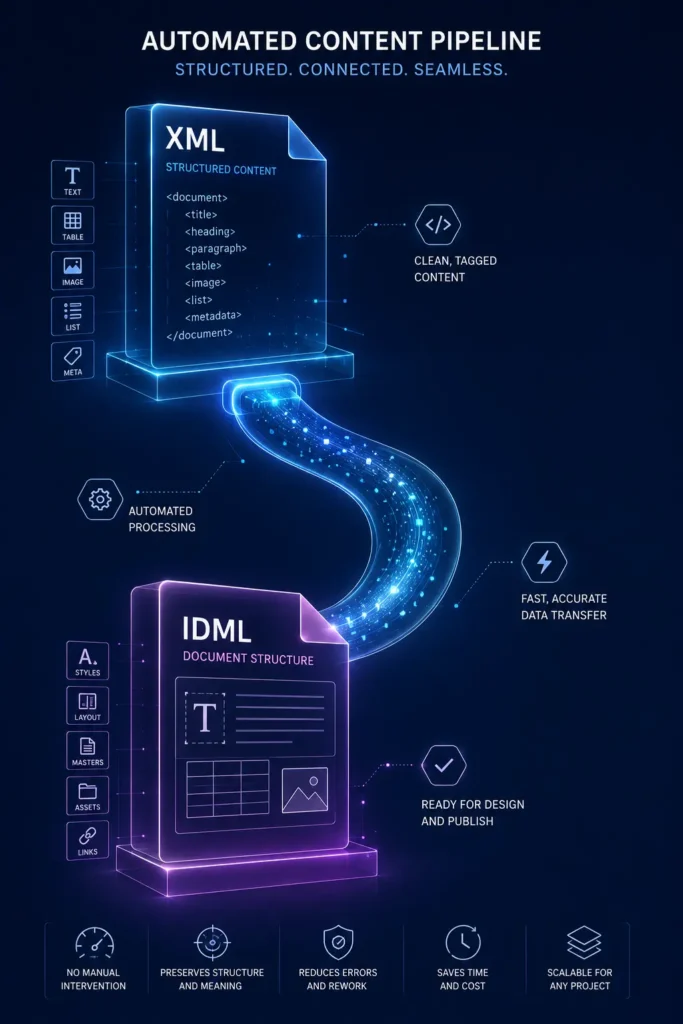
XML (Extensible Markup Language) organizes content using structured tags, making it easier to manage, exchange, and reuse information across publishing systems.

IDML (InDesign Markup Language) is an Adobe InDesign file format that stores document structure in an editable XML-based format. It enables content to move more efficiently between design applications, localization tools, and publishing workflows.

Together, these formats help maintain document integrity while supporting efficient content exchange.

Advantages of Structured XML and IDML Workflows

Organizations managing multilingual publications benefit from structured workflows that reduce repetitive manual tasks.

Key advantages include:

  • Easier content extraction
  • Improved compatibility with localization tools
  • Better preservation of styles and formatting
  • Simplified document updates
  • More consistent layouts
  • Reduced desktop publishing effort
  • Improved collaboration between production teams

These benefits become increasingly valuable for large publishing projects that require regular updates.

XML and IDML publishing

Traditional Workflow vs. Translation-Compatible Workflow

Traditional File Preparation

Translation-Compatible Workflow

Manual text extraction

Structured content exchange

Repeated formatting corrections

Consistent layout preservation

Separate content management

Integrated publishing workflow

Increased manual editing

Streamlined document processing

Longer production timelines

Improved workflow efficiency

A structured workflow reduces unnecessary production effort while improving consistency across localized publications.

Supporting Scalable Publishing Operations

Publishing organizations often manage multiple document versions across products, regions, and release cycles. Translation-compatible XML and IDML files support scalable production by allowing content to be updated without rebuilding entire documents.

This approach helps organizations:

  • Maintain reusable content
  • Standardize publishing processes
  • Improve version control
  • Reduce duplicate production work
  • Accelerate future document revisions

Structured file management creates a more sustainable publishing workflow over time.

XML and IDML publishing
Best Practices for Preparing XML and IDML Files

Preparing files correctly before localization helps maximize workflow efficiency.

Recommended practices include:

  • Apply consistent paragraph and character styles.
  • Organize document layers and assets.
  • Remove unused styles and formatting.
  • Verify linked graphics before export.
  • Eliminate overset text.
  • Use standardized templates whenever possible.
  • Perform a pre-localization quality review.

These practices reduce production issues and improve document reliability throughout localization.

A Practical Publishing Scenario

A technical publisher produces equipment manuals that require frequent updates across multiple international markets. Rather than creating separate layouts for every edition, the publishing team prepares structured XML content and IDML files with standardized styles and templates.

When revisions are needed, only the updated content is processed while the document structure remains consistent. Designers spend less time rebuilding layouts, reviewers encounter fewer formatting issues, and the final publications are delivered more efficiently without compromising quality.

Building More Efficient Publishing Workflows

Translation-compatible XML and IDML files provide the structured foundation needed for efficient multilingual publishing. By organizing content, preserving document integrity, and supporting seamless collaboration across production teams, these file formats help reduce manual effort while improving consistency and scalability. Investing in structured publishing workflows enables organizations to deliver high-quality multilingual documents more efficiently and maintain reliable content management as publishing requirements continue to grow.

FAQ

XML organizes content into structured elements, making documents easier to manage, update, exchange, and prepare for localization.

IDML stores InDesign documents in an editable, structured format that improves compatibility with publishing and localization workflows.

They simplify content extraction, preserve document structure, reduce manual formatting work, and support more consistent multilingual publishing.

Technical documentation, educational materials, product catalogs, user manuals, corporate reports, journals, and marketing publications all benefit from structured XML and IDML workflows.

They make content easier to maintain, simplify future revisions, improve version management, reduce production effort, and help organizations scale multilingual publishing more efficiently
