Why Translation Agencies Prefer Translation-Ready InDesign and IDML Files

Translation-Ready InDesign Files

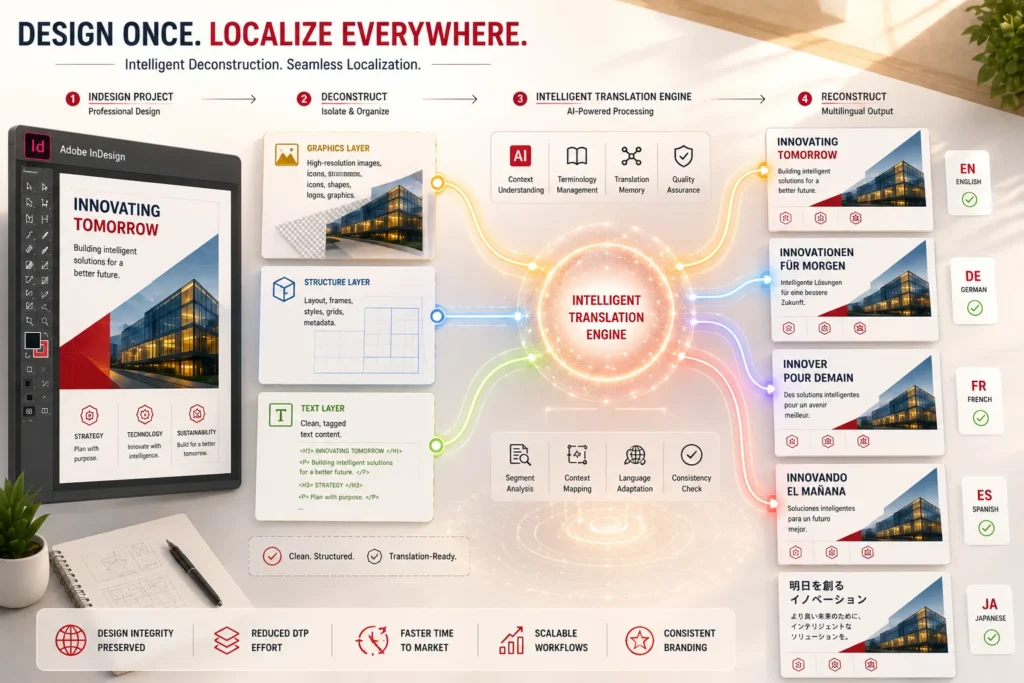
Translation projects often involve far more than converting text from one language to another. Agencies must preserve layouts, maintain formatting consistency, protect document structure, and ensure that translated content can be reintroduced into the final design without extensive manual corrections.

When source files are poorly prepared, translators and desktop publishing teams spend valuable time fixing formatting issues rather than focusing on language quality. This is one reason translation agencies consistently prefer translation-ready  InDesign  files. Properly prepared files simplify workflows, improve translation accuracy, reduce project risks, and accelerate multilingual publishing.

The Challenge With Non-Prepared Design Files

Many organizations submit files that appear complete from a design perspective but are difficult to process for translation.

Common issues include:

  • Overset text
  • Missing linked assets
  • Unstructured content
  • Embedded text in images
  • Inconsistent styles
  • Broken document links

These problems often create delays before translation can even begin.

Agencies may need to spend additional time cleaning files, extracting content, and resolving formatting issues before importing them into CAT tools such as Trados or MemoQ.

What Makes An InDesign File Translation-Ready?

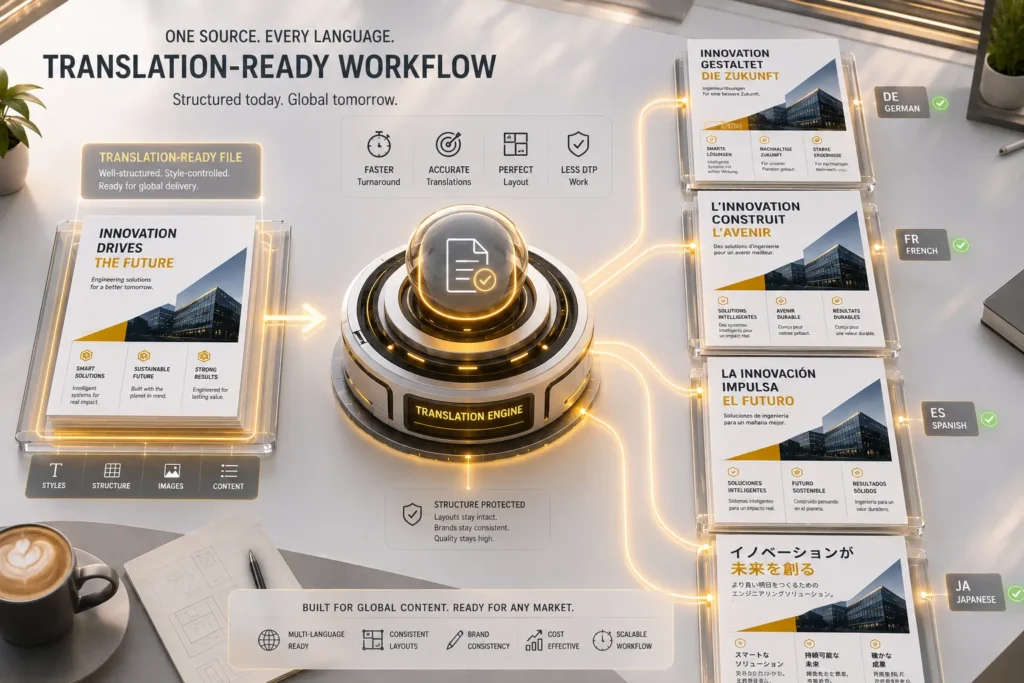
A translation-ready InDesign file is prepared specifically to support multilingual workflows.

Key characteristics include:

  • Proper paragraph and character styles
  • Organized document structure
  • Linked assets correctly managed
  • Editable text elements
  • Consistent formatting
  • Clean file packaging

When these standards are followed, agencies can process projects more efficiently and reduce production risks.

Why IDML Files Are Important For Translation

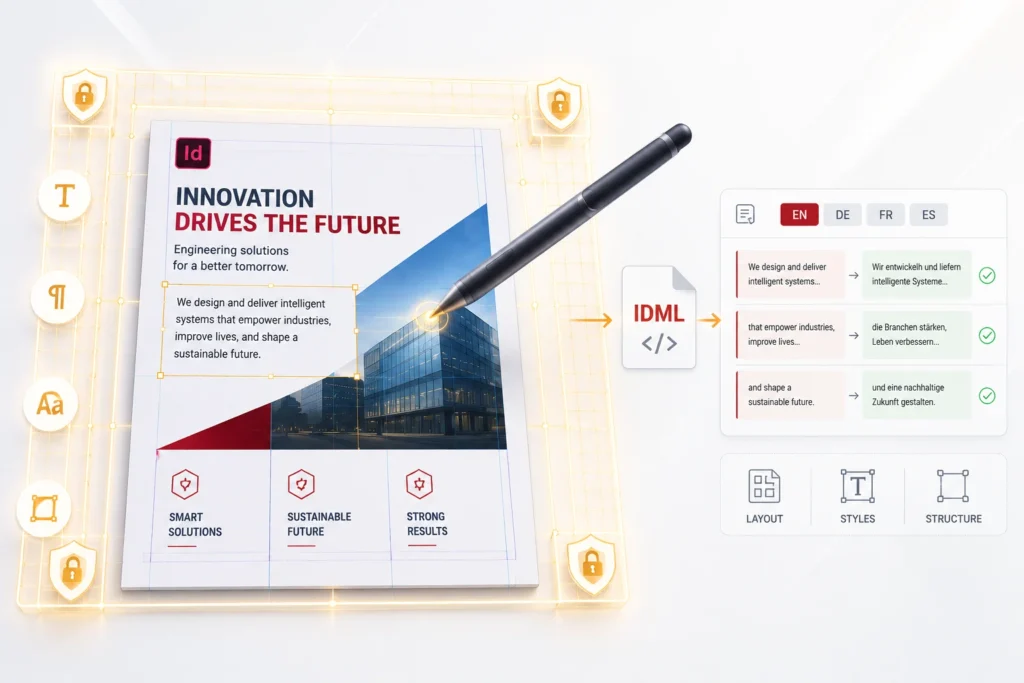
IDML (InDesign Markup Language) files are widely used in translation workflows because they provide a structured representation of InDesign content.

Benefits include:

  • Better CAT tool compatibility
  • Easier content extraction
  • Improved translation workflow integration
  • Greater software compatibility
  • Simplified automated processing

Many translation management systems and CAT tools can work more effectively with IDML files than with native design files alone.

This makes IDML a preferred format for multilingual publishing projects.

Translation-Ready InDesign Files
Compare Standard InDesign Files And Translation-Ready Files

Standard Design Files

Translation-Ready InDesign & IDML Files

Formatting inconsistencies

Structured formatting

Manual content extraction

Automated content processing

Higher risk of layout issues

Better layout preservation

Slower translation workflows

Faster CAT tool integration

Increased DTP corrections

Reduced post-translation rework

The difference becomes especially significant in large multilingual projects.

Supporting Trados And MemoQ Workflows

Most professional translation agencies rely on CAT tools to improve efficiency and consistency.

Translation-ready InDesign and IDML files support:

  • Translation memory utilization
  • Terminology management
  • Automated segmentation
  • Quality assurance checks
  • Content reuse

Without properly prepared files, many of these advantages are reduced.

Agencies prefer files that allow translators to focus on language quality rather than technical file issues.

Preserving Layout Integrity Across Languages

Different languages expand and contract in length.

For example:

  • German often requires more space than English
  • French may increase text volume
  • Some Asian languages require different spacing considerations

Translation-ready files help agencies manage these variations more effectively.

Well-structured layouts make it easier to:

  • Adjust text flow
  • Maintain visual consistency
  • Preserve brand standards
  • Reduce desktop publishing effort

This becomes particularly important for brochures, educational content, technical manuals, and marketing materials.

Improving Translation Consistency

Consistency is critical in multilingual projects.

Organizations often require:

  • Standard terminology
  • Consistent product names
  • Regulatory compliance language
  • Uniform educational terminology

Translation-ready files integrate smoothly with CAT-tool terminology databases and translation memories.

This supports:

  • Higher translation quality
  • Consistent terminology usage
  • Reduced review cycles
  • Better multilingual governance
Translation-Ready InDesign Files
Reducing Desktop Publishing Costs

Post-translation desktop publishing (DTP) is often one of the most time-consuming stages of multilingual production.

Poorly prepared source files can lead to:

  • Manual text corrections
  • Layout reconstruction
  • Formatting repairs
  • Additional quality reviews

Translation-ready InDesign and IDML files reduce these requirements significantly.

By preserving structure and formatting throughout the workflow, agencies can minimize post-translation production effort.

Supporting Large-Scale Multilingual Publishing

Global organizations frequently manage:

  • Technical documentation
  • Educational resources
  • Product catalogs
  • Marketing collateral
  • Training materials

These projects may involve dozens of languages and recurring updates.

Translation-ready workflows enable agencies to:

  • Reuse previous translations
  • Accelerate updates
  • Improve project scalability
  • Reduce turnaround times

As multilingual publishing requirements grow, structured file preparation becomes increasingly valuable.

Practical Translation Scenario

An educational publisher prepares a series of learning resources for translation into eight languages. Previously, the publisher submitted native design files with inconsistent styles, embedded text, and missing links. Translation agencies spent significant time correcting files before translation could begin.

After implementing translation-ready InDesign and IDML preparation workflows, the publisher provides structured, properly packaged files compatible with Trados and MemoQ environments. Translation memory utilization improves, layout issues decrease, and multilingual releases are completed more efficiently.

The result is a faster and more predictable localization process.

Building More Efficient Multilingual Publishing Workflows

Translation agencies prefer translation-ready InDesign and IDML files because they simplify every stage of the localization process. From CAT-tool compatibility and translation memory utilization to layout preservation and reduced desktop publishing effort, properly prepared files create a more efficient and scalable workflow. Organizations that invest in translation-ready file preparation gain faster turnaround times, improved consistency, and a stronger foundation for managing multilingual content at scale

FAQ

A translation-ready InDesign file is properly structured and prepared to support efficient translation and multilingual publishing workflows.

IDML files provide structured content that integrates more effectively with CAT tools and translation management systems

Educational publishing, technical documentation, manufacturing, healthcare, software, and marketing organizations frequently benefit from structured multilingual workflows.

They minimize file preparation, reduce desktop publishing corrections, improve translation memory usage, and shorten production timelines.

Yes. Properly prepared InDesign and IDML files work efficiently with both Trados and MemoQ translation workflows
