How Translation-Compatible DTP Workflows Reduce Publishing Delays and Costs

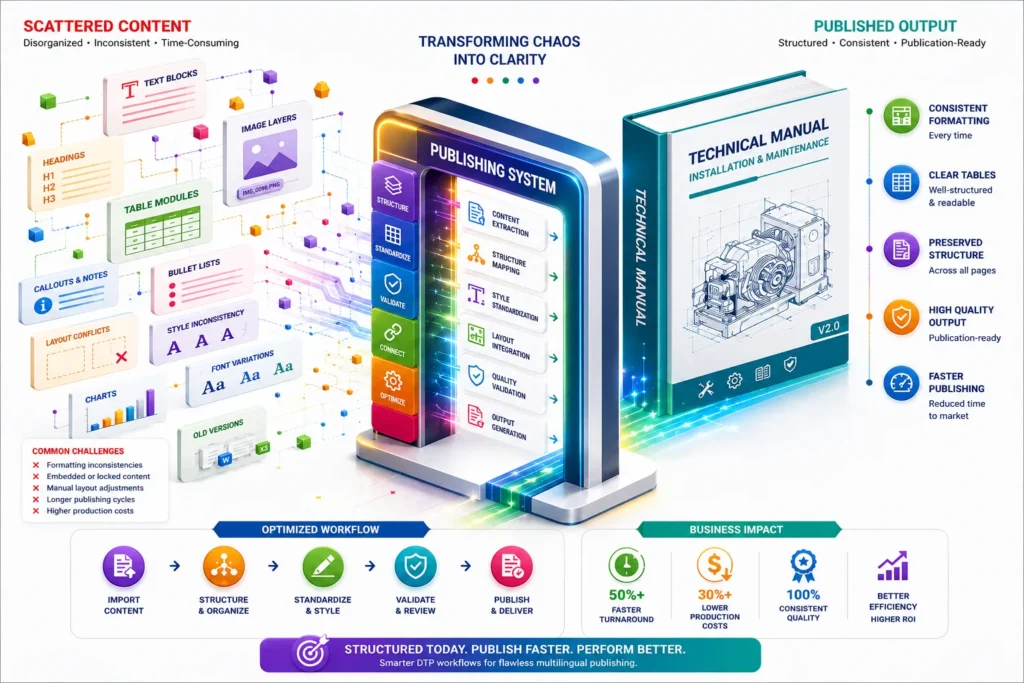
Publishing delays rarely begin during translation. In many cases, they start much earlier when source documents are created without considering multilingual publishing. Inconsistent formatting, embedded text, manual layouts, and poorly structured files often require extensive corrections before and after translation. Translation-compatible Desktop Publishing (DTP) workflows help eliminate these inefficiencies by creating documents that move smoothly through translation and production while maintaining layout consistency across left-to-right (LTR) language editions.

Why Traditional Publishing Workflows Slow Down Projects

Organizations producing technical manuals, product documentation, catalogs, reports, and training materials often manage frequent revisions. If documents rely on manual formatting or inconsistent templates, every update increases production effort.

Common causes of publishing delays include:

  • Non-editable source files
  • Text embedded in graphics
  • Manual spacing and formatting
  • Inconsistent document styles
  • Unstructured tables
  • Repeated layout corrections
  • Multiple review cycles
  • Version control challenges

These issues not only delay publication but also increase overall production costs.

What Is a Translation-Compatible DTP Workflow?

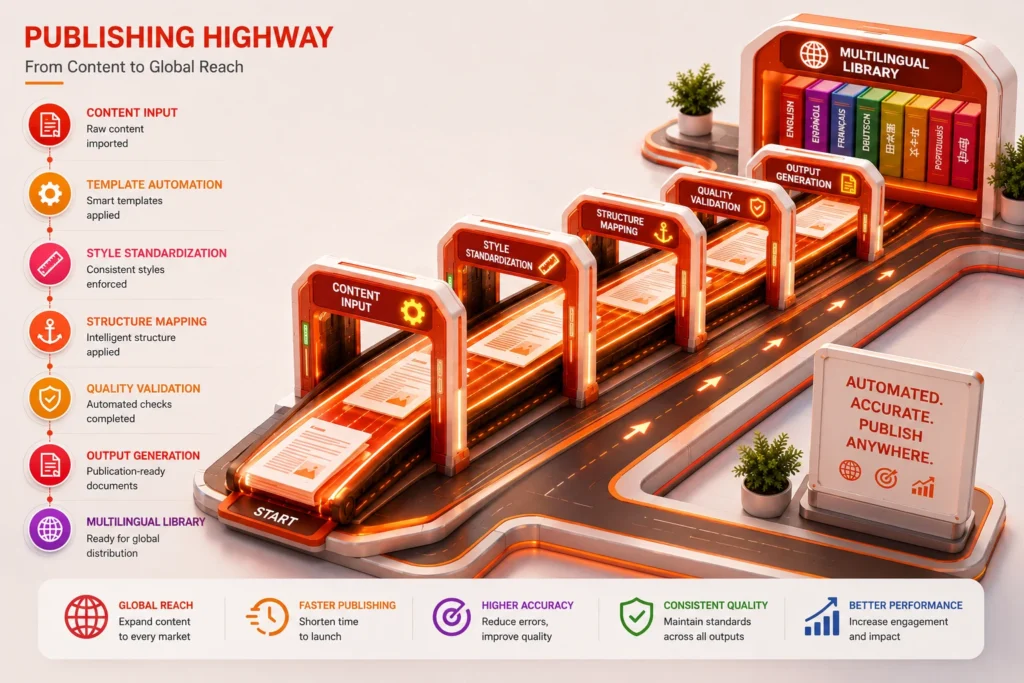
A translation-compatible DTP workflow is a structured publishing process that prepares documents for efficient localization while preserving formatting, design consistency, and technical accuracy.

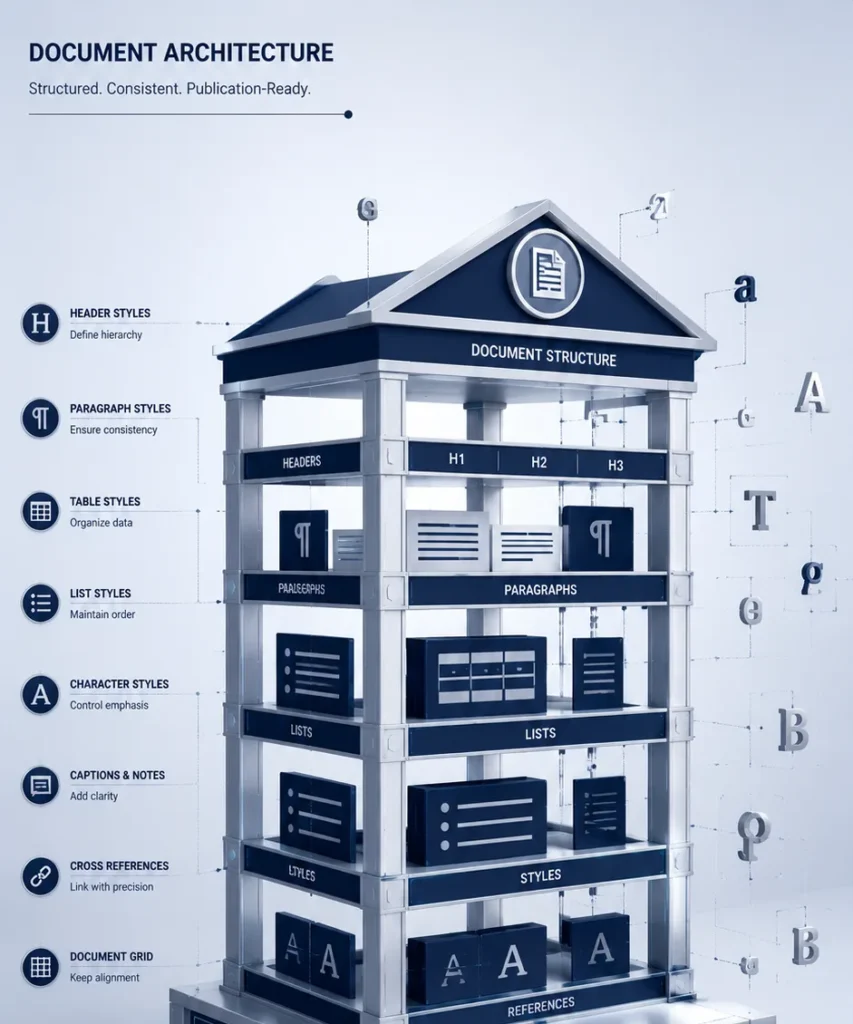
Instead of rebuilding layouts after translation, documents are designed using standardized templates, editable content, reusable styles, and organized file structures. This approach enables smoother collaboration between authors, translators, desktop publishing specialists, and reviewers.

The result is a faster publishing process with fewer manual interventions.

How Structured Workflows Reduce Publishing Delays

Translation-compatible workflows simplify every stage of document production.

Faster Document Preparation

Documents created with consistent styles and editable layouts require less preprocessing before translation. Publishing teams spend less time correcting formatting and more time preparing final deliverables.

Fewer Layout Revisions

Structured tables, predefined paragraph styles, and properly separated graphics reduce formatting adjustments after translated content is imported.

Improved Collaboration

Standardized document structures allow writers, localization teams, reviewers, and publishing specialists to work from the same organized source files, reducing communication delays.

Efficient Document Updates

When product information changes, only revised sections need updating instead of rebuilding entire documents, helping organizations publish new editions more quickly.

How Translation-Compatible DTP Reduces Costs

Publishing costs extend beyond translation. Document corrections, repeated quality reviews, and manual formatting consume valuable production time.

Translation-compatible workflows help reduce costs by:

  • Minimizing manual desktop publishing
  • Reducing document rework
  • Improving template reuse
  • Shortening review cycles
  • Increasing translation memory efficiency
  • Supporting consistent terminology
  • Simplifying future document maintenance

Over time, these efficiencies contribute to lower operational costs across large documentation projects.

Traditional Workflow vs Translation-Compatible Workflow

Traditional Publishing

Translation-Compatible Workflow

Manual formatting

Style-based formatting

Separate layout corrections

Structured templates

Repeated formatting errors

Consistent document standards

Longer production cycles

Faster publishing process

Higher rework costs

Reduced production effort

Difficult document updates

Simplified ongoing maintenance

A structured workflow improves both productivity and long-term document management.

Best Practices for Translation-Compatible DTP

Organizations can improve publishing performance by adopting several proven practices.

Use Standardized Templates

Templates ensure consistency across manuals, reports, catalogs, and technical documentation while reducing manual formatting.

Maintain Editable Source Files

Editable documents simplify localization and reduce production effort during future revisions.

Separate Graphics and Text

Keeping text outside graphical elements allows translators and desktop publishing teams to update content without recreating artwork.

Apply Consistent Styles

Paragraph styles, character styles, tables, captions, and numbering should follow predefined standards throughout every document.

Validate Files Before Translation

Review formatting, hyperlinks, references, fonts, and terminology before localization begins to minimize production delays.

Practical Publishing Scenario

A manufacturer publishes installation guides, maintenance manuals, product specifications, and safety documentation several times each year. Previously, every translated edition required manual layout adjustments because documents contained inconsistent styles and embedded text.

After adopting a translation-compatible DTP workflow, the organization standardized templates, maintained editable source files, and separated text from graphics. As a result, publishing teams reduced formatting corrections, accelerated review cycles, and delivered multilingual documentation more efficiently across multiple LTR language editions.

Creating A More Efficient Publishing Process

Publishing efficiency depends on more than accurate translation. Well-structured DTP workflows provide a reliable foundation for faster production, lower operating costs, and consistent multilingual documentation. By preparing documents for translation from the beginning, organizations can reduce unnecessary delays, improve collaboration across publishing teams, and maintain professional, high-quality documentation throughout every stage of the content lifecycle.

Frequently Asked Questions

It is a structured desktop publishing process that prepares documents for efficient translation while maintaining formatting consistency and reducing production effort.

They minimize manual formatting, simplify document updates, improve collaboration, and reduce post-translation layout corrections.

Structured files require fewer manual edits, reduce review cycles, improve template reuse, and simplify long-term maintenance.

Technical manuals, engineering documentation, product catalogs, user guides, compliance documents, training materials, and corporate reports all benefit from structured publishing workflows.

Organizations should use editable source files, apply consistent styles, standardize templates, organize tables correctly, separate text from graphics, and perform quality checks before translation begins.
