
How Trados and MemoQ-Compatible Files Simplify Translation Projects

How Trados and MemoQ-Compatible Files Simplify Translation Projects

Translation projects have become increasingly complex as organizations manage multilingual content across websites, technical manuals, educational materials, marketing assets, and digital publications. While translation quality remains a primary concern, project efficiency often depends on something less visible: file preparation.

Many delays, inconsistencies, and cost overruns occur because source files are not properly prepared for translation workflows. This is why Trados and MemoQ-compatible files have become essential for organizations managing large-scale multilingual content. By creating translation-ready files that work seamlessly with leading Computer-Assisted Translation (CAT) tools, organizations can improve efficiency, maintain consistency, and reduce project complexity.

Why File Preparation Matters In Translation Projects

Translation is no longer a simple process of converting text from one language to another.

Modern projects often involve:

  • Multiple languages
  • Repeated content updates
  • Large document collections
  • Technical terminology
  • Complex layouts
  • Ongoing localization requirements

Poorly prepared files can create challenges such as:

  • Broken formatting
  • Lost content structure
  • Repeated translation effort
  • Increased review cycles
  • Higher project costs

Translation-ready files help eliminate many of these issues before the project begins.

Understanding Trados And MemoQ Workflows

Both Trados and MemoQ are widely used CAT tools that help translators work more efficiently.

These platforms support:

  • Translation memory
  • Terminology management
  • Quality assurance checks
  • Segment reuse
  • Collaborative workflows

However, these benefits are most effective when source files are properly structured and compatible with CAT-tool requirements.

This is where file preparation becomes critical.

What Makes A File Translation-Ready?

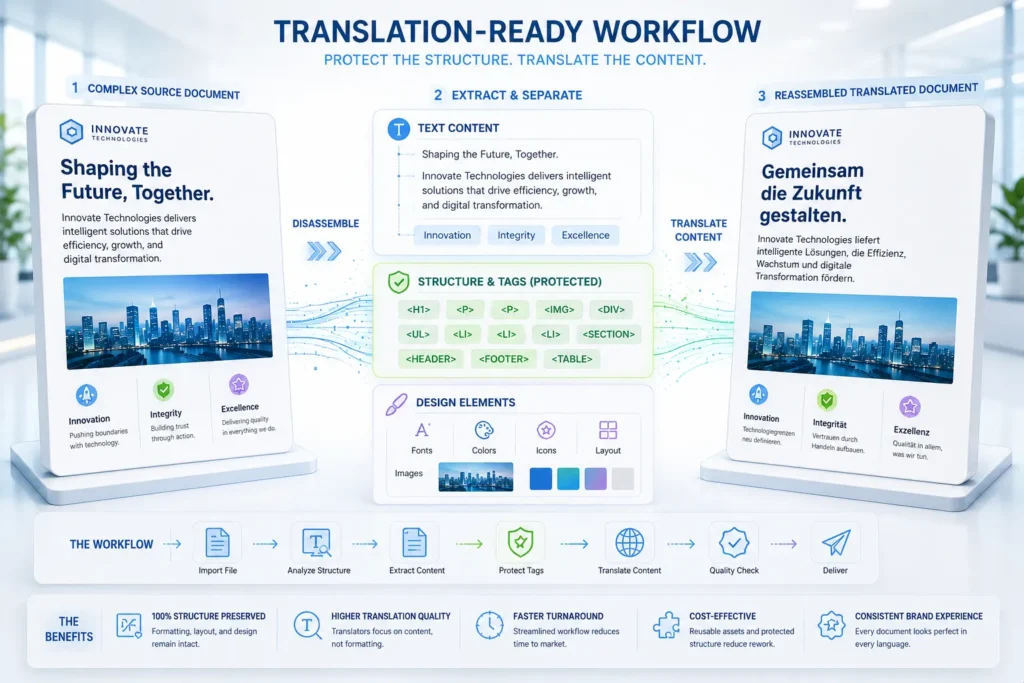
A translation-ready file allows translators to focus on content rather than formatting problems.

Typical characteristics include:

  • Clean document structure
  • Consistent formatting
  • Proper tagging
  • Editable text elements
  • Organized content hierarchy
  • Minimal formatting conflicts

Common file formats prepared for CAT-tool workflows include:

  • Microsoft Word
  • Adobe InDesign packages
  • XML files
  • HTML content
  • Excel spreadsheets
  • PowerPoint presentations
  • Tagged PDF conversions

Well-prepared files reduce manual intervention throughout the translation process.

Compare Traditional Files And CAT-Compatible Files

Traditional Files

Trados & MemoQ-Compatible Files

Formatting issues during translation

Preserved document structure

Manual terminology management

Translation memory support

Repeated translation effort

Reusable translated segments

Higher risk of inconsistencies

Improved terminology control

Increased review time

Faster quality assurance

The difference often becomes more noticeable as project size increases.

Improving Translation Consistency

One of the biggest challenges in multilingual projects is maintaining consistency across documents and languages.

Organizations frequently manage:

  • Product documentation
  • Educational content
  • Technical manuals
  • Marketing materials
  • Regulatory content

Translation memories and terminology databases help translators reuse approved content and maintain consistent language usage.

When files are compatible with Trados and MemoQ workflows, these resources can be used more effectively across projects.

Supporting Large-Scale Content Updates

Many organizations regularly update content after initial translation.

Examples include:

  • New product releases
  • Curriculum revisions
  • Software updates
  • Policy changes
  • Technical document revisions

Without CAT-compatible files, translators may need to review large amounts of previously translated content manually.

Translation memory systems can identify only the changed segments, significantly reducing translation effort.

This improves both speed and cost efficiency.

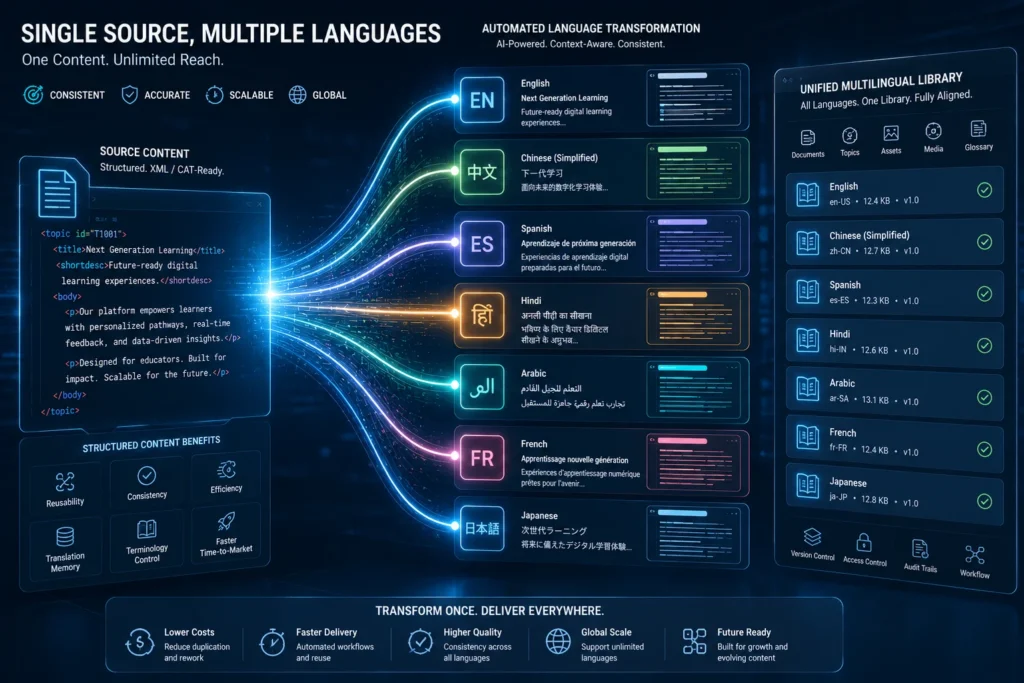
The Role Of Structured Content

Structured content plays an increasingly important role in multilingual publishing.

Formats such as XML and structured authoring systems help separate content from presentation.

Benefits include:

  • Easier content extraction
  • Improved translation workflows
  • Better content reuse
  • Simplified updates
  • Consistent multilingual outputs

Structured content is particularly valuable for organizations managing large translation volumes across multiple channels.

Supporting Adobe InDesign Translation Workflows

Many publishing and marketing projects originate in Adobe InDesign.

However, sending native design files directly for translation can create challenges.

Professional file preparation workflows often involve:

  • Extracting translatable content
  • Preserving layout structure
  • Managing tags correctly
  • Preparing files for CAT-tool compatibility
  • Reintegrating translated content after completion

This approach helps maintain design integrity while supporting efficient translation processes.

Reducing Costs Through Translation Memory Reuse

Translation memory is one of the most significant advantages of CAT-compatible workflows.

Benefits include:

  • Reduced translation volume
  • Faster turnaround times
  • Improved consistency
  • Lower project costs
  • Simplified updates

Organizations with recurring content often achieve substantial efficiency gains through effective translation memory utilization.

The quality of file preparation directly influences how effectively these savings can be realized.

Practical Translation Scenario

A global educational publisher updates hundreds of learning resources annually across multiple languages. Previously, translators worked with inconsistent source files, resulting in repeated translation effort and formatting corrections.

By preparing Trados and MemoQ-compatible files, the publisher enables translation memory reuse, improves terminology consistency, and reduces manual formatting work. When curriculum updates occur, only modified content requires translation, significantly accelerating project delivery.

The result is a more efficient and scalable multilingual publishing workflow

FAQ

They are files prepared to work efficiently with CAT tools, allowing translation memory, terminology management, and quality assurance features to function properly.

They improve translation efficiency, preserve formatting, support consistency, and reduce project costs

Yes. InDesign content can be prepared through specialized workflows that preserve structure while enabling efficient translation.

Translation memories reuse previously translated content, reducing duplicate translation effort and accelerating updates.

Technical documentation, educational content, software documentation, multilingual marketing materials, and frequently updated content benefit significantly.
