Precision in Technical Communication Starts with Structured Typesetting

Engineering documents are built around precision. Whether it is a manufacturing manual, technical specification, engineering report, scientific publication, or installation guide, even the smallest formatting inconsistency can create confusion, operational errors, or compliance risks. 

As technical content becomes increasingly complex and globally distributed, engineering typesetting has become a critical component of accurate documentation management. 

Professional engineering typesetting helps organizations organize technical information into structured, readable, and publication-ready layouts that maintain consistency across print, digital, and multilingual environments. 

Why Technical Accuracy Depends on More Than Engineering Data

Engineering documentation contains highly specialized content that must remain visually and structurally accurate throughout the publishing process. 

Typical technical components include: 

  • Engineering equations  
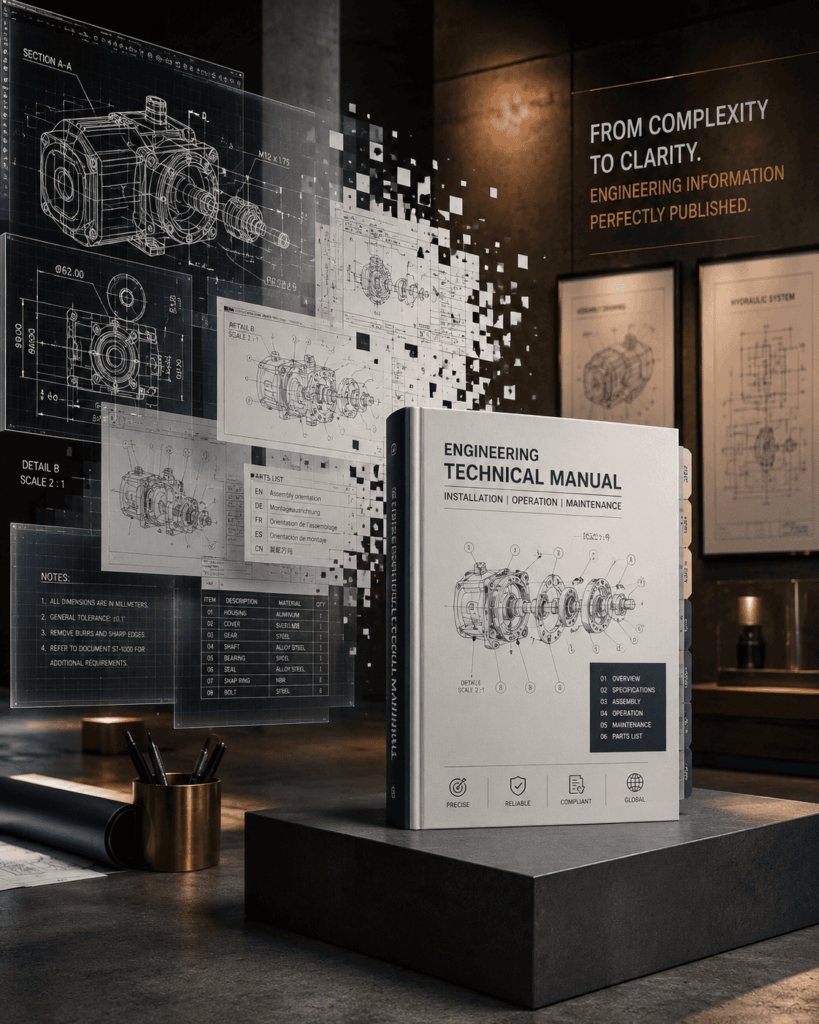
  • CAD illustrations  
  • Wiring diagrams  
  • Scientific tables  
  • Technical annotations  
  • Multi-column layouts  
  • Symbols and notations  
  • Cross-references  
  • Compliance instructions  
  • Multilingual content  

Without structured typesetting systems, these elements can easily lose alignment, clarity, or consistency. 

Structured Typesetting

The Connection Between Typesetting and Documentation Accuracy

Engineering typesetting is not simply visual formatting. It is a technical publishing discipline focused on preserving engineering integrity while improving readability and usability. 

Maintaining Consistent Layout Structures

Structured page layouts help technical teams locate information quickly and reduce interpretation errors. 

Improving Diagram and Table Alignment

Precise positioning of engineering graphics, labels, and technical tables ensures data remains readable across all formats. 

Maintaining Symbol Accuracy

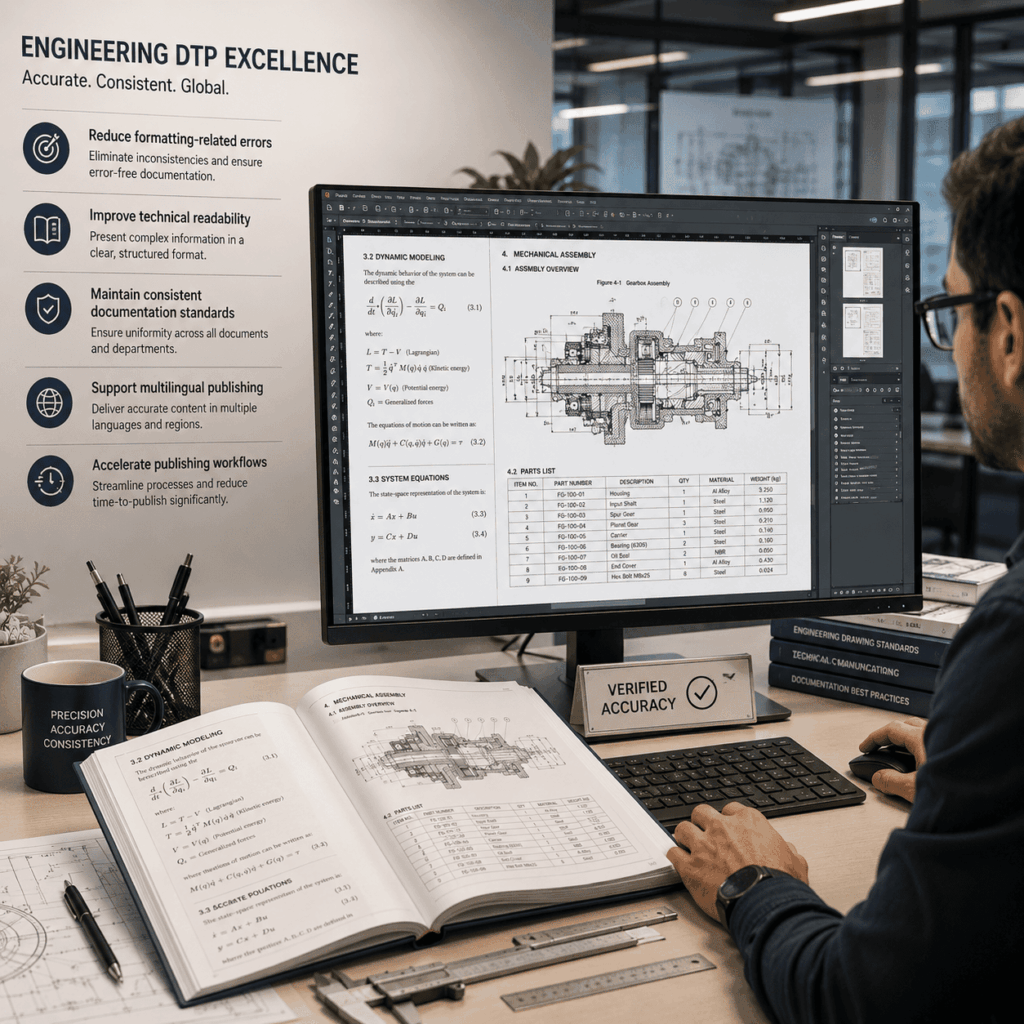
To prevent technical misconceptions, engineering symbols, units, calculations, and annotations must be formatted accurately. 

Supporting Cross-Reference Integrity

Automated reference management helps maintain accurate figure numbering, citations, indexes, and section links.

Enhancing Digital and Print Compatibility

Typesetting workflows optimize documents for PDFs, print publishing, online platforms, XML systems, and mobile viewing. 

Common Documentation Problems Caused by Poor Typesetting

Many organizations underestimate how formatting inconsistencies directly affect technical communication quality.

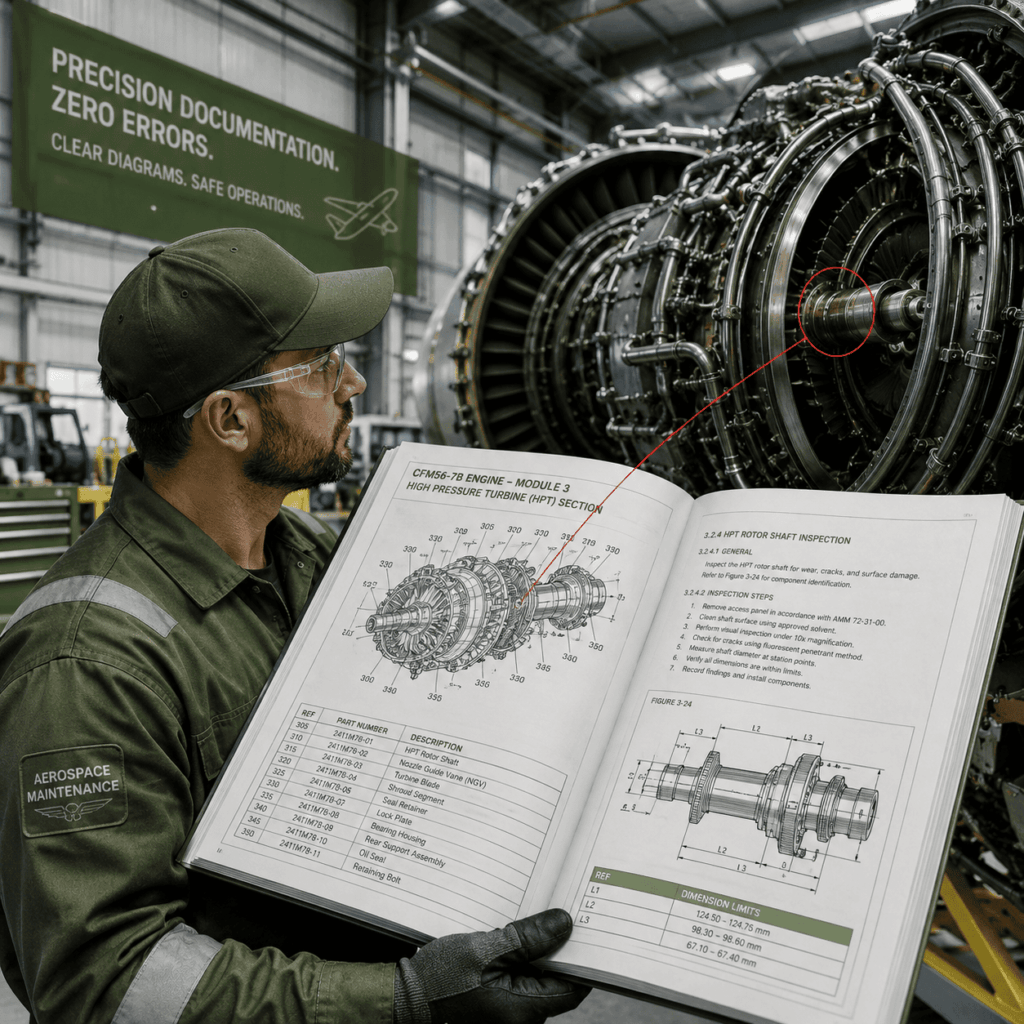
Engineering graphics that are not aligned 

Diagrams with incorrect formatting can make them harder to read and cause more operational confusion. 

Inconsistent Typography and Spacing 

Uneven formatting affects professional presentation and makes technical information harder to navigate. 

Broken References and Numbering 

Incorrect cross-references create confusion during maintenance, manufacturing, and compliance review processes. 

Difficulties in Multilingual Publishing 

Improper layout adaptation can distort translated technical content and reduce document clarity. 

Professional engineering typesetting helps eliminate these risks through structured publishing workflows. 

How Engineering Typesetting Supports Global Operations

Global Operations 

Technical documentation is dispersed over several nations, divisions, and manufacturing systems by contemporary engineering firms 

Expert typesetting enhances: 

  • Consistency in documents worldwide 
  • Readability in multiple languages 
  • Management of technical compliance 
  • The effectiveness of digital publishing 
  • Cooperation in engineering 
  • Communication in manufacturing 
  • Scalability of documents with time 

Stronger operational alignment between global teams and production settings results from this. 

Structured Typesetting

The Shift Toward Intelligent Engineering Publishing Workflows

Modern engineering documentation no longer depends on isolated formatting tasks or manual layout corrections alone. Today’s publishing environments combine structured workflow management, automated validation systems, and precision-driven documentation controls to handle increasingly complex technical content. 

Instead of relying only on traditional desktop publishing tools, engineering teams now integrate workflow ecosystems designed for scalability, accuracy, and cross-platform consistency. 

Key capabilities within modern engineering publishing environments include: 

  • Centralized technical asset management  
  • Automated numbering and reference synchronization  
  • Smart document version tracking  
  • CAD-to-publication integration workflows  
  • Structured multilingual layout adaptation  
  • Print and digital output optimization  
  • Real-time collaboration and markup systems  
  • High-volume document standardization pipelines  

These sophisticated publishing frameworks assist companies in lowering manual intervention, enhancing document dependability, and preserving uniform engineering communication throughout international operations. 

Where Engineering Typesetting Creates the Greatest Impact

Heavy Equipment and Machinery Documentation

Industrial machinery manufacturers rely on highly organized technical manuals to support installation, maintenance, and operational safety across global production environments. 

Advanced Product Development Teams

Engineering departments handling complex prototypes, CAD systems, and technical specifications require precise formatting structures to maintain design clarity and revision control. 

Global Technical Training Programs

Organizations delivering multilingual technical training materials need consistent layouts, structured diagrams, and readable instructional documentation across international markets. 

Regulatory and Compliance Reporting

Industries operating under strict compliance frameworks depend on accurate formatting for inspection reports, safety documentation, certification records, and audit-ready engineering files. ec ullamcorper mattis, pulvinar dapibus leo.

Digital Engineering Knowledge Systems

Modern enterprises managing centralized technical repositories require scalable typesetting workflows that support searchable PDFs, XML-ready publishing, and structured digital archiving. 

Research-Driven Innovation Sectors

Scientific and engineering research organizations depend on professionally typeset publications containing equations, graphs, references, and data visualization for accurate academic communication. 

Clear Documentation Creates Better Engineering Outcomes

Accurate technical documentation improves operational efficiency, compliance readiness, maintenance reliability, and user understanding. 

Professional engineering typesetting helps organizations: 

  • Reduce formatting-related errors 
  • Improve technical readability  
  • Maintain consistent documentation standards  
  • Support multilingual publishing  
  • Accelerate publishing workflows  
  • Enhance print and digital compatibility  
  • Strengthen professional presentation quality  

In technical industries, structured documentation is not only a publishing requirement — it directly supports engineering accuracy and operational performance.

Structured Typesetting

FAQ

Most frequent questions and answers

Engineering typesetting is the professional formatting and structuring of technical documents such as manuals, engineering reports, CAD-based layouts, and scientific publications. 

It helps maintain technical accuracy, readability, formatting consistency, and compliance across complex engineering documentation. 

Manufacturing, aerospace, automotive, infrastructure, energy, industrial engineering, and scientific publishing industries widely use these services. 

Yes. Professional typesetting workflows support multilingual formatting while preserving layout consistency and technical clarity. 

AutoCAD-compatible workflows, XML systems, FrameMaker, Adobe InDesign, LaTeX, and automated proofing platforms are frequently utilised. 

It improves layout consistency, preserves technical symbols and references, optimizes diagrams and tables, and reduces formatting-related communication errors.
