
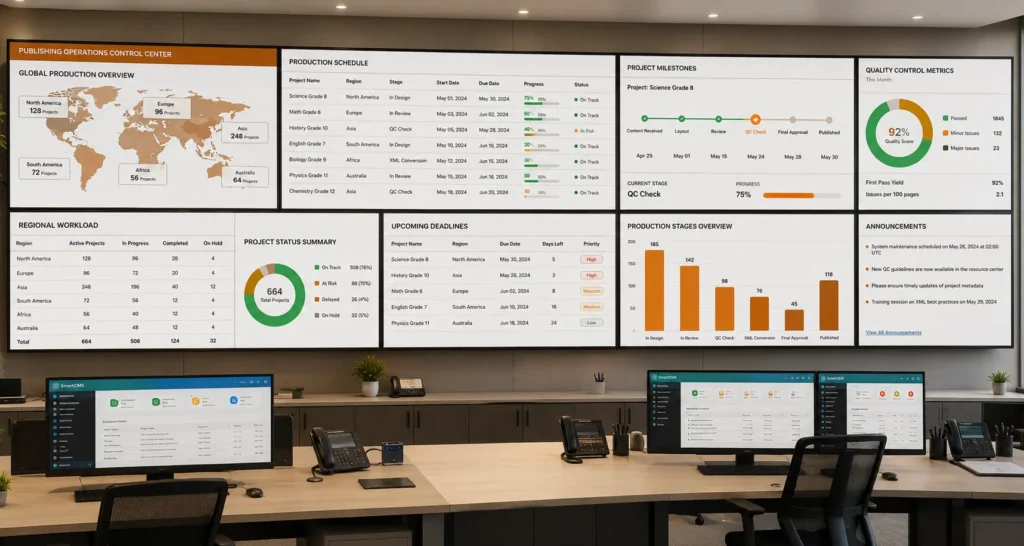

Reducing Textbook Production Timelines Through Dedicated Publishing Teams

Meeting textbook publication deadlines has become increasingly difficult for educational publishers. Curriculum updates, digital learning requirements, accessibility standards, and multi-format publishing expectations have significantly expanded production workloads. While many organizations focus on improving tools and technology, production delays often result from fragmented workflows, competing priorities, and limited resource alignment.

One strategy gaining traction among educational publishers is the use of dedicated publishing teams. By assigning specialized professionals to specific projects or content programs, publishers can improve coordination, reduce bottlenecks, and accelerate production timelines without sacrificing quality.

Why Textbook Production Often Slows Down

Textbook development involves multiple stages that depend on effective collaboration.

Typical production activities include:

  • Editorial review
  • Copyediting
  • Layout and typesetting
  • Illustration integration
  • Quality assurance
  • Accessibility validation
  • Multi-format publishing
  • Final approvals

When these functions operate across disconnected teams, delays can occur at every handoff point.

Common Sources Of Production Delays

Challenge

Impact

Multiple project priorities

Resource conflicts

Unclear ownership

Delayed decisions

Sequential workflows

Longer schedules

Communication gaps

Rework and corrections

Limited visibility

Missed deadlines

As projects become more complex, these issues can significantly extend production cycles.

What Is A Dedicated Publishing Team?

A dedicated publishing team is a group of specialists assigned to support a specific publishing program, product line, or project portfolio.

Rather than sharing resources across dozens of initiatives, dedicated teams focus on a defined set of objectives.

A typical team may include:

  • Project manager
  • Editorial specialist
  • Typesetter
  • Graphic designer
  • Quality analyst
  • Accessibility reviewer
  • Digital publishing specialist

This structure improves continuity throughout the production process.

How Dedicated Teams Accelerate Production

Reduced Workflow Handoffs

One of the largest causes of delay is the movement of content between multiple departments.

Dedicated teams reduce:
  • Waiting periods
  • Approval delays
  • Repeated project onboarding
  • Knowledge transfer issues

Because team members remain engaged throughout the project lifecycle, work progresses more efficiently.

Better Communication And Accountability

Dedicated teams typically operate with clearly defined responsibilities.

Benefits include:

  • Faster issue resolution
  • Improved decision-making
  • Clear project ownership
  • Consistent stakeholder communication

This level of accountability often reduces unnecessary production delays.

Parallel Workflows Create Faster Results

Traditional publishing processes frequently rely on sequential execution

Traditional vs Dedicated Team Approach

Traditional Workflow

Dedicated Team Workflow

Sequential activities

Parallel activities

Multiple handoffs

Continuous collaboration

Shared resources

Focused resources

Frequent scheduling conflicts

Stable project allocation

Longer delivery timelines

Faster completion

Parallel workflows allow editorial, design, and quality functions to progress simultaneously where appropriate

Specialized Expertise Improves Efficiency

Dedicated publishing teams often develop deep familiarity with:

  • Publisher standards
  • Curriculum requirements
  • Style guides
  • Production workflows
  • Technology platforms

As expertise increases, teams spend less time learning project requirements and more time producing content.

This knowledge accumulation can significantly improve production speed over time

Improved Visibility Across Production Stages

Publishing managers need accurate information to maintain schedules.

Dedicated teams often support:

  • Real-time project tracking
  • Milestone monitoring
  • Resource planning
  • Risk identification
  • Performance reporting

Increased visibility enables problems to be resolved before they cause significant delays

Key Performance Improvements

Production Metric

Typical Outcome

Review Cycle Time

Reduced

Revision Frequency

Lower

Schedule Predictability

Improved

Resource Utilization

Higher

On-Time Delivery

Increased

These improvements contribute directly to shorter production timelines

Supporting Multi-Format Publishing

Modern educational content must often be delivered in multiple formats.

Common outputs include:

  • Print textbooks
  • Digital textbooks
  • EPUB files
  • Learning management systems
  • Accessibility-compliant formats

Dedicated teams can coordinate these outputs more effectively because all production activities remain aligned under a unified workflow.

This reduces duplication and improves overall efficiency.

When Dedicated Teams Deliver The Most Value

Dedicated publishing teams are particularly effective for:

  • Large textbook programs
  • Curriculum modernization projects
  • Multi-volume publications
  • Assessment content development
  • Ongoing educational content portfolios

Organizations with recurring production needs often experience the greatest operational benefits.

Building The Right Team Structure

Successful dedicated teams typically combine:

✔ Clear project ownership

✔ Defined workflows

✔ Specialized expertise

✔ Consistent quality controls

✔ Regular communication

✔ Performance measurement

When these elements are combined, production timelines become more predictable and manageable.

FAQ

A dedicated publishing team consists of specialists assigned to support specific publishing projects or programs rather than being shared across multiple unrelated initiatives.

They improve coordination, reduce handoffs, support parallel workflows, and maintain consistent project focus.

No. Publishers of various sizes can benefit from dedicated resources, particularly for recurring or high-volume projects

Project managers, editors, designers, typesetters, quality analysts, accessibility specialists, and digital publishing experts are commonly included.

The ability to maintain continuity and accountability throughout the production process often delivers the greatest improvement in timeline performance.
