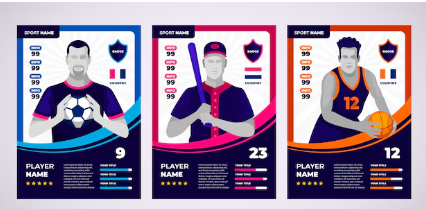
As the leading card publisher in India for sports trading cards since 2016, ValueDocs India recognizes that “Player Card Layout” is more than a simple layout. It is a collectible’s identity. It is a blueprint that organizes, carves, highlights the elegance of an athlete and, most importantly, determines the card’s aesthetic and functional utility. It is the core of our craft. ValueDocs India strives to master this layout. Designed well, the layout will transform the card into an artifact.
The Foundational Principles of a Player Card Layout
To create success, a player card layout must find the right equilibrium of visual emphasis and clarity of information. While designing, one must harmoniously incorporate the timeless and the modern, ensuring that each element of design, of information flow, guides the user and draws their attention to the core information without any clutter.
The Hero Image
- The player’s photo is the centerpiece of the card, of course.
- It could be a dramatic shot of the player in an action moment, a reverse shot for a portrait, or an image of the player in a celebratory moment and it will set the tone of the card.
- It must be dynamic, high-resolution, cropped, and composed in a way to tell a story.
- The photo must dominate the card construction, but space must be left for key information and player card branding.
- Overlays and backgrounds should accentuate the player instead of distracting from them.
- The Information Grid: This includes the player’s name, team, position, and card number. The placement of this information is critical. It must be instantly accessible without cluttering the visual field. We often use a clean, strategic grid system that guides the eye naturally, typically placing this data in a banner at the top, bottom, or side.
- The Color Palette: The color scheme is a powerful tool for branding and visual cohesion. It often ties into the team’s colors, but can also be used to signify a card’s rarity or specific series. A limited-edition “Gold” parallel, for instance, will use a predominantly gold foil color scheme in its layout to immediately convey its value.
- Typography: The font choice and size must be both legible and thematic. A classic, bold sans-serif font might be used for player names to convey strength, while a cleaner, smaller font is reserved for detailed statistics on the back. Consistency in typography is key to a professional look.
Evolution of Layouts: From Basics to Branded Aesthetics
The history of sports card design is a story of evolving layouts. Early cards had a very utilitarian layout: a portrait, a name, and a team. The reverse side was often just a blank back or a simple biography.
- Classic Layouts: Cards from the 1950s and 60s, like the Topps sets, established a classic layout. A single image took up most of the space, with a simple banner or shield containing the player’s name and team. The back was a block of text and statistics, organized in a clear, column-based format. This layout became a timeless standard, emphasizing the player as the central focus.
- The Modern-Era Layout: The “Junk Wax Era” introduced more complex layouts with borders, team logos, and decorative elements. The goal was to make the cards more visually appealing and unique. This era also saw the beginning of “full-bleed” layouts, where the image extends to the very edge of the card, creating a more immersive visual experience.
- The “Holographic” Layout: Today’s layouts are a product of advanced printing technology. The player image is often treated with a Prizm, Refractor, or holographic finish, and the card’s surface is no longer a simple flat background. The layout must now accommodate these complex finishes, often using minimalist borders and negative space to allow the card’s special effects to shine.
Creating a Professional Player Card Layout
For those who want to create their own custom cards, either for a personal collection or as part of a creative project, understanding the professional process is invaluable. At ValueDocs India, we follow a meticulous process to ensure every card we publish is a masterpiece of design.
- Concept and Theme: Every card series has a unique theme, which dictates the layout’s aesthetic. Is it a vintage-style series? A futuristic, minimalist look? Or a vibrant, action-packed one? The theme informs every design decision, from color to typography.
- Mock-up and Prototyping: We create digital mock-ups using design software like Adobe Illustrator or Photoshop. This allows us to experiment with different layouts, placing the player’s image, text, and other elements in various configurations until we find the perfect balance.
- The Front and Back Synergy: The front and back of the card must complement each other. The layout of the back, which contains stats, a brief bio, and other details, should echo the style of the front. A clean, organized stats section on the back is just as important as a striking image on the front.
- Attention to Detail: The smallest details matter. The size and position of the card’s number, the official league logo, and the copyright information must be perfectly placed. These details add a professional finish and show a commitment to quality.
The ValueDocs India Difference
At ValueDocs India, our expertise in player card layouts goes beyond just aesthetics. We understand that a great layout can increase a card’s collectibility and value. A well-organized, visually striking card is more appealing to collectors and more likely to be showcased. Since 2016, we have been committed to publishing content that not only provides the monetary valuation of cards but also educates collectors on the art and science behind their design. We believe that understanding the Player Card Layout is the first step to truly appreciating the world of sports collectibles.
The future of sports cards is not just about new players and new records, but about the continuous evolution of design. As printing technology advances, so too will the possibilities for player card layouts. From incorporating augmented reality to using new, sustainable materials, the layout will continue to be the canvas on which the story of sports is told. At ValueDocs India, we are excited to be at the forefront of this evolution, guiding collectors through the dynamic and ever-changing world of sports card design.