Turning Static PDFs into Editable Publishing Assets
For global publishers, PDFs are often the final output — but not always the final stage of production. Many publishing workflows require fully editable InDesign files for content updates, multilingual publishing, redesign projects, digital conversions, and reprints.
The challenge is that standard PDF files are not designed for seamless editing. Complex layouts, embedded fonts, scientific tables, graphics, equations, and layered formatting can easily break during manual reconstruction.
Reliable PDF-to-InDesign conversion services solve this problem by transforming static PDF documents into structured, editable, and production-ready InDesign files while preserving layout accuracy and publication quality.
For publishers handling journals, books, reports, technical manuals, and academic content, professional conversion workflows have become an essential part of modern publishing operations.
Why PDF Conversion Requires Specialized Publishing Expertise
Converting a PDF into an editable InDesign document is not a simple file transfer process. Every element within the document must be carefully reconstructed and optimized.
This includes:
- Typography and paragraph styles
- Multi-column layouts
- Tables and charts
- Scientific equations
- Vector graphics
- Footnotes and references
- Master page structures
- Linked image assets
- Interactive publishing elements
Professional conversion specialists ensure that the rebuilt InDesign file mirrors the original publication while remaining fully editable for future production use.

The Production Risks of Poor Conversion Quality
Low-quality conversion methods often create publishing delays and formatting inconsistencies that increase correction cycles.
Layout Distortion
Improper conversion can shift alignment, spacing, and page structure, affecting publication consistency.
Font and Character Errors
Missing fonts, encoding problems, and symbol mismatches are common issues in technical and multilingual documents.
Broken Graphics and Tables
Complex engineering diagrams, charts, and structured tables may lose formatting integrity during inaccurate conversion.
Increased Editorial Workload
Production teams often spend hours manually correcting improperly converted files before publishing.
Reliable conversion services help eliminate these inefficiencies and protect production timelines.
How Professional PDF-to-InDesign Conversion Works
Step 1: File Structure Assessment
Specialists analyze the PDF for layout complexity, typography, linked graphics, equations, and embedded elements.
Step 2: Content Reconstruction
Every page is carefully rebuilt inside Adobe InDesign using structured formatting practices and editable styles.
Step 3: Asset Recovery and Optimization
Images, vector illustrations, charts, and tables are optimized for print and digital production quality.
Step 4: Quality Validation
The recreated InDesign file undergoes extensive proofreading and layout verification to ensure pixel-level accuracy.
Step 5: Production-Ready Delivery
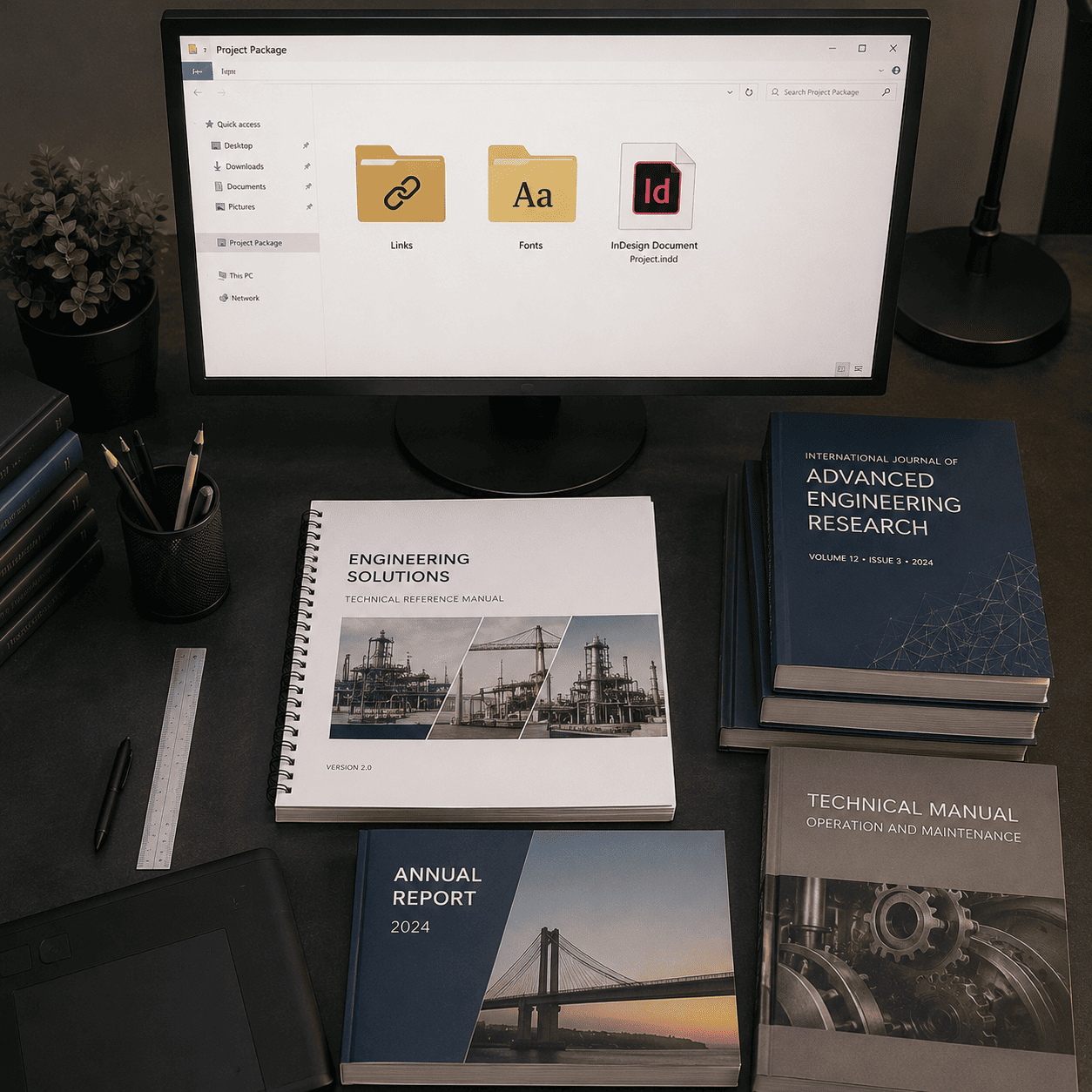
Publishers receive fully packaged InDesign files with linked assets, editable layers, fonts, and organized production structure.
Publishing Segments That Depend on Conversion Services
Reliable PDF-to-InDesign conversion plays an important role across multiple publishing sectors.
Academic and STM Publishing
Scientific journals, technical papers, and educational books often require editable source files for future revisions and multilingual editions.
Corporate Publishing
Annual reports, white papers, training manuals, and branded documents need reusable design formats for ongoing updates.
Engineering and Technical Documentation
Complex layouts containing CAD graphics, equations, and structured technical data require accurate reconstruction.
Digital Publishing Workflows
Interactive publishing platforms often require InDesign-compatible files for ePub, XML, and responsive digital outputs.
Technology Behind Accurate Conversion Workflows
Professional conversion providers use advanced publishing tools and manual quality control to maintain precision.
Commonly used technologies include:
- Adobe InDesign
- OCR correction software
- Vector reconstruction tools
- XML publishing workflows
- Font management systems
- Preflight validation software
These technologies help maintain structural consistency while improving conversion efficiency.
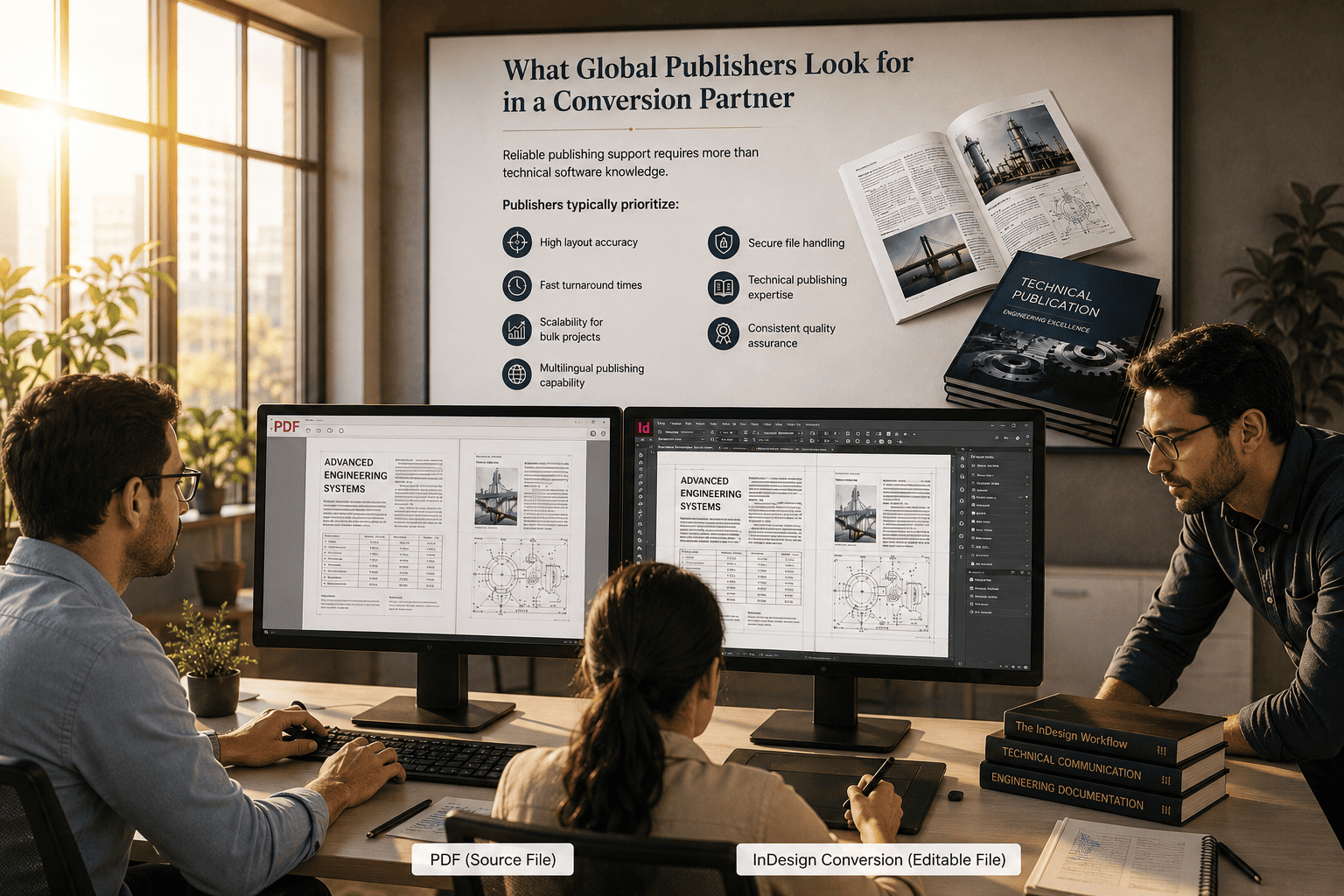
What Global Publishers Look for in a Conversion Partner
Reliable publishing support requires more than technical software knowledge.
Publishers typically prioritize:
- High layout accuracy
- Fast turnaround times
- Scalability for bulk projects
- Multilingual publishing capability
- Secure file handling
- Technical publishing expertise
- Consistent quality assurance
Experienced conversion teams understand both design precision and publishing production requirements.
From Static Files to Flexible Publishing Workflows
Modern publishing demands flexibility, speed, and reusable content structures. PDF-to-InDesign conversion services allow publishers to transform static archived documents into editable production assets ready for redesign, localization, digital publishing, and future revisions.
For global publishers managing large volumes of complex content, reliable conversion support improves efficiency, reduces manual corrections, and protects publication quality across every stage of production.
As publishing workflows continue to evolve, editable content infrastructure is becoming just as important as final publication output.
FAQ
Most frequent questions and answers
PDF-to-InDesign conversion is the process of rebuilding static PDF documents into fully editable Adobe InDesign files while preserving layout accuracy and formatting structure.
Editable InDesign files allow publishers to update content, redesign layouts, localize publications, and prepare files for print and digital publishing workflows.
Yes. Professional conversion services can accurately handle equations, engineering graphics, tables, charts, references, and multi-column layouts.
Academic publishing, engineering documentation, corporate publishing, STM publishing, training materials, and technical documentation industries frequently use these services.
Adobe InDesign, OCR correction tools, vector reconstruction software, XML systems, and preflight validation tools are commonly used.
They reduce manual corrections, preserve layout consistency, accelerate production workflows, and provide reusable editable publishing assets for future updates.

ValueDocs India offer the most competent multilingual typesetting services that are best in the industry. Typesetting services includes all aspects of designing a book.