How Multilingual DTP Services Improve Localization Efficiency

Translation Alone Does Not Deliver a Publication-Ready Document

Many organizations assume that once content has been translated, it is ready for distribution. In reality, multilingual publishing often requires significant desktop publishing (DTP) work to maintain formatting, page layouts, graphics, tables, charts, and overall document consistency. Without a structured DTP process, translated files may contain layout issues, inconsistent typography, misplaced graphics, or formatting errors that delay publication.

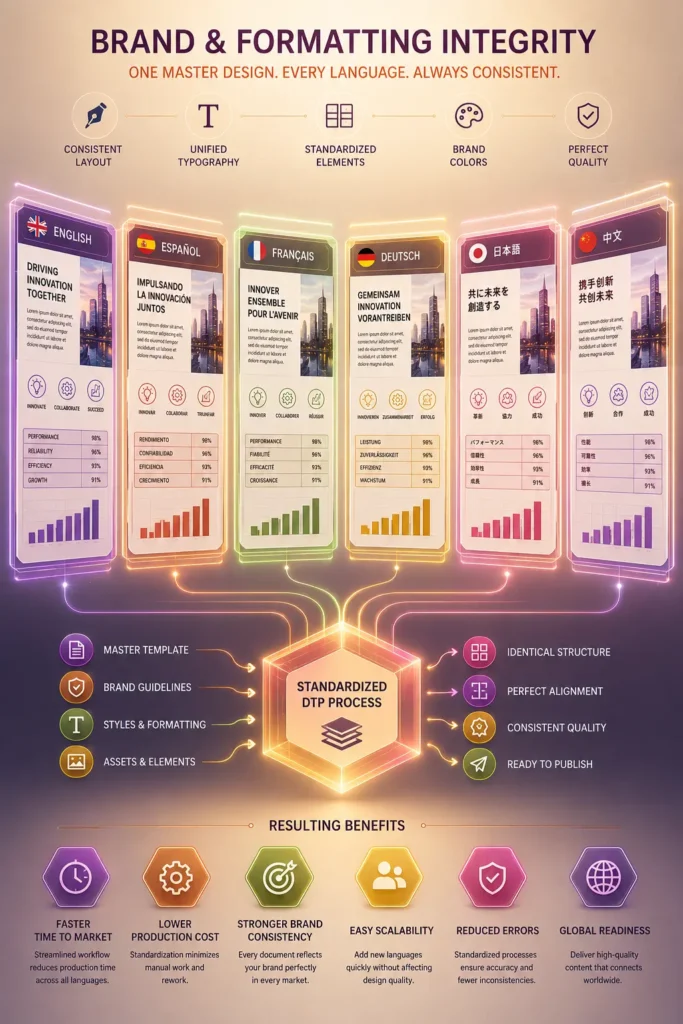
Multilingual DTP services bridge the gap between translation and final production by ensuring every localized document meets professional publishing standards while maintaining consistency across all language versions.

Why Desktop Publishing Is Essential in Localization

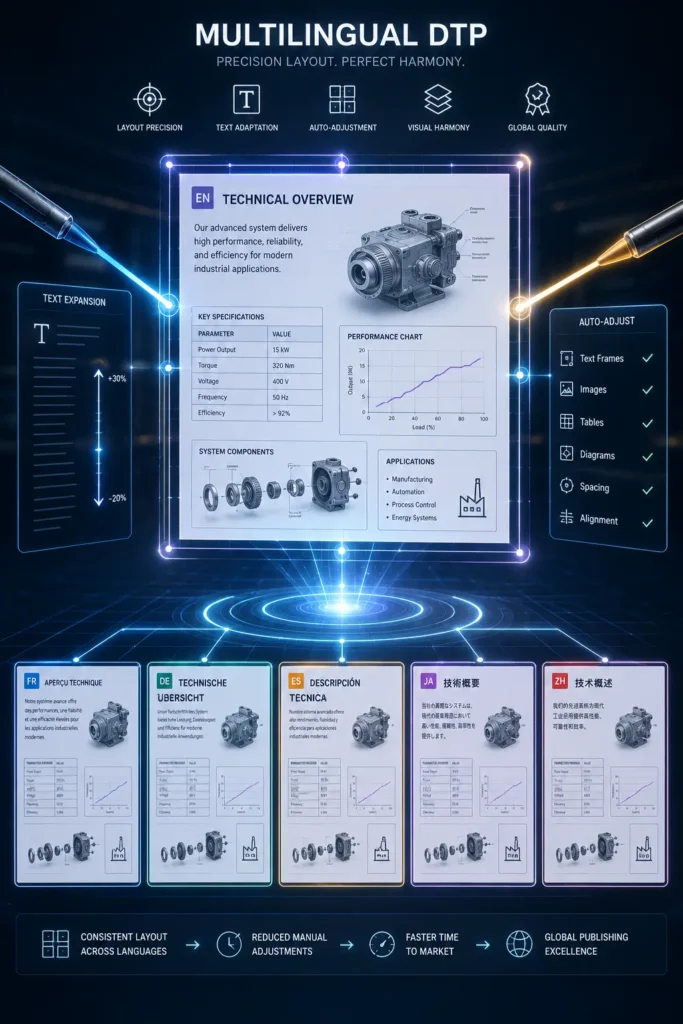
Translation changes the text, while desktop publishing ensures the document remains visually accurate and professionally formatted. As translated content varies in length and structure, layouts often need careful adjustment without affecting the overall design.

Professional multilingual DTP helps organizations:

  • Preserve document structure
  • Maintain brand consistency
  • Improve readability
  • Support efficient review cycles
  • Deliver publication-ready files

A well-managed DTP workflow reduces production challenges and helps organizations publish multilingual content with greater confidence.

Key Components of Multilingual DTP Services

Multilingual desktop publishing involves much more than resizing text boxes. Production specialists ensure every document element works together across localized editions.

Common DTP activities include:

  • Layout refinement after translation
  • Typography adjustments
  • Table and chart formatting
  • Image and graphic placement
  • Page numbering verification
  • Cross-reference updates
  • Style consistency checks
  • Final pre-publication review

These tasks help ensure that every localized document maintains the same level of quality as the source version.

How Multilingual DTP Improves Localization Efficiency

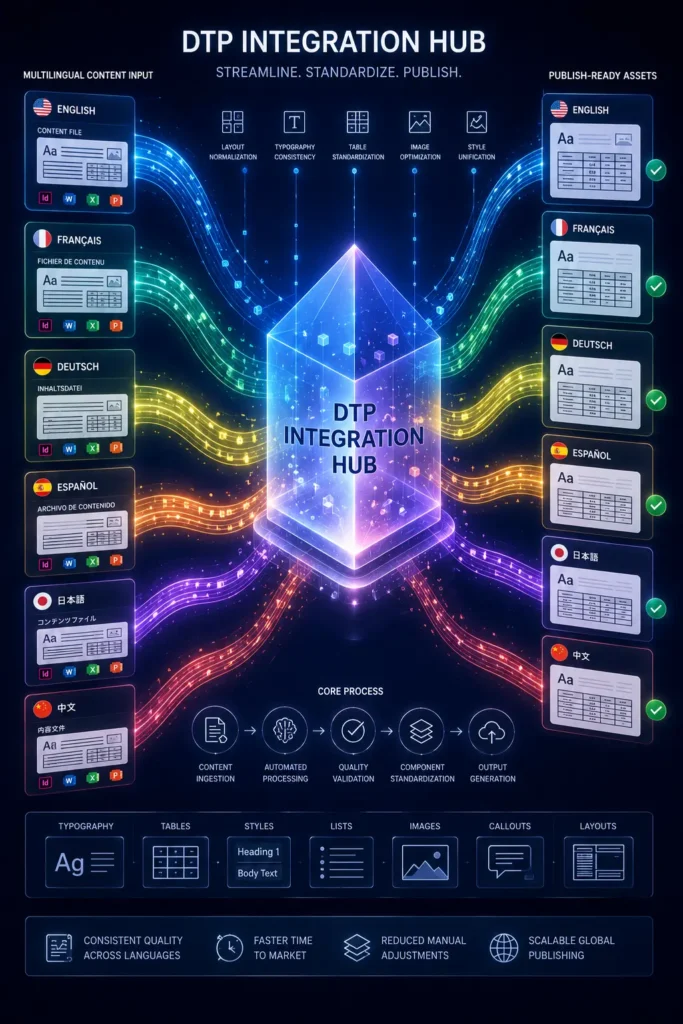
A structured DTP process minimizes manual corrections and simplifies collaboration between translators, designers, and reviewers.

Traditional Workflow

Multilingual DTP Workflow

Manual layout corrections

Structured layout management

Inconsistent formatting

Standardized document styles

Multiple revision rounds

Streamlined quality reviews

Separate production activities

Coordinated publishing workflow

Increased production delays

Faster document completion

By integrating desktop publishing into the localization process, organizations can reduce production bottlenecks and improve overall efficiency

Common Challenges Solved by Multilingual DTP

Localization projects frequently involve complex documents containing graphics, technical illustrations, tables, and structured layouts. Without professional DTP support, these elements can become difficult to manage.

Multilingual DTP helps address challenges such as:

  • Text expansion affecting page layouts
  • Misaligned graphics and illustrations
  • Broken tables after translation
  • Inconsistent fonts and styles
  • Incorrect page numbering
  • Formatting differences across document versions

Resolving these issues during production helps reduce review time and improves document quality before publication.

Supporting Collaboration Across Publishing Teams

Localization projects typically involve designers, translators, editors, reviewers, and production managers. A structured DTP workflow creates consistency throughout the publishing process by ensuring everyone works from standardized templates and document specifications.

Benefits include:

  • Better coordination between teams
  • Reduced formatting revisions
  • Improved version control
  • More consistent quality checks
  • Faster approval cycles

Effective collaboration contributes to smoother project execution and more predictable publishing schedules.

A Practical Publishing Scenario

A manufacturing company is preparing installation manuals, safety documentation, and maintenance guides for international distribution. After translation, each document requires updates to tables, diagrams, callouts, and page layouts to maintain consistency with the original design.

Using multilingual DTP services, the production team applies standardized templates, adjusts layouts where necessary, verifies graphics and formatting, and performs comprehensive quality checks before final delivery. As a result, reviewers spend less time correcting formatting issues and more time validating technical accuracy, allowing the organization to release documentation more efficiently.

Strengthening Localization Through Professional Document Production

Successful localization depends on more than accurate translation. Every document must maintain its structure, formatting, and visual consistency to provide a professional reading experience. By incorporating multilingual DTP services into the localization workflow, organizations can improve production efficiency, reduce formatting challenges, enhance collaboration, and deliver high-quality multilingual publications that are ready for distribution across global markets.

FAQ

Multilingual DTP services involve formatting, layout adjustment, typography management, graphic placement, and quality assurance to prepare translated documents for professional publication

Translation changes the text, but desktop publishing ensures the document remains visually consistent, readable, and publication-ready across every localized version.

Technical manuals, product catalogs, educational materials, marketing brochures, user guides, annual reports, and corporate documentation commonly require multilingual DTP support.

It reduces manual formatting work, streamlines review cycles, improves document consistency, and helps production teams deliver finalized documents more efficiently.

Standardized layouts, reusable templates, consistent formatting practices, and organized production workflows make future updates, revisions, and additional language editions easier to manage.