The Hidden Costs of In-House Educational Production Teams

In order to keep direct control over content creation, scheduling, and quality control, educational publishers frequently establish internal production teams. At first glance, this approach appears straightforward: hire skilled professionals, establish internal workflows, and manage production under one roof.

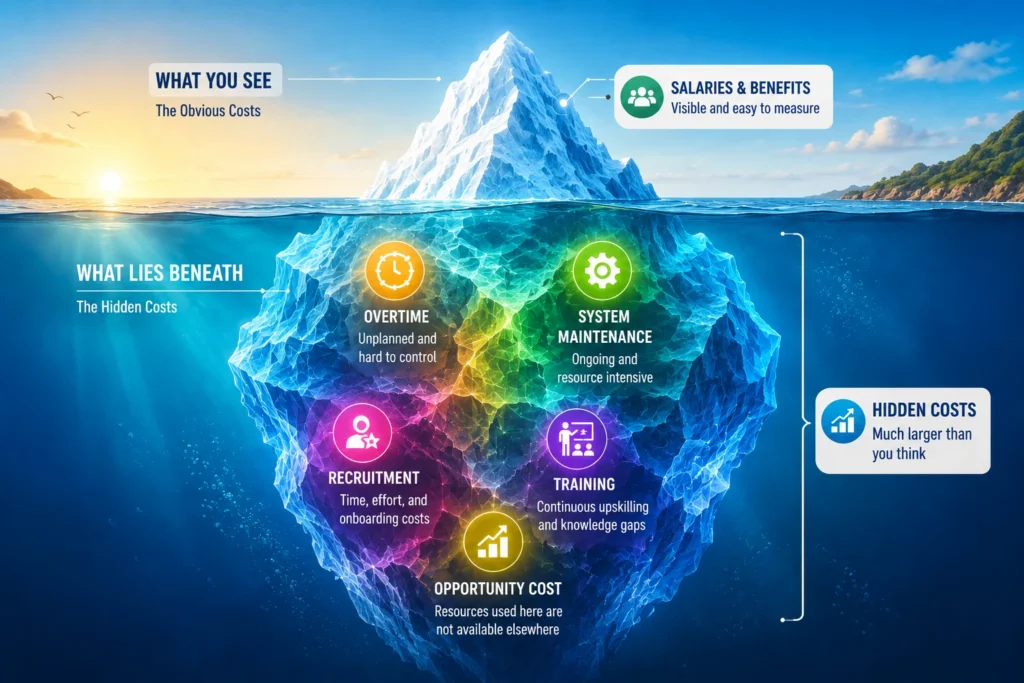
However, many publishers eventually discover that the true cost of maintaining an in-house production operation extends far beyond salaries. As content demands grow, digital formats expand, and accessibility requirements become more complex, hidden operational expenses can significantly impact profitability and efficiency.

Understanding these hidden costs helps publishers make more informed decisions about production strategies and resource allocation.

Why Production Costs Are Often Underestimated

When evaluating internal production teams, organizations typically focus on direct expenses such as:

  • Employee salaries
  • Benefits
  • Office space
  • Equipment

Even though these expenses are significant, they only make up a portion of the total investment.

Less visible operational costs often accumulate gradually and become significant as production requirements increase.

This is particularly true for educational publishers managing multiple product formats and evolving curriculum demands.

Recruitment And Talent Retention Expenses

Building an effective production team requires specialized skills.

Educational publishing frequently depends on professionals with expertise in:

  • Typesetting
  • Digital publishing
  • Accessibility preparation
  • XML workflows
  • Quality assurance
  • Content conversion

Recruiting and retaining these specialists can be expensive.

Additional costs may include:

  • Hiring campaigns
  • Onboarding programs
  • Ongoing training
  • Employee turnover management
  • Knowledge transfer activities

As publishing technologies evolve, organizations must also invest continuously in skill development.

Capacity Challenges During Peak Production Cycles

Educational publishing rarely operates with consistent production volumes throughout the year.

Major curriculum updates, new editions, and seasonal release schedules often create sudden workload increases.

Internal teams may experience:

  • Overtime expenses
  • Production bottlenecks
  • Schedule delays
  • Increased stress levels
  • Resource shortages

Conversely, during slower periods, organizations may continue paying for capacity that is not fully utilized.

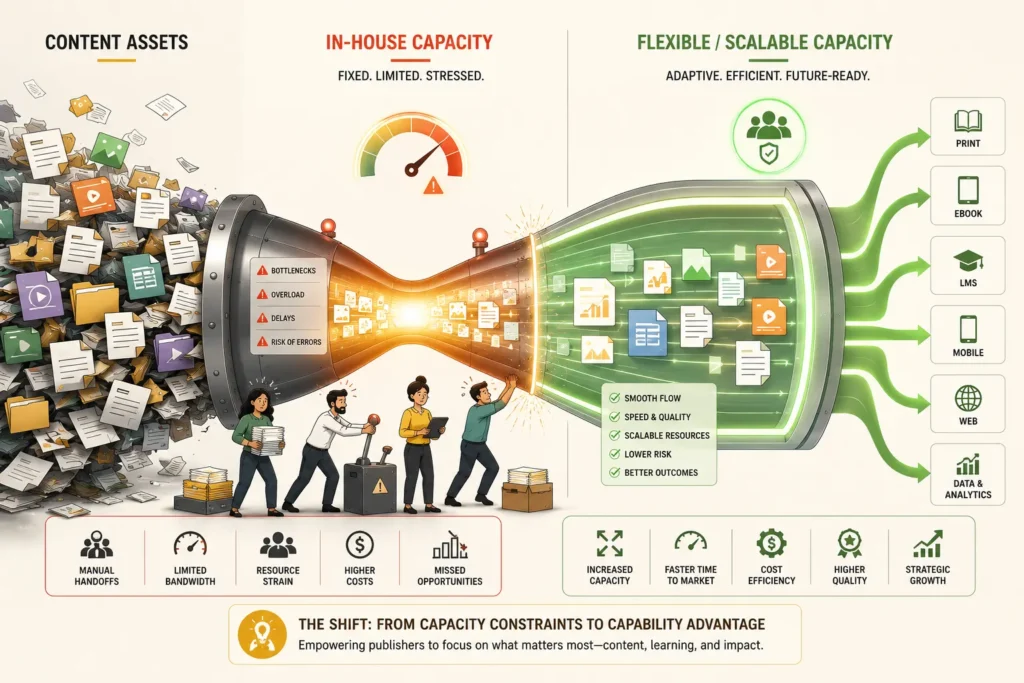
Compare Fixed Capacity And Flexible Capacity Models

One of the most overlooked costs of internal production is limited scalability.

In-House Production Model

Flexible Production Model

Fixed staffing levels

Scalable resource availability

Capacity constrained by team size

Capacity adjusted as needed

Overtime during peak demand

Flexible workload management

Underutilized resources during slow periods

Resources aligned to project volume

Long recruitment cycles

Faster access to specialized expertise

Technology And Software Investments

Modern educational publishing relies on a wide range of specialized tools.

Common investments include:

  • Layout and design software
  • Content management systems
  • Accessibility testing tools
  • Quality assurance platforms
  • Workflow management systems
  • Digital publishing applications

Beyond software licensing costs, publishers must manage:

  • System upgrades
  • Technical support
  • User training
  • Infrastructure maintenance

Productivity Losses From Repetitive Tasks

It is common for production teams to devote time to activities that do not immediately improve instructional value.

Examples include:

  • File preparation
  • Format conversion
  • Version tracking
  • Manual quality checks
  • Asset organization
  • Content migration

When highly skilled specialists spend large portions of their time on repetitive operational work, overall productivity may decline.

Managing Multiple Output Formats

Educational content is now delivered through numerous channels.

Publishers often support:

  • Print products
  • Digital textbooks
  • EPUB formats
  • Learning management systems
  • Mobile learning platforms
  • Institutional repositories

Maintaining separate workflows for multiple formats can increase:

  • Production complexity
  • Resource requirements
  • Quality-control effort
  • Update management costs

Without efficient content strategies, these demands can place considerable strain on internal teams.

Accessibility Compliance Costs

Accessibility expectations continue to grow across educational publishing.

When accessibility is addressed late in production, organizations often face:

  • Additional review cycles
  • Remediation projects
  • Delayed releases
  • Increased quality-assurance effort

Internal teams may require specialized expertise and tools to manage accessibility effectively.

Publishers that underestimate these requirements often encounter unexpected production expenses.

Opportunity Costs And Strategic Limitations

Perhaps the most significant hidden cost is the opportunity cost associated with internal resource allocation.

When production teams spend substantial time managing operational activities, publishers may have fewer resources available for:

  • Product innovation
  • Market expansion
  • Curriculum development
  • Strategic partnerships
  • New revenue opportunities

Production budgets rarely account for the impact of these lost opportunities, yet they can have an impact on long-term growth.

Practical Publishing Scenario

A publisher maintains a large in-house production department responsible for print, digital, and accessibility-related projects. As content volumes increase, the organization faces recurring bottlenecks during peak publishing seasons.

Although staffing levels remain constant, overtime costs rise, software investments increase, and project timelines become harder to manage. After conducting an operational review, the publisher discovers that a substantial portion of production effort is devoted to repetitive tasks and capacity management rather than content improvement.

This insight helps leadership evaluate alternative approaches for improving efficiency and scalability.

Understanding The Full Production Cost Picture

In-house educational production teams provide control and direct oversight, but the total cost of maintaining these operations often extends well beyond payroll expenses. Recruitment, technology investments, scalability limitations, accessibility requirements, and opportunity costs can all affect long-term efficiency and profitability. Publishers that regularly evaluate the full production cost picture are better positioned to make strategic decisions that support sustainable growth while maintaining content quality.

FAQs

Hidden costs include recruitment, training, software investments, overtime expenses, capacity limitations, accessibility management, and productivity losses from repetitive tasks.

Growing content volumes, additional formats, accessibility requirements, and technology investments create greater operational complexity.

Peak workloads often result in overtime, scheduling challenges, bottlenecks, and increased resource pressure.

Scalability allows publishers to respond efficiently to changing production demands without maintaining excess permanent capacity.

For many publishers, opportunity cost is significant because internal resources devoted to operational activities may limit investment in innovation, product development, and growth initiatives.
