ENGINEERING OPERATIONS ARE DIRECTLY IMPACTED BY THE QUALITY OF TECHNICAL DOCUMENTATION

Engineering documentation includes more than just supporting resources. They direct operational workflows in several industries, including production, maintenance, installation, and compliance 

Poorly formatted technical documents can lead to: 

  • Miscommunication between teams 
  • Delayed approvals  
  • Inconsistent revisions  
  • Difficult multilingual adaptation  
  • Reduced readability in field environments  

Therefore, selecting the top Engineering DTP (Desktop Publishing) service provider is now an important business decision rather than only an outsourced task. 

A trustworthy supplier should facilitate long-term documentation consistency, expedite publication procedures, and enhance technical clarity.

Experience in the field is more important than general publishing abilities.

Engineering documentation requires specialized technical understanding. 

A provider experienced in engineering publishing will already understand: 

  • CAD-based illustrations  
  • Technical callouts  
  • Complex table structures  
  • Engineering symbols  
  • Compliance layouts  
  • Cross-references  
  • Revision workflows  
  • Multi-format outputs  

Generic publishing agencies may struggle with highly technical documentation environments. 

Industry familiarity reduces correction cycles and improves project accuracy. 

Impact of Technical Documentation on Engineering Operations Efficiency

Evaluate Their Ability to Handle Complex Technical Content

Not all DTP providers can manage advanced engineering materials efficiently. 

Before selecting a provider, evaluate whether they can support: 

  • Engineering manuals  
  • Technical catalogs  
  • Wiring diagrams  
  • Aerospace documentation  
  • Industrial equipment manuals  
  • Automotive service guides  
  • Process flow documentation 
  • Large specification datasets  

The provider should demonstrate the ability to maintain layout precision even when handling dense technical information.

Check Their Multilingual Publishing Capabilities

Global engineering operations often require documentation in multiple languages. 

An effective Engineering DTP provider should support: 

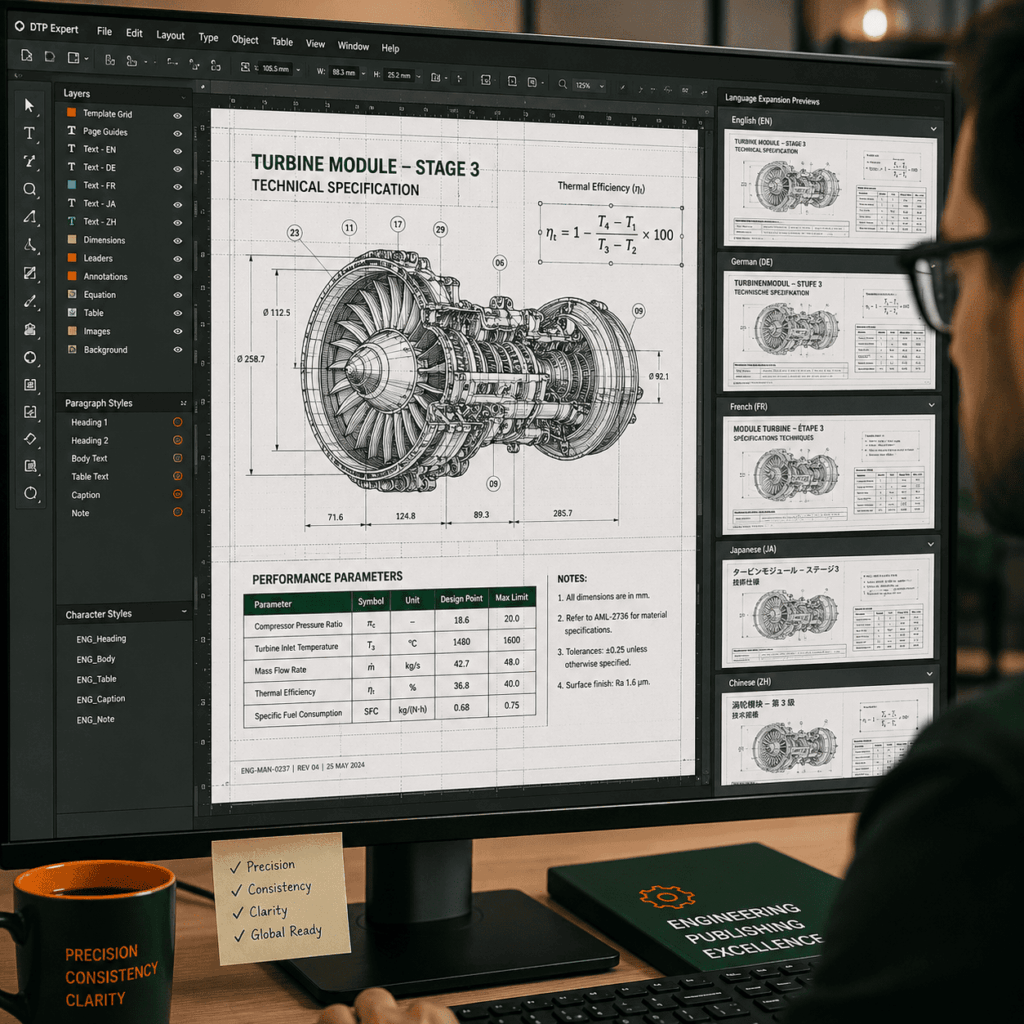
  • Multilingual formatting  
  • Unicode compatibility  
  • Language expansion handling  
  • Right-to-left layout adaptation  
  • Consistent diagram alignment  
  • Translation-ready publishing workflows  

This becomes especially important for companies operating across international manufacturing environments.

Consistency ranks among the most significant factors.

Strong Engineering DTP providers maintain consistency across every document type. 

Look for providers that standardize: 

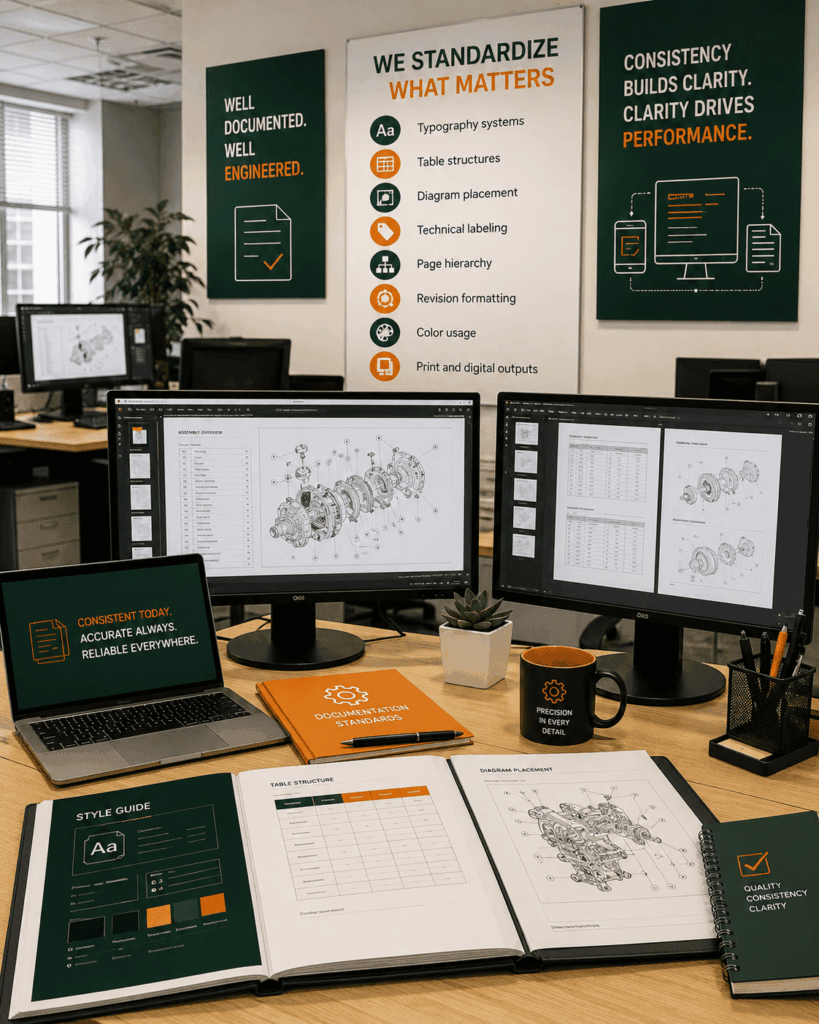
  • Typography systems  
  • Table structures  
  • Diagram placement  
  • Technical labeling  
  • Page hierarchy  
  • Revision formatting  
  • Color usage  
  • Print and digital outputs  

Consistency improves usability and strengthens professional presentation quality. 

Ask About Their Quality Control Process

Engineering documentation requires rigorous quality validation. 

Expert providers must to have organised review procedures that confirm: 

  • Consistency in layout  
  • Alignment of symbols  
  • The ability to print  
  •  The quality of digital output  
  • Synchronisation of versions . 

Well-organised quality assurance procedures significantly lower publication errors. 


Impact of Technical Documentation on Engineering Operations Efficiency

Scalability Is Essential for Long-Term Projects

Many engineering projects expand over time. 

A provider may initially handle a few manuals but later need to support: 

  • Thousands of pages  
  • Multiple product lines  
  • Ongoing revisions  
  • Parallel publishing schedules  
  • Regional language editions  
  • Digital repository integration  

Choose a provider capable of scaling production capacity without compromising quality. 

Digital Publishing Support Is Increasingly Important

Modern engineering documentation now supports both physical and digital environments. 

A capable provider should understand: 

  • Interactive PDFs  
  • XML publishing systems  
  • Mobile-responsive outputs  
  • Cloud documentation repositories  
  • Searchable technical libraries  
  • Multi-device compatibility  

This ensures documentation remains accessible across modern engineering ecosystems. 

Communication and Workflow Transparency Matter

A reliable Engineering DTP partner should provide: 

  • Clear project timelines  
  • Structured revision tracking  
  • Responsive communication  
  • Organized file management  
  • Transparent delivery workflows  

Strong communication reduces operational delays and improves collaboration between engineering teams and publishing specialists.

Security and Confidentiality Should Never Be Overlooked

Engineering documents often contain sensitive technical data. 

Before selecting a provider, verify: 

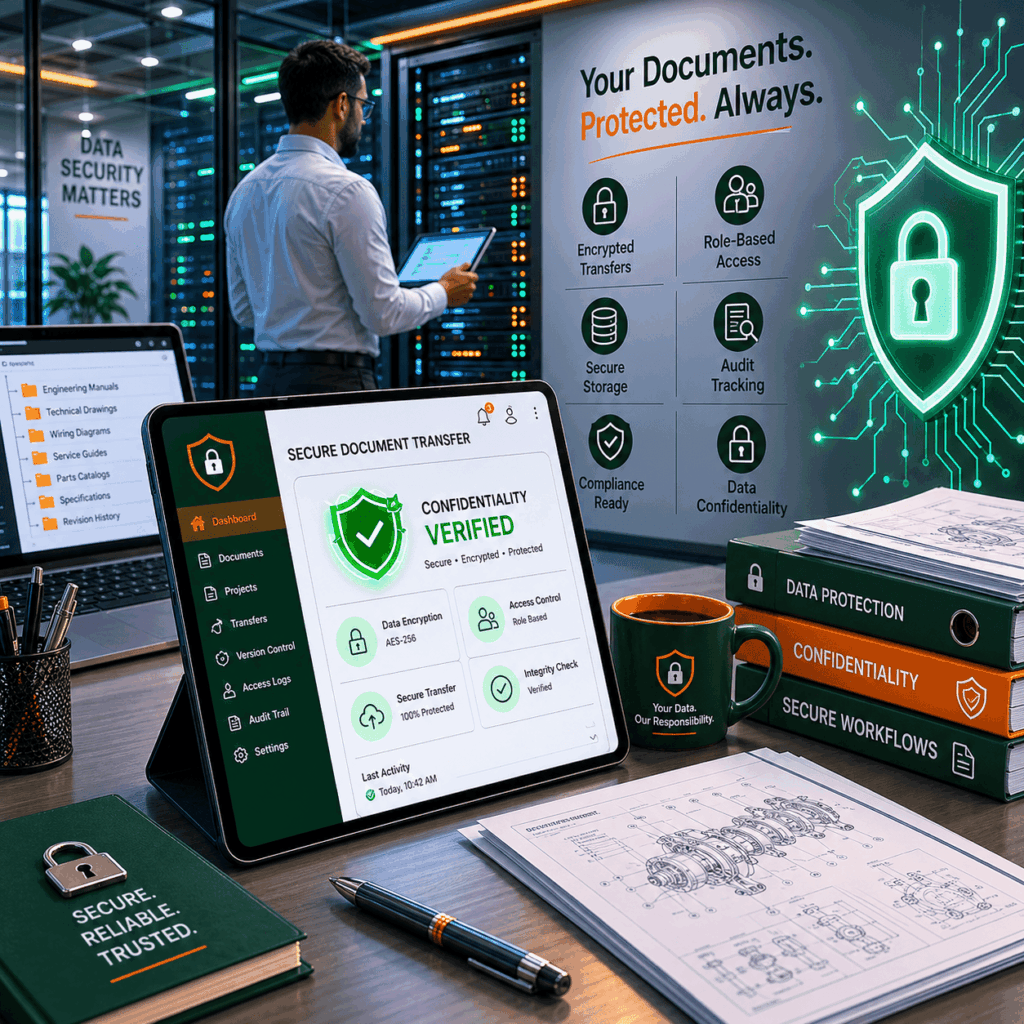
  • Data protection practices  
  • Secure file-sharing systems  
  • Access control procedures  
  • Confidentiality agreements  
  • Backup and archive management  

This is especially important in aerospace, industrial manufacturing, defense, and infrastructure sectors. 


Impact of Technical Documentation on Engineering Operations Efficiency

The Right DTP Partner Improves More Than Document Appearance

Professional Engineering DTP services contribute to: 

  • Faster publishing workflows  
  • Better technical readability  
  • Reduced formatting errors  
  • Improved operational consistency  
  • Stronger global communication  
  • Scalable documentation systems  

The best providers function as long-term technical publishing partners rather than simple formatting vendors.

Long-Term Engineering Efficiency Is Supported by Selecting the Correct Provider

Engineering documentation continues to grow in complexity as industries become more digital, multilingual, and globally connected. 

Organizations that choose experienced Engineering DTP providers gain stronger documentation control, improved publishing scalability, and more reliable technical communication systems. 

From aerospace manuals and automotive service guides to industrial maintenance documentation, structured publishing support helps engineering organizations maintain accuracy, consistency, and operational readiness. 

FAQ

Most frequent questions and answers

They format, organize, and prepare technical engineering documents for print, digital publishing, and multilingual distribution. 

Experienced providers better understand engineering layouts, technical graphics, compliance requirements, and complex publishing workflows. 

Yes. Professional providers can maintain layout consistency and formatting accuracy across multiple languages. 


Aerospace, automotive, manufacturing, industrial engineering, infrastructure, energy, and technical product industries frequently use these services. 

Quality control helps reduce formatting errors, broken references, inconsistent layouts, and publishing issues that may affect operations. 

Organizations should evaluate technical expertise, scalability, multilingual support, quality assurance systems, communication workflows, and digital publishing capabilities.
