
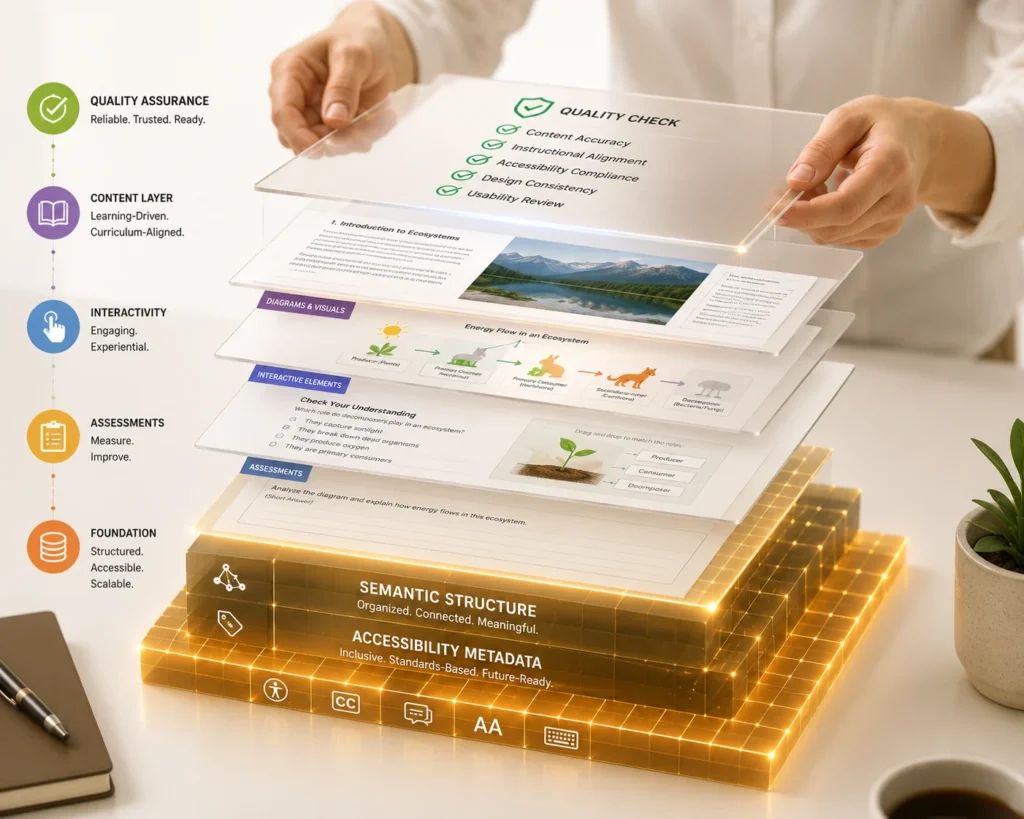

Global Educational Publishing Challenges and How to Overcome Them

Educational publishing has become increasingly complex as publishers serve diverse learners, institutions, and markets across multiple regions. While demand for educational content continues to grow, publishers must navigate evolving technologies, accessibility expectations, curriculum changes, digital transformation initiatives, and rising production pressures.

The challenge is no longer simply producing quality educational resources. Publishers must deliver content efficiently, support multiple formats, maintain consistency, and adapt to rapidly changing educational environments. Understanding the most significant industry challenges—and the strategies used to address them—can help organizations build more resilient publishing operations.

Managing Content Across Multiple Formats

Today’s educational content is rarely published in a single format.

Publishers often need to support:

  • Print textbooks
  • Digital textbooks
  • EPUB publications
  • Learning management systems
  • Mobile learning platforms
  • Online assessment environments

Maintaining separate production workflows for each format can increase costs, create inconsistencies, and slow updates.

How Publishers Can Overcome This Challenge

Many organizations are adopting single-source publishing strategies.

By creating content once and generating multiple outputs from a centralized source, publishers can:

  • Improve consistency
  • Simplify updates
  • Reduce duplication
  • Accelerate production cycles

This approach helps support long-term scalability across multiple delivery channels.

Balancing Quality With Faster Production Timelines

Educational institutions often expect frequent content updates, curriculum alignment, and rapid delivery schedules.

At the same time, publishers must maintain:

  • Editorial accuracy
  • Design quality
  • Technical consistency
  • Accessibility standards

Shorter timelines can place significant pressure on production teams.

How Publishers Can Overcome This Challenge

Successful publishers establish:

  • Standardized workflows
  • Clear production guidelines
  • Early quality-control checkpoints
  • Structured review processes

Reducing rework and improving workflow efficiency often provides greater benefits than simply increasing production speed.

Addressing Accessibility Requirements

Accessibility expectations continue to expand globally.

Educational resources increasingly need to support:

  • Screen readers
  • Logical navigation
  • Alternative text
  • Semantic content structures
  • Accessible digital formats

When accessibility is treated as a final-stage activity, remediation costs can become substantial.

How Publishers Can Overcome This Challenge

Accessibility should be integrated throughout the content lifecycle.

Publishers can reduce challenges by:

  • Planning accessibility early
  • Using structured content workflows
  • Conducting accessibility reviews during production
  • Implementing accessibility-focused quality assurance

This approach improves usability while reducing corrective work.

Compare Traditional Publishing Challenges And Modern Solutions

Common Challenge

Modern Publishing Response

Multiple content versions

Single-source publishing

Manual workflow management

Structured workflows

Accessibility remediation

Accessibility by design

Content duplication

Reusable content architecture

Limited scalability

Flexible production models

Publishers increasingly focus on operational efficiency alongside content quality.

Managing Large Content Volumes

Educational publishers often manage thousands of content assets.

These may include:

  • Textbooks
  • Assessments
  • Teacher resources
  • Interactive activities
  • Reference materials
  • Multimedia assets

As content libraries grow, locating, updating, and reusing resources becomes more difficult.

How Publishers Can Overcome This Challenge

Strong content management practices help improve visibility and control.

Key strategies include:

  • Metadata implementation
  • Structured content organization
  • Centralized repositories
  • Content governance processes

These practices support long-term content sustainability.

Responding To Continuous Curriculum Changes

Educational standards and curriculum frameworks evolve regularly across different regions and educational systems.

Publishers must often update content to reflect:

  • New learning objectives
  • Assessment changes
  • Regulatory requirements
  • Subject-matter developments

Frequent revisions can create production challenges.

How Publishers Can Overcome This Challenge

Structured content approaches allow publishers to update individual content components rather than entire products.

This improves:

  • Revision efficiency
  • Version control
  • Content consistency
  • Update speed

Flexible content architecture becomes increasingly valuable in dynamic educational markets.

Scaling Operations For Global Demand

Publishers serving international markets frequently encounter fluctuations in production volume.

Demand may increase due to:

  • New curriculum programs
  • Institutional contracts
  • Digital expansion initiatives
  • Product portfolio growth

Fixed-capacity production models can create bottlenecks during these periods.

How Publishers Can Overcome This Challenge

Many publishers use flexible production strategies that allow them to:

  • Scale resources as needed
  • Access specialized expertise
  • Improve turnaround times
  • Manage peak workloads more effectively

Operational flexibility often becomes a competitive advantage in global publishing environments.

Integrating Emerging Technologies

Artificial intelligence, learning analytics, and digital learning ecosystems are creating new opportunities for educational publishers.

However, technology adoption also introduces challenges related to:

  • Workflow integration
  • Content compatibility
  • Staff training
  • Data management

Technology alone rarely solves operational problems.

How Publishers Can Overcome This Challenge

Publishers should focus on technologies that support clear business objectives, including:

  • Content management improvements
  • Workflow efficiency
  • Accessibility support
  • Metadata generation
  • Content discovery

Technology should complement publishing expertise rather than replace it.

Practical Publishing Scenario

A publisher distributes educational resources across multiple countries and learning platforms. The organization faces recurring challenges related to content updates, accessibility requirements, and increasing digital delivery demands.

By implementing structured content workflows, improving metadata management, integrating accessibility throughout production, and adopting scalable operational processes, the publisher reduces complexity while improving consistency across its product portfolio.

The result is a more adaptable publishing operation capable of responding to changing market needs.

Building Resilient Publishing Operations For The Future

Global educational publishing continues to evolve as learner expectations, technologies, and institutional requirements change. Publishers that address challenges proactively through structured content management, accessibility integration, scalable workflows, and efficient production practices are better positioned to support long-term growth. Success increasingly depends on creating adaptable publishing operations that can respond effectively to both current demands and future opportunities.

FAQs

Managing content efficiently across multiple formats while maintaining quality and accessibility is one of the industry’s most significant challenges.

Accessibility helps ensure educational resources are usable by a broader range of learners and supports evolving institutional expectations.

Structured content workflows allow targeted updates and simplify content maintenance across multiple products.

Technology can improve workflow efficiency, content management, accessibility processes, and operational visibility when implemented strategically.

By adopting standardized workflows, reusable content strategies, and flexible production models, publishers can expand capacity while maintaining consistent quality standards.
