Why Engineering Companies Need Translation-Compatible Technical Documentation

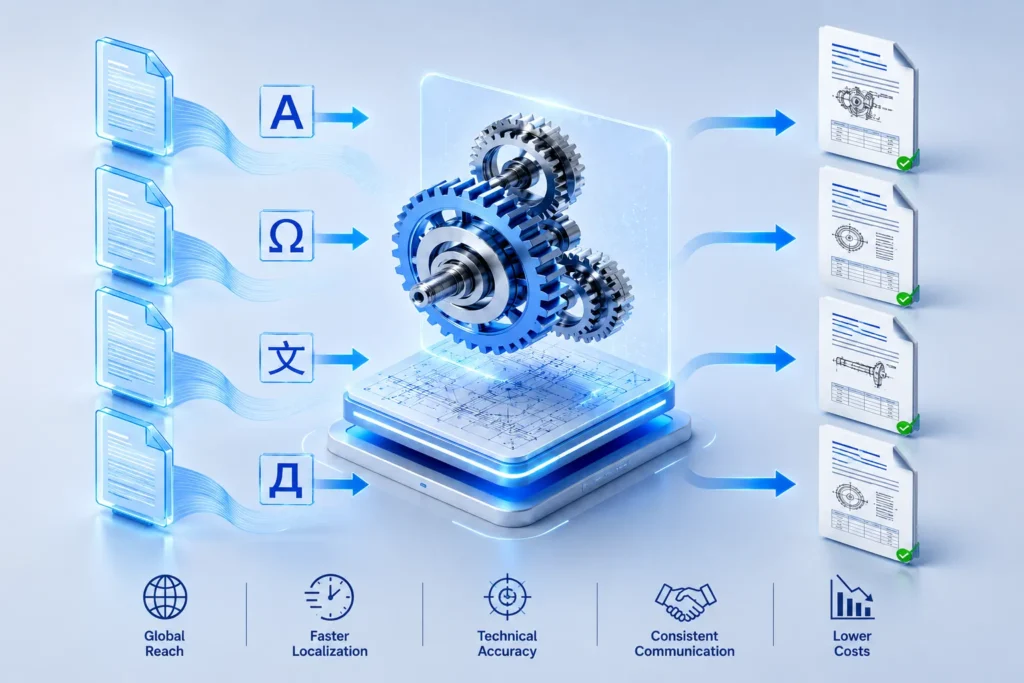
Engineering companies frequently work across multiple countries, manufacturing facilities, suppliers, and service teams. While technical documentation is essential for product development, installation, maintenance, and regulatory compliance, documents that are not prepared for translation often create unnecessary delays, increased costs, and formatting challenges. Translation-compatible technical documentation addresses these issues by ensuring documents can be translated efficiently while maintaining technical accuracy and layout consistency.

The Growing Need for Translation-Ready Documentation

Engineering documentation often includes user manuals, installation guides, maintenance procedures, safety instructions, technical specifications, engineering drawings, and product catalogs. As organizations expand into international markets, these documents must be available in multiple left-to-right (LTR) languages while preserving technical precision.

When documents are created without considering future translation requirements, every language version may require extensive manual editing. This increases project timelines, raises localization costs, and introduces the possibility of inconsistencies across translated editions.

Designing documentation with translation in mind helps organizations streamline multilingual publishing while maintaining a consistent experience for global users.

Common Challenges With Traditional Technical Documents

Many engineering documents are developed primarily for a single language. This approach often leads to problems when localization becomes necessary.

Common challenges include:

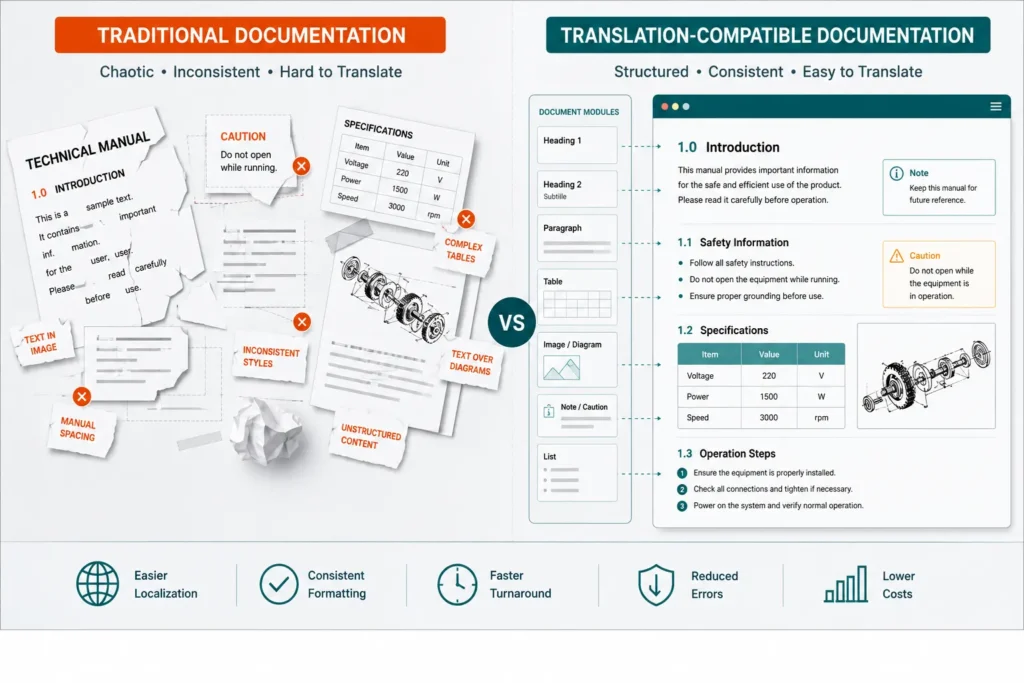
  • Text embedded inside graphics
  • Inconsistent terminology across documents
  • Manual formatting throughout the file
  • Complex tables that break after translation
  • Hard-coded page layouts
  • Non-editable PDF source files
  • Lack of paragraph and character styles

These issues make translation slower and increase desktop publishing effort before documents are ready for release.

What Makes Documentation Translation-Compatible?

Translation-compatible documentation is structured so that both translation tools and publishing workflows can process content efficiently without extensive manual intervention.

Key characteristics include:

  • Editable source files
  • Consistent paragraph and character styles
  • Proper use of tables instead of manual spacing
  • Separated text and graphics
  • Standardized terminology
  • Structured headings
  • Reusable content components
  • Unicode-compliant fonts for LTR languages

These practices help preserve document integrity across multiple language versions while simplifying future updates.

Traditional Documentation vs Translation-Compatible Documentation

Traditional Documentation

Translation-Compatible Documentation

Manual formatting

Structured styles and templates

Text inside images

Editable text elements

Inconsistent terminology

Standardized terminology

Difficult updates

Easier content maintenance

Higher localization effort

Streamlined translation workflow

Greater formatting corrections

Improved layout consistency

A structured documentation approach reduces production effort while supporting long-term document maintenance.

Why Engineering Organizations Benefit

Translation-compatible documentation provides advantages beyond language translation. It strengthens document quality throughout the entire publishing lifecycle.

Improved Translation Efficiency

Structured documents are easier to process using translation memory systems, reducing repetitive translation work and improving consistency across similar projects.

Better Technical Accuracy

Standardized terminology helps ensure technical concepts remain consistent across engineering manuals, installation guides, and maintenance documentation.

Faster Document Updates

Engineering documents frequently change as products evolve. Well-structured files allow organizations to update only modified sections rather than recreating entire documents for each language edition.

Greater Layout Consistency

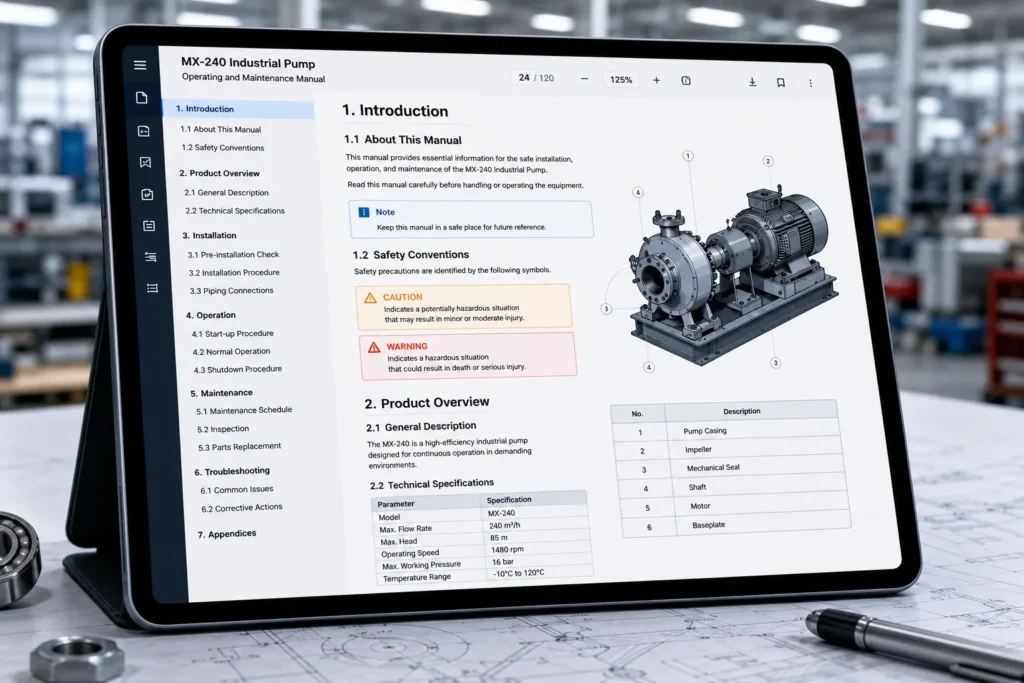
Technical manuals often contain complex tables, diagrams, numbered procedures, warnings, and specifications. Using structured layouts helps maintain readability throughout the localization process without extensive manual formatting.

Reduced Publishing Costs

Preparing documents correctly from the beginning minimizes production corrections, shortens review cycles, and reduces overall localization effort.

Practical Engineering Documentation Scenario

A manufacturer releases industrial equipment across several international markets. Product manuals include installation procedures, maintenance schedules, troubleshooting guides, and safety documentation. By preparing editable source files with standardized styles, structured tables, and consistent terminology, the company can localize documentation more efficiently, reduce formatting revisions, and maintain uniform technical information across all LTR language editions.

Best Practices for Creating Translation-Compatible Documentation

Engineering teams can improve localization readiness by adopting several documentation practices during content creation.

Use Structured Templates

Templates create consistency across manuals and simplify document maintenance.

Keep Graphics Separate From Text

Avoid embedding important instructions inside images. Editable text improves both translation accuracy and future revisions.

Standardize Technical Terminology

Using approved terminology throughout documentation reduces ambiguity and improves consistency across translated projects.

Apply Consistent Formatting

Paragraph styles, lists, captions, and tables should be created using document styles instead of manual formatting.

Create Modular Content

Reusable content blocks help engineering organizations update documentation efficiently while maintaining consistency across multiple publications.

Strengthening Technical Documentation for Global Collaboration

Engineering documentation supports product quality, operational safety, and effective communication across international teams. Preparing documents for translation from the outset helps organizations improve consistency, simplify multilingual publishing, reduce production effort, and maintain accurate technical information throughout the document lifecycle. By following structured documentation practices, engineering companies can support efficient localization while ensuring every published document remains clear, reliable, and easy to maintain across multiple left-to-right language editions.

FAQ

I am item content. Click edit button to change this text. Lorem ipsum dolor sit amet, consectetur adipiscing elit. Ut elit tellus, luctus nec ullamcorper mattis, pulvinar leo.

I am item content. Click edit button to change this text. Lorem ipsum dolor sit amet, adipiscing elit. Ut elit tellus, luctus nec mattis, pulvinar dapibus leo.

I am item content. Click edit button to change this text. Lorem ipsum dolor sit amet, consectetur adipiscing elit. Ut elit tellus, luctus ullamcorper mattis, pulvinar dapibus leo.

I am item content. Click edit button to change this text. Lorem ipsum dolor sit amet, consectetur adipiscing elit. Ut luctus nec ullamcorper mattis, pulvinar dapibus leo.

I am item content. Click edit button to change this text. Lorem ipsum dolor sit amet, adipiscing elit. Ut elit tellus, luctus nec ullamcorper mattis, pulvinar dapibus leo.