Why Engineering Drawing Conversion Is More Critical Than Ever

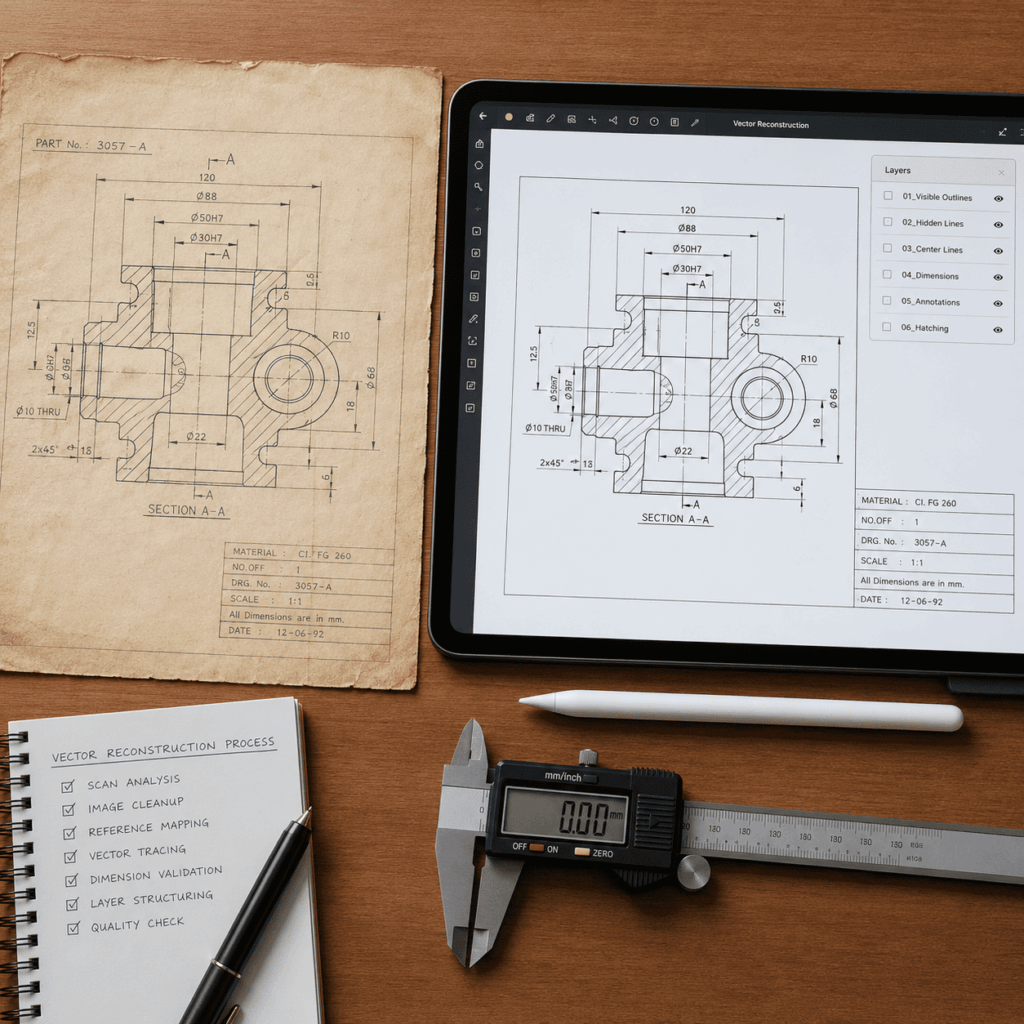
Engineering organizations today manage enormous volumes of technical drawings across manufacturing, construction, aerospace, automotive, infrastructure, and industrial design sectors. However, many legacy drawings still exist in outdated formats, scanned PDFs, paper blueprints, raster files, or incompatible CAD systems. 

Converting these drawings into accurate, editable, and publication-ready digital formats is not a simple file transfer process. Even minor conversion errors can affect dimensions, assembly instructions, manufacturing precision, and compliance documentation. 

This is why specialized Engineering DTP (Desktop Publishing) experts play a vital role in maintaining technical accuracy throughout the conversion workflow.


The Hidden Complexity Behind Engineering Drawing Conversion

Engineering drawings contain far more than visual lines and annotations. Every layer, symbol, scale reference, and technical label carries operational significance. 


Conversion projects often involve: 

  • CAD schematics  
  • Assembly drawings  
  • Layered technical diagrams  
  • Wiring layouts  
  • Mechanical blueprints  
  • Manufacturing annotations  
  • Dimension tables  
  • Legacy scanned drawings  
  • Multi-language technical documentation  

Without structured conversion workflows, valuable technical information can easily become distorted or unusable. 

Engineering Drawing Conversion

Common Engineering Drawing Conversion Challenges

Inconsistent File Quality

Many older engineering documents originate from low-resolution scans, faded paper drawings, or outdated software exports. Poor source quality increases the risk of incomplete conversion results. 

How DTP Experts Solve It 

Specialized image cleanup, vector recreation, OCR correction, and manual technical verification help restore drawing clarity and preserve engineering details. 

Loss of Layer Structure and Technical Accuracy

During conversion, CAD layers, annotations, symbols, and dimension alignments may shift or disappear entirely. 

How DTP Experts Solve It 

Engineering DTP specialists use structured CAD-compatible workflows that preserve layer hierarchy, object relationships, and dimensional precision throughout the conversion process. 

Formatting Problems Across Different Software Platforms

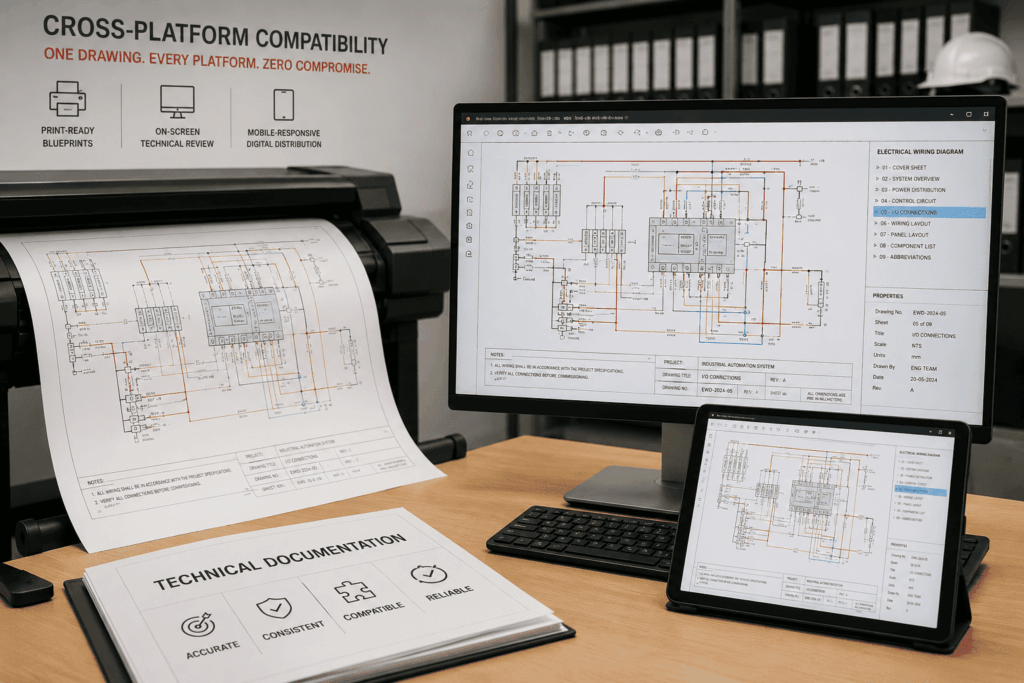
Engineering teams often work across multiple software ecosystems, creating compatibility challenges between formats. 

How DTP Experts Solve It 

Professional DTP workflows support conversion compatibility across AutoCAD, SolidWorks, Revit, Adobe platforms, and XML-ready publishing environments.

Managing Large Volumes of Drawings Efficiently

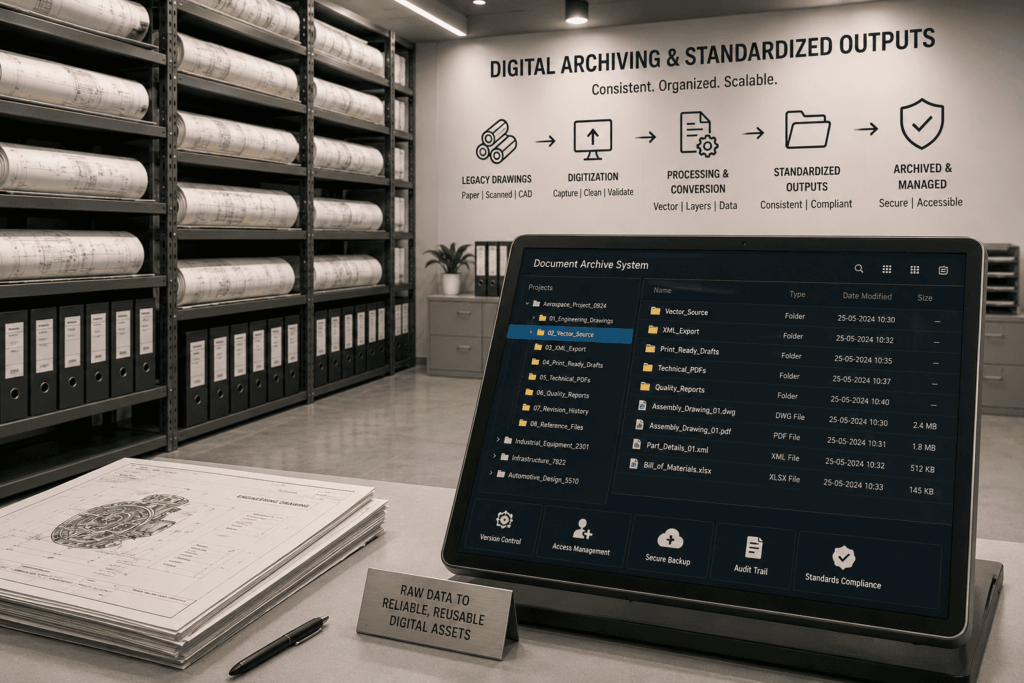
Manufacturing and infrastructure projects may involve thousands of technical files requiring standardized formatting and rapid turnaround times. 

How DTP Experts Solve It 

Automated workflow systems, batch processing pipelines, centralized templates, and scalable quality-control frameworks help manage high-volume conversion projects efficiently.

Multi-Language Technical Documentation Challenges

Global engineering companies frequently require localized technical drawings and multilingual annotations for international operations. 

How DTP Experts Solve It 

Engineering DTP specialists adapt typography, layout spacing, technical labels, and multilingual formatting while preserving drawing consistency.

Print and Digital Publishing Inconsistencies

Some converted files may display correctly on-screen but fail during large-format printing or digital publishing workflows. 

How DTP Experts Solve It 

Professional conversion teams validate drawings across print-ready outputs, PDFs, responsive digital systems, and engineering publishing platforms.

Technologies Used in Advanced Engineering Drawing Conversion

Modern Engineering DTP environments combine automation with expert technical oversight. 

Commonly used technologies include: 

  • AutoCAD-compatible workflows  
  • Adobe Illustrator  
  • Adobe InDesign  
  • OCR correction systems  
  • Vector tracing tools  
  • XML publishing systems  
  • Layer reconstruction software  
  • Technical illustration platforms

These technologies help maintain technical precision while improving workflow scalability. 

Engineering Drawing Conversion

Industries That Depend on Accurate Engineering Conversion

Automotive Manufacturing

Lorem ipsum dolor sit amet, consectetur adipiscing elit. Ut elit tellus, luctus nec ullamcorper mattis, pulvinar dapibus leo.

Aerospace and Defense

Mission-critical engineering drawings demand extremely high accuracy standards. 

Industrial Equipment Manufacturing

Technical manuals and machinery layouts rely on precise conversion workflows. 

Architecture and Infrastructure

Construction drawings and engineering blueprints must remain fully scalable and editable. 

Energy and Utilities

Power systems, utility layouts, and technical network diagrams require standardized digital documentation. 

Accurate Conversion Protects Operational Efficiency

Engineering drawing conversion is not only about digitization — it directly affects manufacturing quality, operational safety, collaboration efficiency, and long-term documentation management. 

Professional Engineering DTP services help organizations: 

  • Reduce technical conversion errors  
  • Improve drawing accessibility  
  • Maintain compliance standards  
  • Accelerate engineering workflows  
  • Support multilingual operations  
  • Simplify future document updates  
  • Ensure scalable digital archiving  

For global engineering organizations, structured conversion workflows create the foundation for reliable technical communication.

Engineering Drawing Conversion

FAQ

Most frequent questions and answers

Engineering drawing conversion is the process of transforming technical drawings from paper, scanned files, or outdated formats into editable, structured digital files.

Technical drawings contain layers, dimensions, symbols, annotations, and scale references that must remain accurate during conversion. 

Automotive, aerospace, manufacturing, architecture, infrastructure, utilities, and industrial engineering industries frequently use these services. 

Yes. Professional DTP specialists use OCR correction, vector tracing, and CAD-compatible workflows to recreate editable engineering drawings. 

They use structured workflows, manual validation, layer preservation systems, and CAD-compatible software environments. 

AutoCAD workflows, Adobe Illustrator, InDesign, vector reconstruction tools, OCR systems, and XML publishing platforms are widely used.
