
InDesign-Based Learning Content Development for Global Education Markets

A publisher expanding educational content into multiple countries often discovers that translation is only one part of the challenge. The real complexity begins when curriculum materials must be adapted for different languages, educational standards, reading patterns, and publishing requirements while maintaining a consistent learning experience.

Longer translated material, various assessment forms, localised examples, and academic requirements relevant to a certain country may require modifications to a workbook created for one market. Managing content quality across international markets becomes a major production challenge when dozens of titles need to be modified at once.

This is one of the key reasons educational publishers continue to rely on Adobe InDesign for learning content development. Its structured publishing environment helps organizations create, adapt, and maintain educational resources for diverse international audiences.

Why Global Education Publishing Requires More Than Translation

Educational content rarely moves from one market to another without modification.

Publishers often need to adapt:

  • Curriculum frameworks
  • Learning objectives
  • Assessment structures
  • Cultural references
  • Terminology
  • Visual examples
  • Regulatory requirements

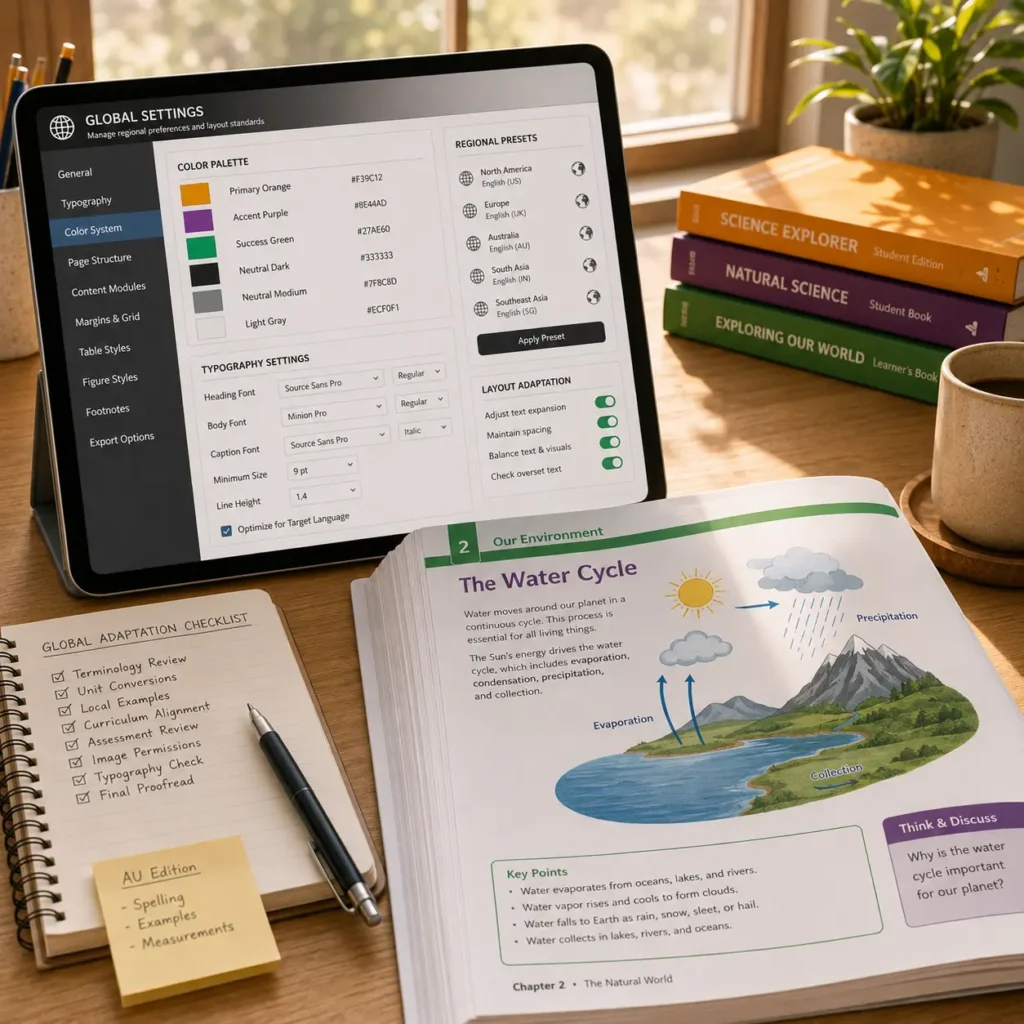
A science workbook developed for one country may require different instructional examples, measurement units, or educational standards before it can be used elsewhere.

As the number of target markets increases, maintaining consistency becomes increasingly difficult.

The Challenge of Managing Multilingual Learning Resources

Managing numerous language versions of the same content is one of the most frequent challenges in international publishing.

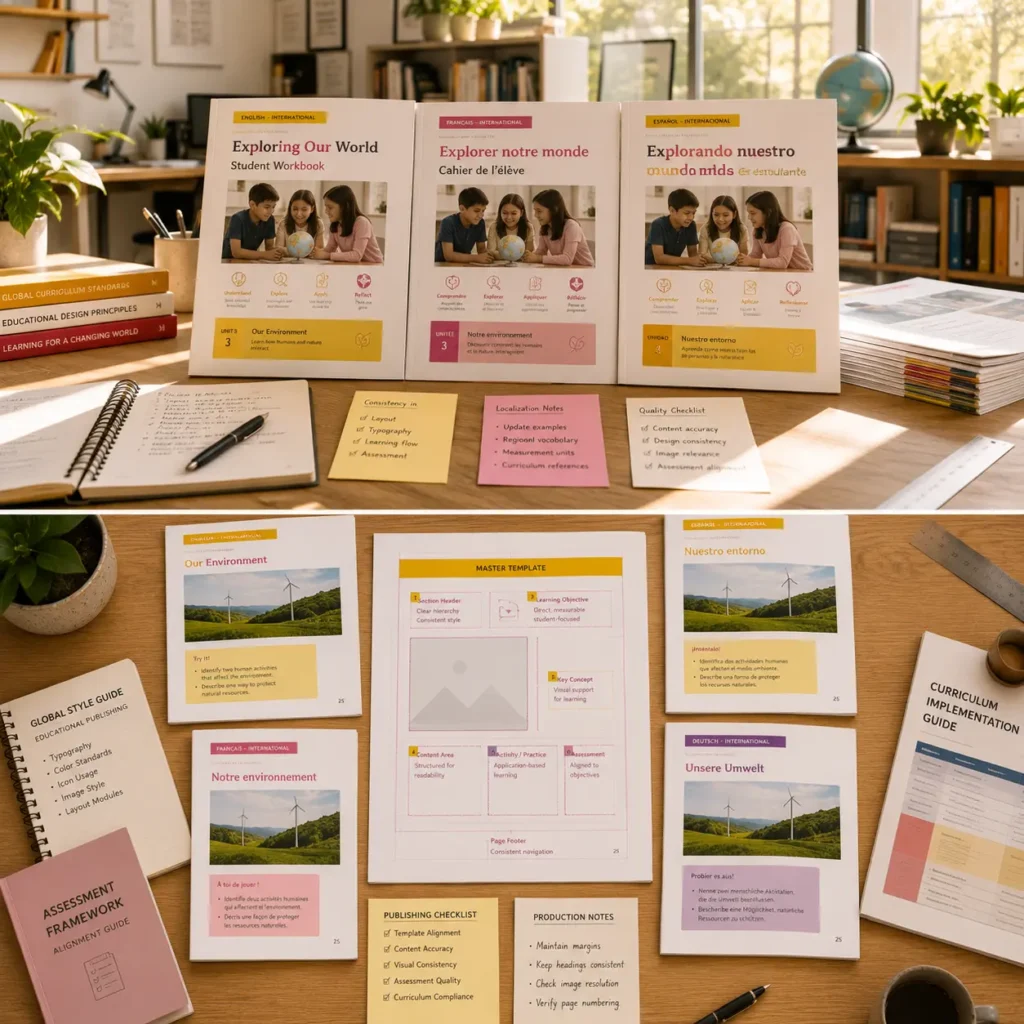
Different languages can significantly affect page layouts.

For example:

  • German text may expand considerably compared to English.
  • French often increases paragraph length.
  • Asian languages may require different typography treatments.

Without a structured publishing workflow, every language version can evolve into a separate design project, increasing production costs and revision effort.

Creating Standardized Global Content Frameworks

Many international publishers address this challenge by establishing standardized design frameworks before localization begins.

Using InDesign, teams can define:

  • Page architectures
  • Typography systems
  • Content hierarchies
  • Assessment layouts
  • Graphic placement rules
  • Navigation structures

This establishes a shared framework that can be modified for other markets while maintaining the integrity of the program as a whole.

Rather than redesigning each publication from scratch, publishers work within a controlled framework.

Supporting Curriculum Adaptation Across Regions

Global educational publishing is not simply about producing identical content in different languages.

Publishers frequently need to accommodate:

Global Publishing Requirement

Adaptation Need

Language localization

Text expansion and contraction

Regional curriculum standards

Content modification

Assessment requirements

Question restructuring

Educational policies

Compliance adjustments

Cultural relevance

Localized examples and visuals

A structured InDesign workflow helps production teams manage these changes without disrupting the overall design system.

Managing Large Volumes of Educational Content

International education providers often maintain extensive content libraries.

These may include:

  • Student textbooks
  • Workbooks
  • Teacher guides
  • Assessment resources
  • Supplementary learning materials
  • Digital curriculum assets

When updates occur, publishers must ensure changes are reflected consistently across all versions.

InDesign supports this process by helping teams maintain design governance throughout the content lifecycle.

This becomes especially important when curriculum revisions affect multiple countries simultaneously.

Improving Collaboration Between Global Teams

International publishing projects often involve contributors from different regions.

A typical project may include:

  • Subject matter experts
  • Curriculum specialists
  • Translators
  • Editors
  • Reviewers
  • Production teams

Without a shared publishing framework, maintaining alignment across these groups can become difficult.

Structured templates and style systems help create a common production environment that supports collaboration regardless of location.

A Practical Global Publishing Scenario

Consider an educational publisher developing mathematics resources for distribution across North America, Europe, the Middle East, and Asia.

Although the core curriculum is mostly the same, localised terminology, language alterations, and evaluation adjustments are needed for each region.

Instead of managing separate design projects for every market, the publisher develops a centralized InDesign framework that serves as the foundation for all regional versions. Localization teams adapt content within the established structure, allowing the organization to maintain consistency while meeting local educational requirements

Building Educational Content for International Growth

As education providers expand into new regions, the ability to manage multilingual content, curriculum adaptations, and large-scale publishing operations becomes increasingly important. Structured InDesign workflows help organizations balance global consistency with local educational requirements, enabling publishers to deliver learning resources that remain relevant, accurate, and scalable across international markets.

FAQ

Curriculum adaptation, localisation, assessment modifications, and adherence to regional standards are frequently necessary for educational material

It provides structured layouts and design systems that can accommodate multiple language versions while maintaining consistency.

InDesign allows publishers to use standardized templates, styles, and layout structures, helping ensure a consistent look and feel across textbooks, workbooks, teacher guides, and other learning materials.

Templates help maintain consistency across markets while reducing production effort and simplifying content updates.

Centralised publishing systems, which enable updates to be implemented methodically across localised content versions, are used by many organisations.
