
Building a Cost-Efficient Educational Publishing Supply Chain

Educational publishers face constant pressure to deliver high-quality learning materials while controlling production costs. Curriculum revisions, digital publishing requirements, accessibility standards, and shorter publication schedules have increased operational complexity across the publishing lifecycle. As a result, many organizations are looking beyond individual cost-cutting measures and focusing on building a cost-efficient publishing supply chain.

A well-designed supply chain helps publishers optimize resources, improve workflow visibility, reduce production waste, and maintain consistent delivery performance without compromising quality.

Understanding The Educational Publishing Supply Chain

An educational publishing supply chain includes every activity involved in transforming content from manuscript creation into final learning products.

Typical stages include:

  • Content development
  • Editorial review
  • Design and typesetting
  • Illustration production
  • Quality assurance
  • Accessibility validation
  • Digital conversion
  • Distribution preparation

When these activities operate independently, inefficiencies often increase costs and extend production schedules.

Where Publishing Costs Typically Increase

Many production expenses are not caused by labor alone. Hidden inefficiencies often create significant financial impact.

Common Cost Drivers

Cost Area

Typical Cause

Rework

Inconsistent standards

Production Delays

Workflow bottlenecks

Multiple File Versions

Poor version control

Manual Formatting

Lack of templates

Quality Corrections

Late-stage reviews

Resource Underutilization

Inefficient planning

Identifying these areas is often the first step toward building a more efficient operation.

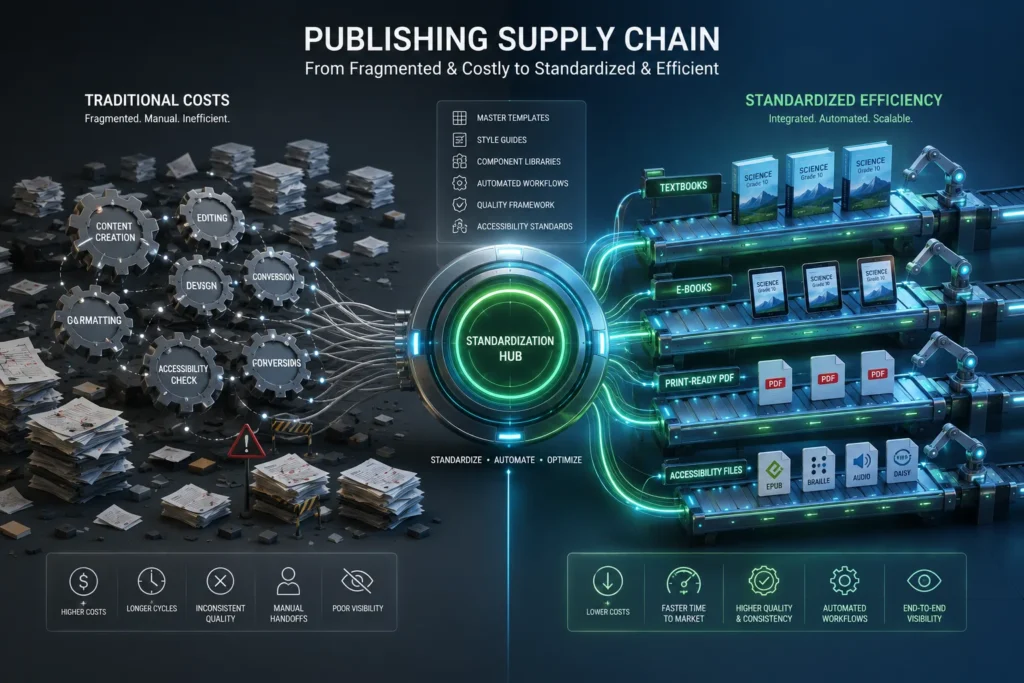
Create Standardized Production Processes

Standardization is one of the most effective methods for reducing production costs.

Publishers can establish:

  • Master page templates
  • Style guides
  • Content component libraries
  • Illustration standards
  • Production checklists
  • Accessibility guidelines

Traditional vs Standardized Production

Traditional Process

Standardized Process

Repeated formatting decisions

Predefined templates

Variable outputs

Consistent production

Longer reviews

Faster validation

Higher correction rates

Reduced rework

Manual setup tasks

Repeatable workflows

Standardization improves consistency while reducing unnecessary effort.

Improve Visibility Across The Supply Chain

Many publishers struggle because different production stages operate with limited visibility.

Effective supply chain management often includes:

  • Centralized project dashboards
  • Milestone tracking
  • Capacity monitoring
  • Production reporting
  • Resource allocation planning

Greater visibility allows managers to identify bottlenecks before they affect delivery schedules or budgets.

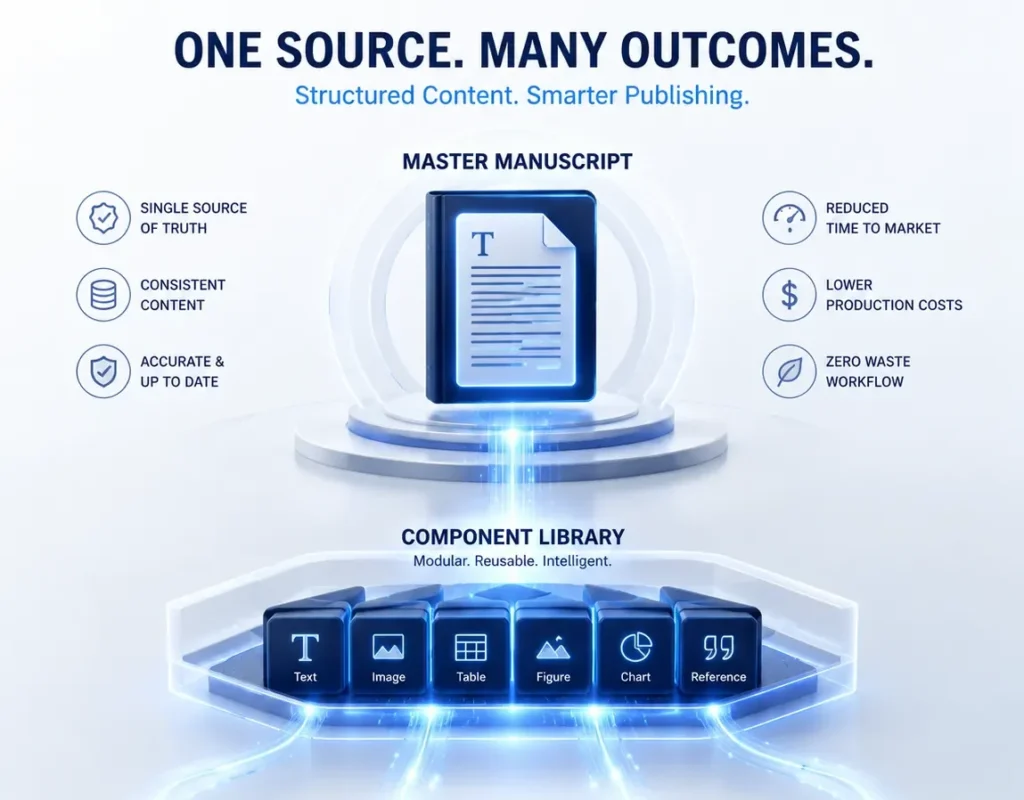
Use Shared Content Across Multiple Outputs

Educational content increasingly needs to support multiple formats.

Common outputs include:

  • Print textbooks
  • Digital textbooks
  • EPUB publications
  • Learning management systems
  • Accessibility-compliant formats

Rather than creating separate versions for each format, many publishers adopt structured content workflows that support multiple outputs from a common content source.

This reduces duplication and improves cost efficiency.

Build Flexible Resource Models

Publishing workloads fluctuate throughout the year.

Maintaining excess capacity for seasonal demand can increase operational costs.

Many organizations create flexible resource models through:

  • Dedicated production partners
  • Specialized publishing teams
  • Scalable quality assurance resources
  • Multi-format production specialists

This approach helps align production capacity with actual demand.

Reduce Rework Through Early Quality Controls

Quality issues identified late in production are often expensive to resolve.

Publishers can reduce correction costs by implementing:

✔ Editorial checkpoints

✔ Design validation reviews

✔ Accessibility verification

✔ Automated quality checks

✔ Structured approval processes

Early detection helps prevent costly revisions during later production stages.

Cost Impact Of Quality Timing

Quality Approach

Business Impact

Late-stage corrections

Higher costs

Early validation

Reduced rework

Reactive reviews

Schedule delays

Preventive quality controls

Better efficiency

Proactive quality management improves both productivity and cost control.

Strengthen Supplier And Partner Collaboration

Many educational publishing supply chains involve external contributors.

These may include:

  • Typesetting providers
  • Illustration teams
  • Accessibility specialists
  • Digital publishing experts
  • Conversion services

Clear communication standards and performance expectations help maintain efficiency across distributed production environments.

Use Shared Content Across Multiple Outputs

Educational content increasingly needs to support multiple formats.

Common outputs include:

  • Print textbooks
  • Digital textbooks
  • EPUB publications
  • Learning management systems
  • Accessibility-compliant formats

Rather than creating separate versions for each format, many publishers adopt structured content workflows that support multiple outputs from a common content source.

This reduces duplication and improves cost efficiency.

Technology As A Supply Chain Enabler

Technology plays an important role in reducing operational friction.

Common systems support:

  • Workflow automation
  • Asset management
  • Version control
  • Production scheduling
  • Reporting and analytics

These tools improve coordination while reducing manual administrative effort.

Key Characteristics Of A Cost-Efficient Publishing Supply Chain

Successful publishing organizations often focus on:

  • Workflow standardization
  • Production visibility
  • Shared content strategies
  • Flexible resource planning
  • Early quality controls
  • Technology-enabled coordination

Together, these practices create a more resilient and cost-efficient operation.

Frequently Asked Questions

It is the collection of processes, resources, technologies, and production activities used to create and deliver educational content.

Rework, manual processes, poor workflow visibility, inconsistent standards, and production delays are common contributors.

Repeatable workflows, style guides, and templates minimise errors, increase consistency, and lessen manual labour.

Visibility helps publishers identify bottlenecks, manage resources effectively, and improve production planning.

It helps organizations improve productivity, control operational costs, and deliver educational content more consistently.
