How to Reduce Educational Publishing Costs by Up to 50% Through Outsourcing

Rising Production Costs Are Challenging Educational Publishers

Educational publishers today face increasing pressure to deliver more content while controlling production budgets. Curriculum updates, digital learning initiatives, multilingual publishing requirements, and growing content volumes often create significant operational costs.

Many publishers initially focus on reducing printing expenses, but a large portion of educational publishing costs actually occurs before a book reaches the printer. Editorial preparation, typesetting, layout design, artwork integration, quality assurance, and file preparation can consume substantial resources.

As a result, many educational publishers are turning to outsourcing as a practical strategy to improve efficiency and reduce production costs without compromising quality.

Why Outsourcing Has Become A Common Publishing Strategy

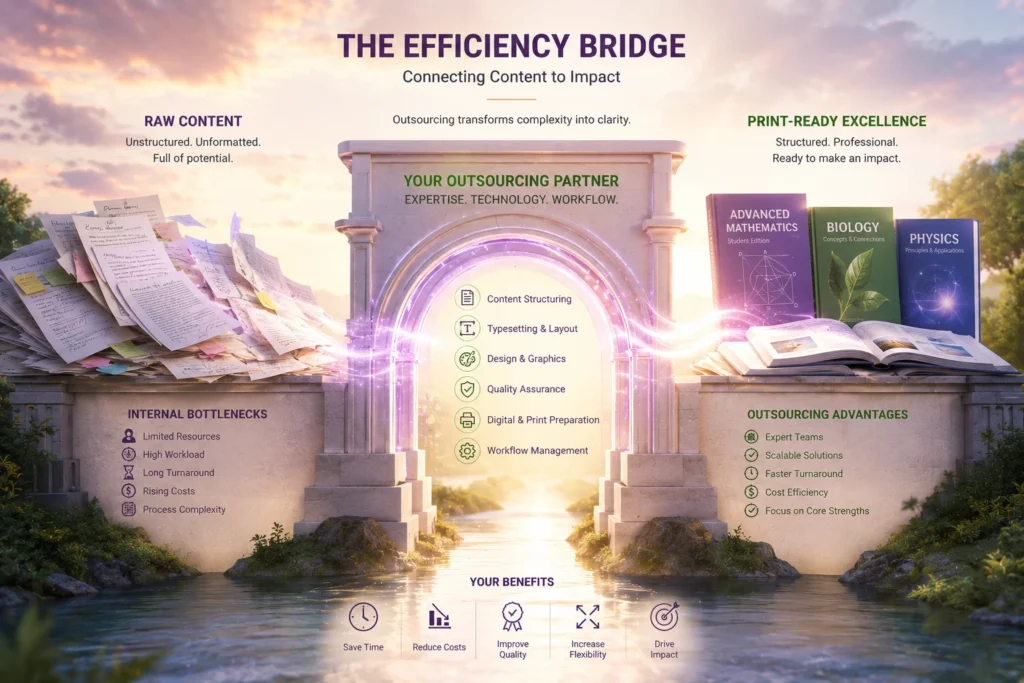
Outsourcing allows publishers to access specialized production expertise without maintaining large permanent teams.

Instead of hiring additional staff for every project, publishers can leverage experienced production partners for specific publishing functions.

Commonly outsourced services include:

  • Educational typesetting
  • Textbook layout design
  • Assessment formatting
  • Artwork placement
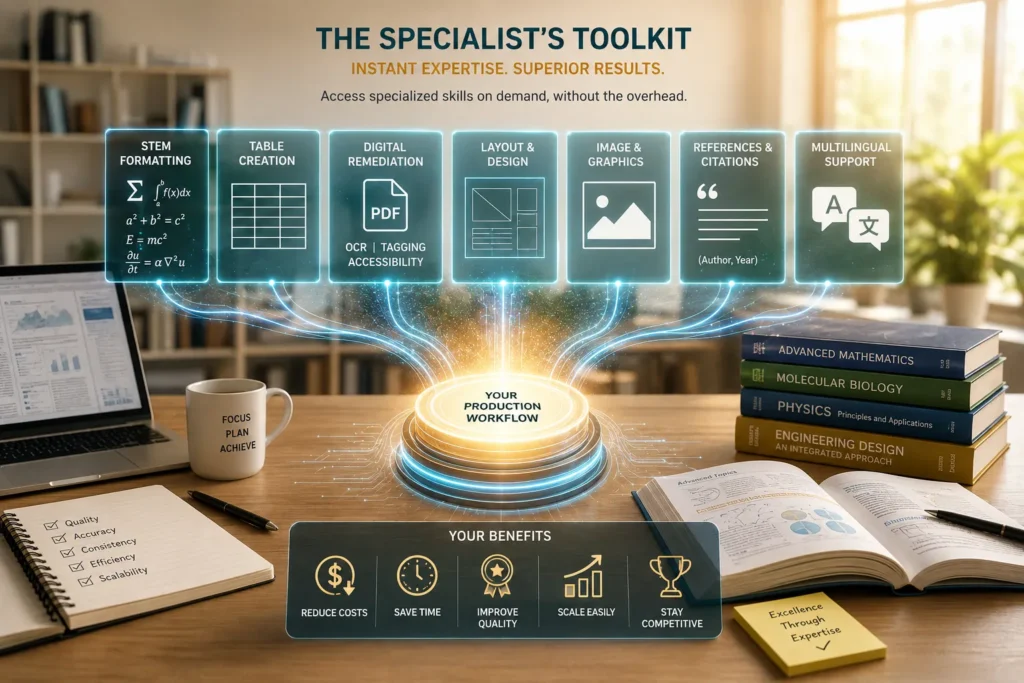
  • STEM content formatting
  • Digital publishing preparation
  • Proofreading support
  • Print-ready file creation

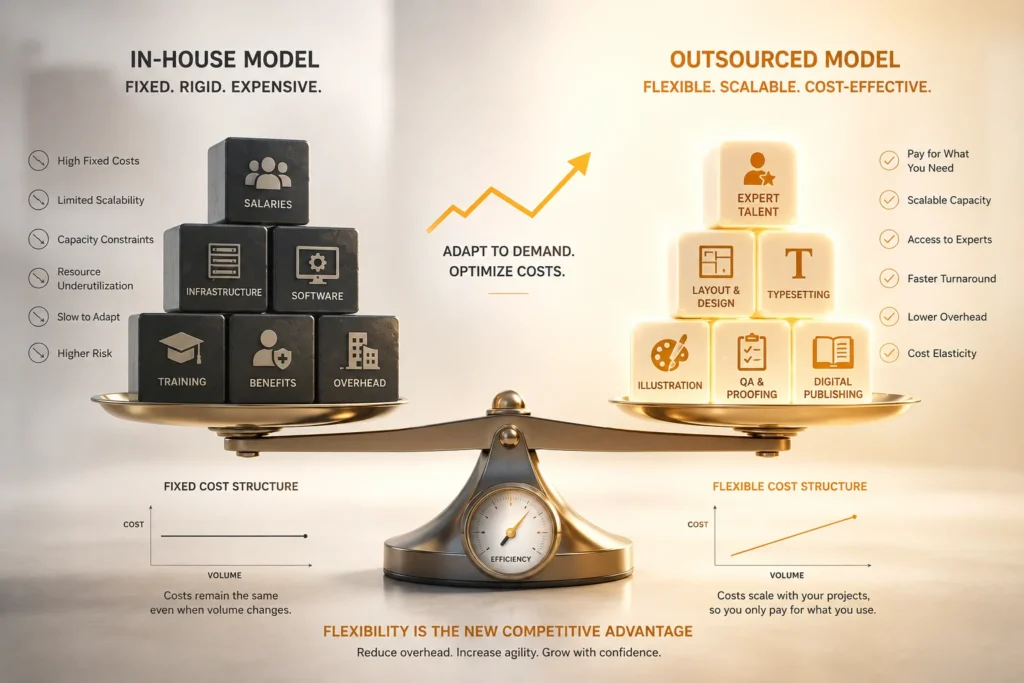
This approach converts fixed operational expenses into more flexible project-based costs.

Understanding Where Publishing Costs Originate

Before exploring outsourcing strategies, it is important to understand common cost drivers within educational publishing workflows.

These often include:

  • In-house production teams
  • Software licensing
  • Recruitment and training
  • Project management overhead
  • Content formatting
  • Design and layout work
  • Revision cycles
  • Quality-control processes

When educational publishing volumes fluctuate throughout the year, maintaining large internal teams can become particularly expensive.

Production Areas Where Publishers Often Achieve Savings

Not every publishing activity generates the same outsourcing benefits.

The greatest savings often occur in production-intensive functions.

Educational Typesetting And Page Composition

One of the most time-consuming phases of educational publishing is typesetting.

Outsourcing can reduce costs associated with:

  • Dedicated design staff
  • Software investments
  • Ongoing training
  • Peak workload management

Specialized production teams can often process large content volumes more efficiently because educational publishing is their primary focus.

Layout Design And Template Development

Developing reusable templates can significantly reduce production effort across multiple textbooks and learning resources.

Benefits include:

  • Faster page creation
  • Consistent branding
  • Reduced revision requirements
  • Simplified future updates

Publishers often realize substantial long-term savings through standardized production systems.

Scaling Without Increasing Internal Headcount

One challenge educational publishers frequently encounter is fluctuating project demand.

For example:

In-House Model

Outsourced Model

Staff costs remain fixed

Costs align with project volume

Additional hiring during peak periods

Flexible resource allocation

Training responsibilities remain internal

Expertise already available

Capacity limitations may occur

Scalable production support

Higher operational overhead

Lower administrative burden

This flexibility helps publishers manage growth without significantly increasing fixed costs.

Reducing Revision And Rework Expenses

Production errors can create hidden costs throughout the publishing workflow.

Common issues include:

  • Formatting inconsistencies
  • Incorrect pagination
  • Figure placement problems
  • Template deviations
  • Quality-control failures

Experienced publishing partners often use structured workflows that reduce rework and revision cycles.

Fewer production errors can result in meaningful cost savings across large publishing programs.

Supporting Multi-Format Publishing More Efficiently

Educational content is increasingly delivered through multiple formats.

Publishers may require:

  • Printed textbooks
  • Teacher guides
  • Workbooks
  • Digital learning materials
  • Interactive resources

Managing separate workflows internally can increase complexity and costs.

Outsourcing partners that support both print and digital production can streamline content preparation and improve efficiency.

Access To Specialized Publishing Expertise

Certain educational publications require advanced production skills.

Examples include:

  • Mathematics textbooks
  • Engineering materials
  • Scientific publications
  • Medical education resources
  • Assessment-heavy learning programs

Rather than building specialized teams for occasional projects, publishers can access experienced professionals as needed.

This approach often delivers higher efficiency while avoiding long-term staffing expenses.

Technology And Workflow Advantages

Modern publishing service providers frequently use established production environments that support:

  • Adobe InDesign workflows
  • XML-based publishing
  • OCR-supported content conversion
  • PDF remediation
  • Template-driven production
  • Translation-ready file preparation
  • Multi-format publishing workflows

These capabilities help improve productivity while reducing operational costs associated with maintaining internal production infrastructure.

Building A More Cost-Efficient Publishing Operation

Reducing educational publishing costs is not simply about spending less—it is about creating efficient workflows that support quality, scalability, and long-term sustainability. By strategically outsourcing production-intensive activities such as typesetting, layout design, and digital content preparation, publishers can streamline operations, manage growth more effectively, and potentially reduce overall production costs while continuing to deliver high-quality educational resources.

Frequently Asked Questions

Publishers often outsource to reduce costs, improve scalability, access specialized expertise, and accelerate production schedules.

Typesetting, layout design, proofreading, digital publishing preparation, artwork integration, and print-ready file creation are frequently outsourced.

When managed properly, outsourcing can maintain or improve quality through specialized workflows and experienced production teams.

Outsourcing provides flexible production capacity without requiring permanent increases in internal staffing levels.

K-12 publishers, higher education publishers, EdTech companies, academic publishers, and organizations managing large content volumes can all benefit from outsourcing production activities.
