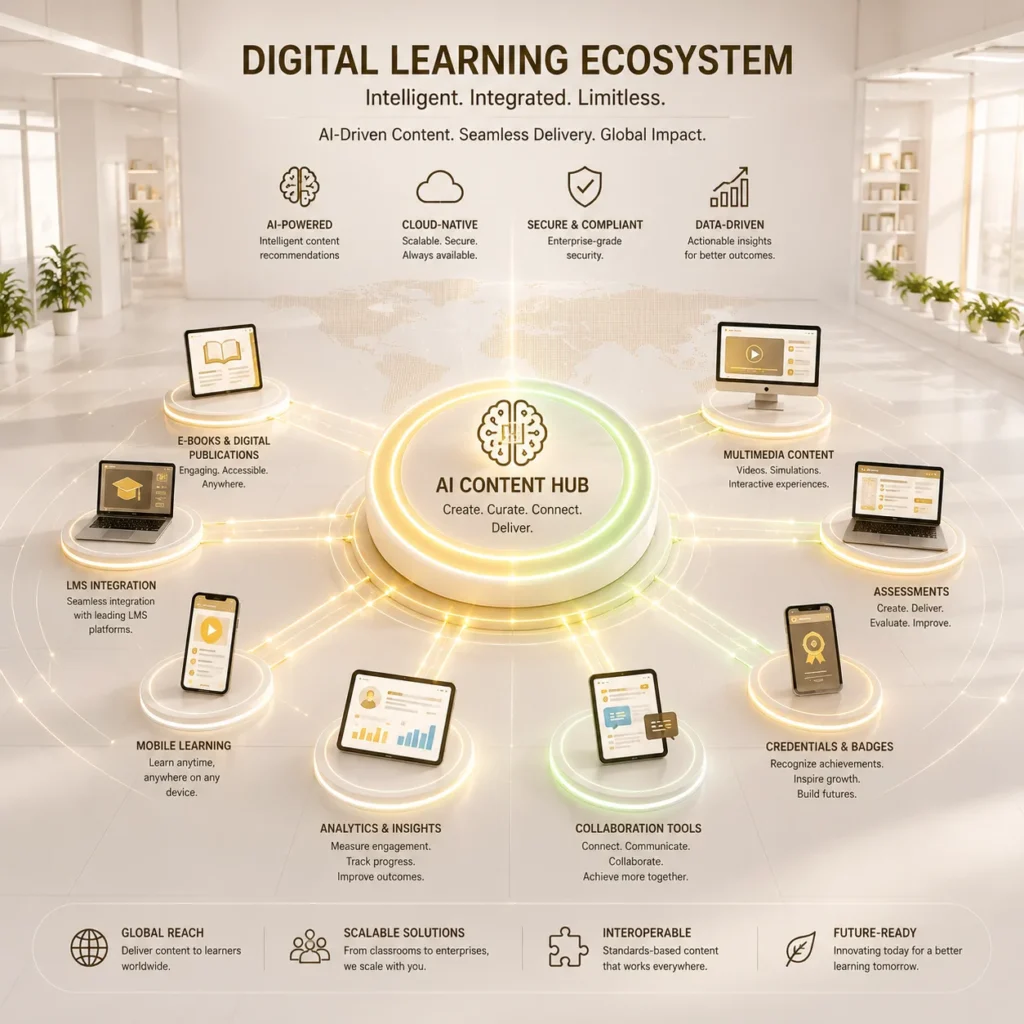

Using AI To Accelerate Educational Content Production

There is growing demand on learning organisations, educational publishers, and assessment companies to produce more content in less time. Curriculum updates, digital learning initiatives, assessment programs, and multi-format publishing requirements have significantly expanded content production demands. At the same time, organizations must maintain quality, consistency, and compliance across every stage of development.

Artificial intelligence (AI) is helping content teams address these challenges by streamlining workflows, reducing repetitive tasks, and improving operational efficiency. AI helps content workers by speeding up procedures that typically involve a significant amount of manual labour, rather than taking the place of human expertise.

Why Content Production Is Becoming More Complex

Modern educational content development involves multiple stakeholders, including authors, editors, reviewers, instructional designers, production specialists, and quality assurance teams.

Common challenges include:

  • Large content volumes
  • Tight publishing schedules
  • Repetitive editorial tasks
  • Content organization difficulties
  • Lengthy review cycles
  • Multi-platform publishing requirements

As content libraries grow, managing these activities manually becomes increasingly difficult.

AI helps organizations improve productivity while maintaining content quality standards.

Automating Repetitive Production Activities

A significant portion of educational content production involves routine tasks that consume valuable staff time.

AI can assist with:

  • Content categorization
  • Metadata generation
  • File organization
  • Content tagging
  • Workflow routing
  • Version tracking

By automating these operational activities, teams can dedicate more time to content development, instructional design, and quality improvement.

Traditional Vs AI-Assisted Production

Traditional Process

AI-Assisted Process

Manual content classification

Automated tagging

Spreadsheet-based tracking

Intelligent workflow management

Manual metadata assignment

AI-generated metadata

Time-consuming searches

Smart content discovery

Repetitive administrative work

Automated task handling

This shift allows organizations to improve efficiency without sacrificing oversight.

Improving Content Discovery And Reuse

Educational organizations often maintain large repositories containing thousands of learning assets, assessment items, and instructional resources.

Finding the right content quickly can be a major challenge.

AI-powered search capabilities can help by:

  • Identifying related content
  • Recommending reusable assets
  • Detecting duplicate materials
  • Suggesting curriculum-aligned resources
  • Mapping relationships between content items

Improved discoverability reduces unnecessary content creation and supports more efficient content reuse strategies.

Supporting Editorial And Review Workflows

Review cycles often represent one of the longest stages of educational content production.

AI can assist editorial teams by helping identify:

  • Formatting inconsistencies
  • Missing metadata
  • Duplicate content
  • Structural issues
  • Broken references
  • Version conflicts

Review Workflow Comparison

Manual Review

AI-Supported Review

Sequential checks

Automated preliminary validation

Visual inspections

Pattern-based detection

Manual issue identification

Faster issue discovery

Longer review cycles

Improved workflow efficiency

AI reduces the administrative overhead, but human reviewers still make the final decisions.

Enhancing Quality Assurance Processes

Quality assurance remains essential in educational publishing and assessment development.

AI can strengthen quality control by validating:

  • Content structure
  • Template compliance
  • Metadata completeness
  • Formatting consistency
  • File integrity
  • Publishing readiness

Early detection of potential issues helps reduce costly revisions later in the production cycle.

Organizations benefit from improved visibility into content quality before materials move to publication.

Supporting Multi-Platform Content Delivery

Educational content is frequently delivered through multiple channels, including:

  • Learning management systems
  • Online testing platforms
  • Digital libraries
  • Mobile learning applications
  • Web-based learning environments

AI can help prepare content for distribution by supporting:

  • Content organization
  • Delivery workflow management
  • Content mapping
  • Repository maintenance
  • Platform readiness checks

These capabilities improve consistency across digital learning ecosystems.

Using Data To Improve Production Decisions

AI-driven analytics can provide valuable insights into content operations.

Organizations can evaluate:

  • Production timelines
  • Content usage patterns
  • Repository growth
  • Review bottlenecks
  • Content lifecycle performance
  • Resource allocation trends

These insights help managers identify opportunities for process improvements and operational optimization.

Key Business Benefits

Businesses using AI-assisted workflows frequently look to enhance:

  • Productivity
  • Content consistency
  • Operational visibility
  • Governance
  • Content discoverability
  • Review efficiency
  • Resource utilization
  • Scalability

The greatest value often comes from reducing repetitive work while enabling teams to focus on higher-value activities.

Practical Educational Publishing Scenario

Consider an assessment provider managing thousands of examination items across multiple subjects and grade levels. Authors create new content, reviewers validate accuracy, editors ensure consistency, and production teams prepare materials for digital delivery.

Without automation, staff spend significant time categorizing content, assigning metadata, tracking versions, and locating approved materials.

By implementing AI-assisted content organization, intelligent search capabilities, workflow automation, and validation tools, the organization can accelerate production timelines, improve repository management, and maintain consistent quality standards across large-scale assessment programs.

Frequently Asked Questions

It is the use of artificial intelligence technologies to support content creation, organization, review, management, and publishing workflows.

AI expedites workflow procedures, enhances information discovery, and eliminates tedious administrative activities.

No. AI supports content teams by handling routine tasks, while subject matter experts remain responsible for content quality and instructional accuracy.

Benefits include improved productivity, faster reviews, better content organization, stronger governance, and enhanced scalability.

Organizations can begin by identifying repetitive workflows, implementing structured content repositories, and introducing AI tools that support content classification, search, and validation.

Best Practices For Successful Outsourcing
Establish Clear Production Standards

Successful projects begin with documented expectations.

Include:

  • Style guides
  • Production specifications
  • File requirements
  • Quality benchmarks
  • Accessibility standards
  • Delivery procedures

Clear standards reduce rework and improve consistency.

Maintain Structured Governance

Outsourcing should be managed through formal processes.

Recommended controls include:

  • Defined approval workflows
  • Scheduled project reviews
  • Performance reporting
  • Escalation procedures
  • Quality audits

Governance ensures accountability throughout the project lifecycle.

Start With Pilot Projects

Rather than outsourcing large programs immediately, many publishers begin with smaller initiatives.

Pilot projects help evaluate:

  • Communication effectiveness
  • Quality performance
  • Workflow compatibility
  • Delivery reliability

The results provide valuable information before expanding the partnership