
Why Global Publishers Outsource InDesign-Based Learning Content Preparation

The Growing Demand for Educational Content Production

Educational publishing has become significantly more complex over the past decade. Printed textbooks are no longer the only product produced by publishers. Today’s projects often include student books, teacher guides, workbooks, digital resources, assessments, and supplementary learning materials that must be delivered within tight timelines.

While curriculum development and content creation remain core responsibilities, the production phase requires a different set of skills. Large volumes of content must be formatted, structured, reviewed, and prepared for publication. This is one of the primary reasons many global publishers choose to outsource InDesign-based learning content preparation.

Rather than expanding internal production teams for every new project, publishers increasingly partner with specialized content production providers who can manage large-scale publishing requirements efficiently.

Managing Production Peaks Without Expanding Internal Teams

Educational publishing projects rarely arrive at a steady pace. Large curriculum updates, new textbook programs, and annual revision cycles often create sudden increases in production requirements.

For publishers, maintaining a permanent in-house team capable of handling peak workloads can be difficult and expensive.

Outsourcing provides a flexible solution by allowing organizations to scale production resources based on project demand. This approach helps publishers maintain productivity without continuously increasing operational overhead.

Faster Turnaround for Large Publishing Projects

Speed is often a critical factor in educational publishing.

Schools, universities, and training organizations frequently work with strict academic schedules. Delays in production can affect printing, distribution, and course delivery.

Specialized production partners typically have dedicated teams, established quality-control processes, and experience handling large educational projects. This enables publishers to move from manuscript approval to final publication more efficiently.

Maintaining Consistency Across Multiple Publications

Consistency is essential in educational content.

Students and educators expect:

  • Uniform chapter structures
  • Consistent typography
  • Standardized activity layouts
  • Predictable assessment formats
  • Professional visual presentation

When multiple contributors work on the same project, maintaining these standards can become challenging. Outsourcing partners often use structured production workflows that help preserve consistency across textbooks, workbooks, teacher guides, and supporting resources.

Why Educational Content Preparation Requires Specialized Expertise

Preparing educational content involves much more than placing text on a page.

A typical project may require:

  • Complex page layouts
  • Learning activity sections
  • Assessment pages
  • Tables and charts
  • Scientific diagrams
  • Image placement
  • Instructor resources
  • Multi-volume content management

When a project spans hundreds or thousands of pages, maintaining consistency becomes a significant challenge. Specialized production teams work with established workflows that help ensure every page follows predefined design standards and publishing guidelines.

Supporting Multi-Format Publishing Requirements

Modern learning materials are often delivered through multiple channels.

A single project may require:

  • Printed textbooks
  • Teacher editions
  • Interactive PDFs
  • Digital learning resources
  • Assessment materials

Managing these outputs efficiently requires careful coordination between content, design, and production teams. Specialized publishing providers are often equipped to support these requirements while maintaining alignment across formats.

A Typical Publishing Scenario

Imagine a publisher preparing a new science curriculum consisting of student textbooks, teacher guides, laboratory manuals, and assessment resources.

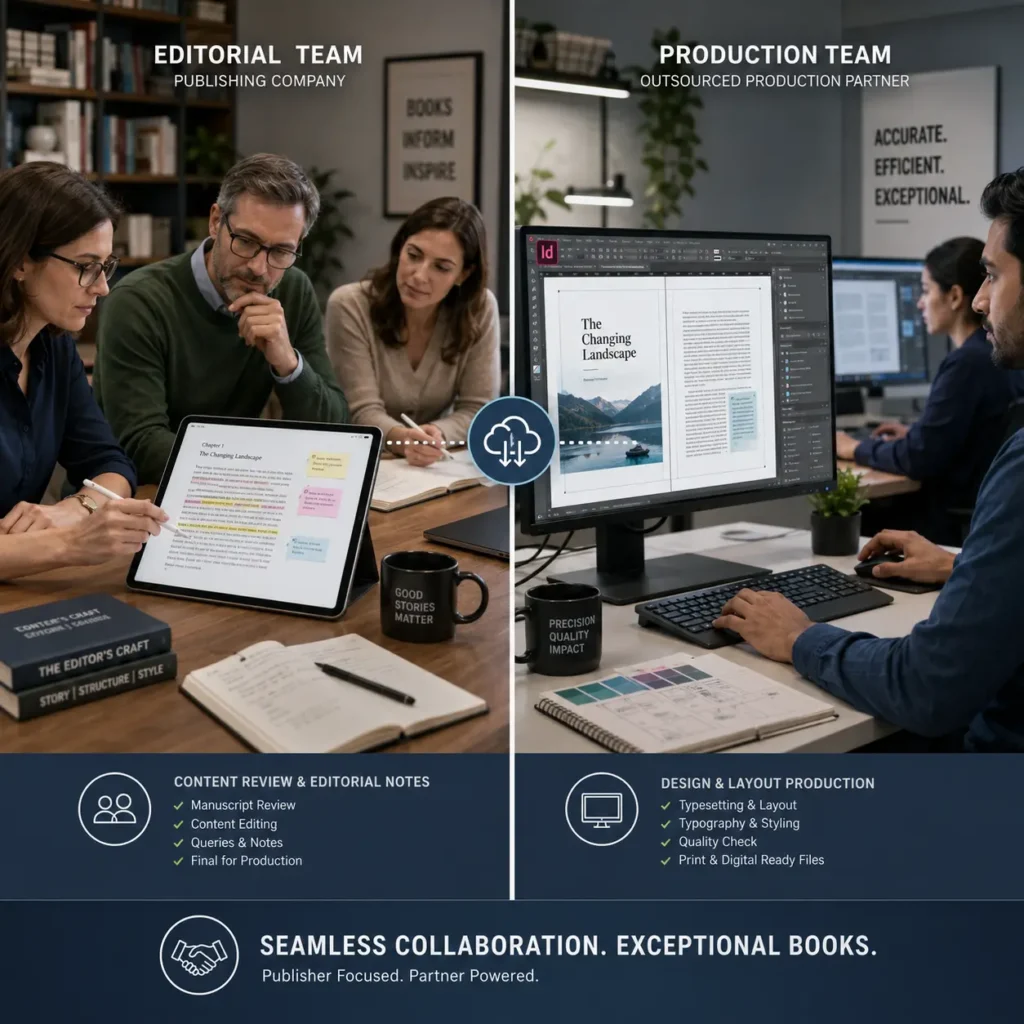
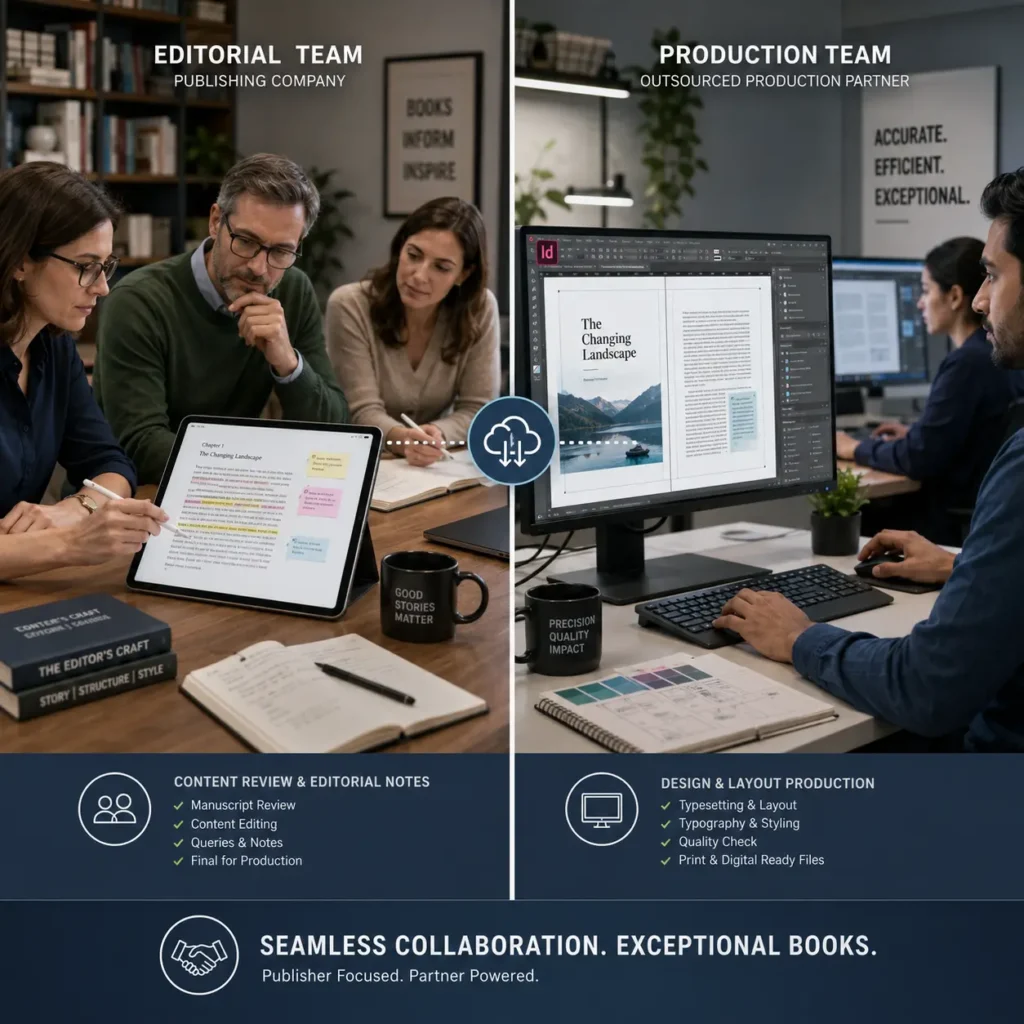
The editorial team focuses on curriculum accuracy, learning outcomes, and content review. At the same time, a dedicated production partner manages layout implementation, formatting, image integration, and publication preparation.

This division of responsibilities allows both teams to focus on their areas of expertise while helping the project move forward efficiently.

Beyond Cost Savings

Although outsourcing can help manage costs, many publishers view it as a strategic decision rather than a financial one.

The key benefits often include:

  • Access to specialized expertise
  • Scalable production capacity
  • Faster project execution
  • Consistent quality standards
  • Improved workflow efficiency
  • Reduced production bottlenecks

For organizations managing multiple educational programs, these advantages often have a greater impact than cost considerations alone.

The Future of Educational Content Production

As educational publishing continues to evolve, publishers are under increasing pressure to produce high-quality learning materials across multiple formats and delivery channels. Outsourcing InDesign-based learning content preparation allows organizations to access specialized production expertise while maintaining focus on curriculum development and educational strategy. For many global publishers, this approach provides the flexibility, consistency, and scalability needed to support modern learning content production.

Frequently Asked Questions​

Publishers often outsource production activities to gain access to specialized expertise, improve scalability, and manage large publishing projects more efficiently.

Textbooks, workbooks, teacher guides, assessments, instructor resources, training manuals, and digital learning materials are commonly prepared through outsourced production workflows.

Not necessarily. Many publishers maintain editorial control while outsourcing production activities to specialized teams that follow established quality standards and publishing guidelines.

InDesign supports structured page layouts, template-driven workflows, and large-document management, making it suitable for educational publishing projects.

Yes. Dedicated production teams can often provide additional capacity and streamlined workflows that help publishers meet demanding project schedules.
