
FAQs
Accessibility helps ensure that educational content can be used by a broader range of learners across different devices and learning environments.
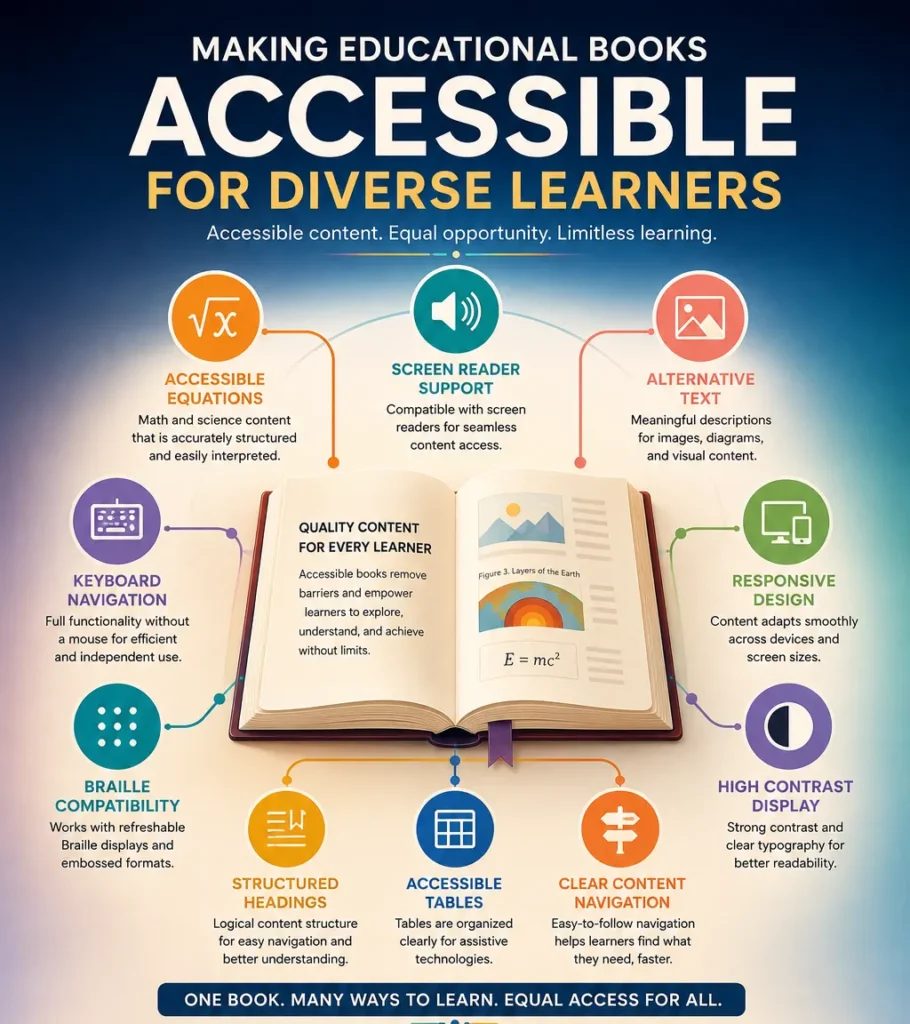
Accessible textbooks typically include structured content, clear navigation, usable visual content, responsive layouts, and compatibility with assistive technologies.
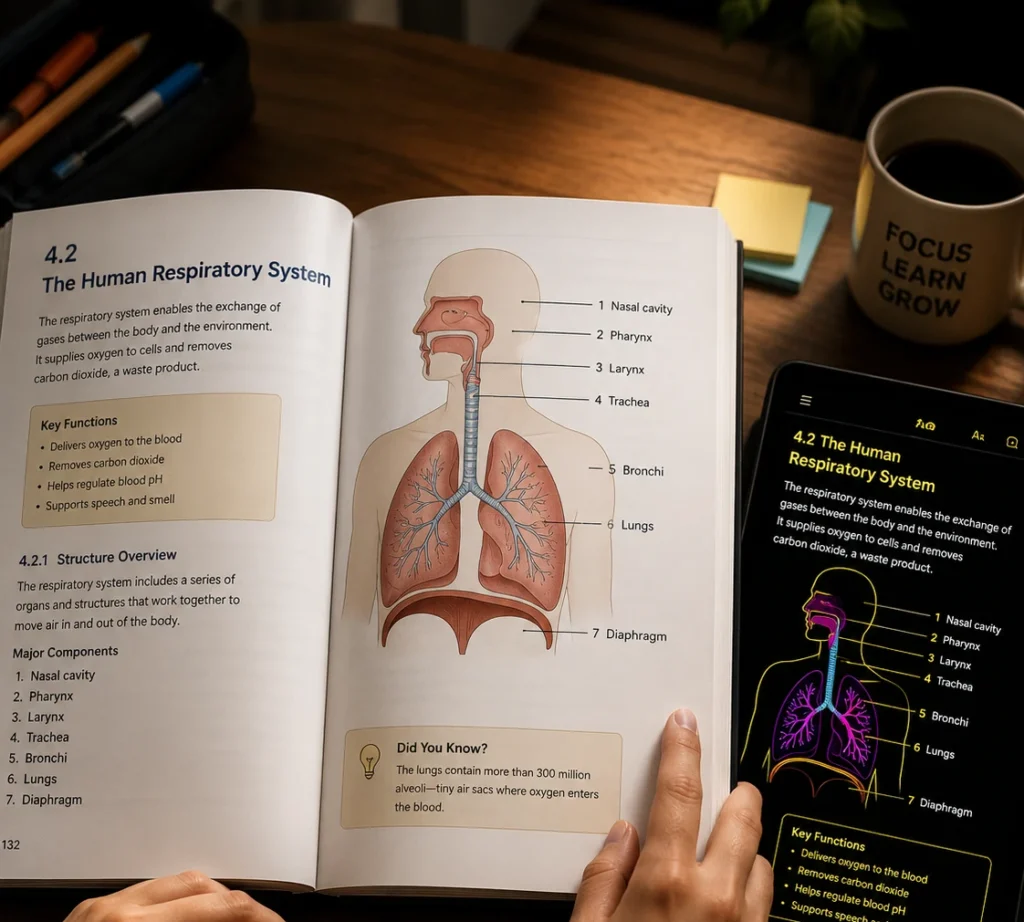
STEM content often includes equations, diagrams, tables, and technical notation that require specialized accessibility planning.
Responsive design allows content to adapt to different screen sizes and devices while maintaining readability and usability.
Publishers use quality assurance processes that review content structure, navigation, visual elements, responsiveness, and compatibility across formats and devices.
