How Multilingual DTP Services Support Global Engineering Documentation

Engineering Documents Require More Than Accurate Translation

Engineering documentation is expected to communicate technical information with precision. Whether it is an installation manual, maintenance guide, product specification, operating procedure, or technical drawing, every document must remain clear, consistent, and professionally formatted after localization. While accurate translation is essential, poorly formatted layouts, broken tables, misplaced diagrams, and inconsistent terminology can reduce the usability of technical documentation.

Multilingual DTP (Desktop Publishing) services help engineering organizations maintain document integrity by ensuring that translated content is accurately formatted and publication-ready for global distribution.

Why Engineering Documentation Needs Specialized DTP

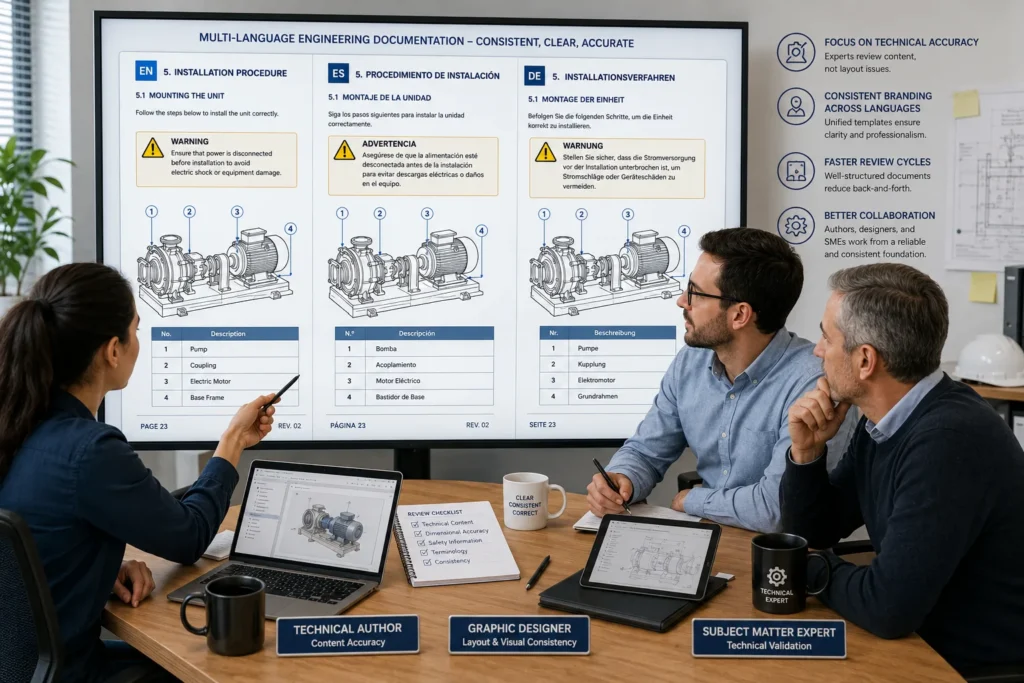
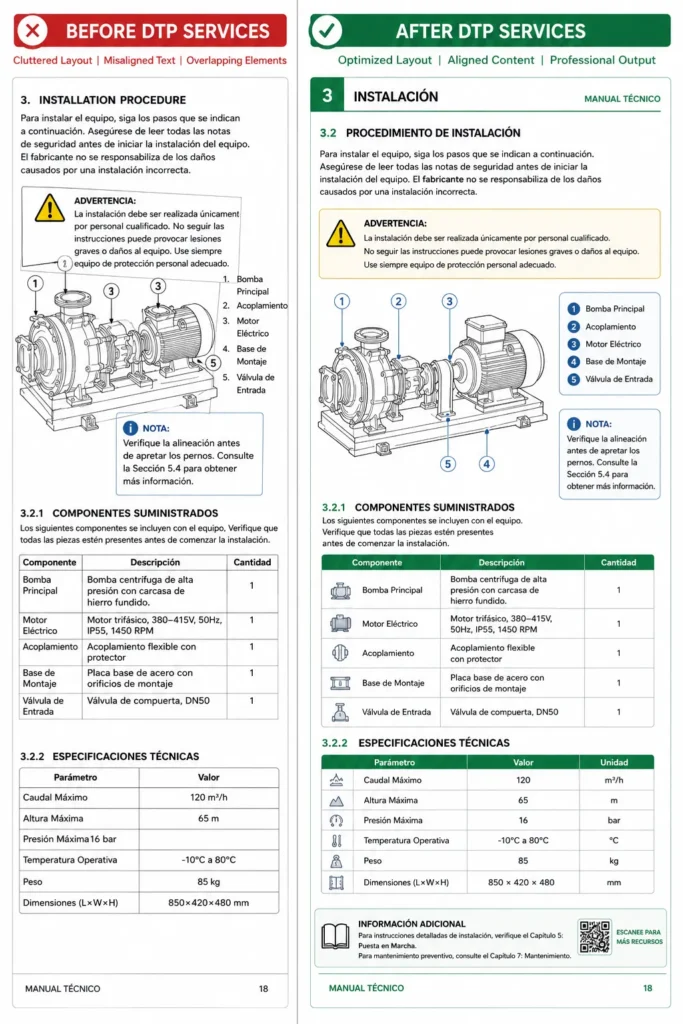
Engineering documents often contain complex layouts that combine technical text with diagrams, tables, illustrations, warnings, callouts, and cross-references. These elements must remain correctly aligned throughout the localization process.

Professional multilingual DTP helps organizations:

  • Preserve technical layouts
  • Maintain document consistency
  • Improve readability
  • Reduce production errors
  • Simplify document updates

A structured publishing workflow ensures that every localized document reflects the same quality and accuracy as the original version.

Key Components of Engineering DTP Services

Unlike general document formatting, engineering desktop publishing focuses on maintaining technical accuracy while adapting layouts for multilingual content.

Typical DTP activities include:

  • Layout refinement after translation
  • Technical table formatting
  • Diagram and illustration alignment
  • Typography adjustments
  • Callout and annotation positioning
  • Cross-reference verification
  • Page numbering updates
  • Final production quality checks

These tasks help ensure that technical information remains easy to interpret across every published edition.

Common Documentation Challenges

Engineering publications frequently contain highly structured content that becomes difficult to manage during localization without professional DTP support.

Common Challenge

How Multilingual DTP Helps

Expanded translated text

Optimizes page layouts and spacing

Complex technical tables

Maintains table alignment and readability

Engineering diagrams

Repositions labels and callouts accurately

Inconsistent formatting

Applies standardized styles throughout

Multiple document versions

Improves consistency and version control

Addressing these issues early reduces production delays and minimizes revision cycles.

Supporting Efficient Global Documentation

Engineering organizations often update documentation throughout a product’s lifecycle. A structured multilingual DTP workflow makes future revisions easier by maintaining standardized templates and formatting practices.

Benefits include:

  • Faster document revisions
  • Improved production consistency
  • Better collaboration between technical writers and designers
  • Reduced manual formatting
  • Simplified quality assurance
  • More efficient multilingual publishing

These advantages become increasingly valuable when managing extensive technical documentation across multiple products.

Improving Collaboration Across Technical Teams

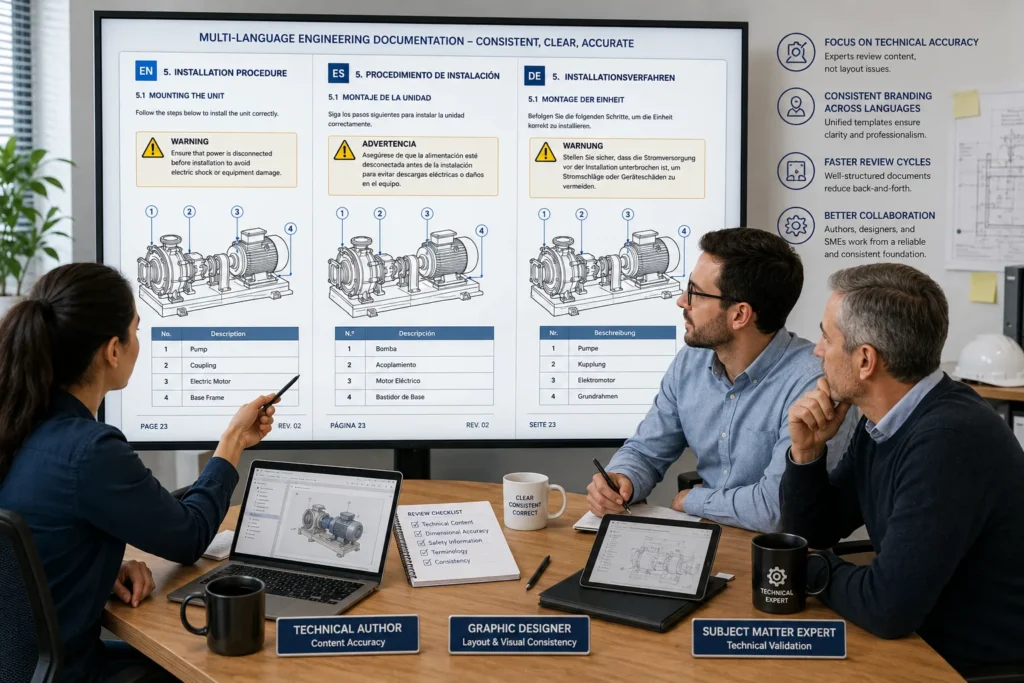
Engineering documentation typically involves technical authors, designers, reviewers, translators, subject matter experts, and production specialists. A standardized DTP process creates a consistent publishing environment that supports effective collaboration.

Well-organized document production helps teams:

  • Work from standardized templates
  • Reduce formatting inconsistencies
  • Improve document traceability
  • Simplify review and approval workflows
  • Maintain consistent branding across publications

A coordinated workflow allows reviewers to focus on technical accuracy rather than layout corrections.

Improving Collaboration Across Technical Teams

Engineering documentation typically involves technical authors, designers, reviewers, translators, subject matter experts, and production specialists. A standardized DTP process creates a consistent publishing environment that supports effective collaboration.

Well-organized document production helps teams:

  • Work from standardized templates
  • Reduce formatting inconsistencies
  • Improve document traceability
  • Simplify review and approval workflows
  • Maintain consistent branding across publications

A coordinated workflow allows reviewers to focus on technical accuracy rather than layout corrections.

A Practical Engineering Documentation Scenario

A manufacturing company is preparing installation manuals, equipment maintenance guides, wiring diagrams, and safety instructions for international customers. After translation, each publication requires adjustments to technical tables, engineering illustrations, warning boxes, and page layouts while preserving the original design standards.

Using multilingual DTP services, the production team applies standardized formatting, verifies technical diagrams, updates cross-references, and performs detailed quality checks before publication. The resulting documents remain visually consistent, technically accurate, and easier for end users to follow, reducing production effort during every release cycle.

Delivering Consistent Engineering Publications Worldwide

Engineering documentation must communicate technical information clearly, regardless of where it is published. Multilingual DTP services provide the structured production support needed to maintain formatting accuracy, technical consistency, and document quality throughout the localization process. By integrating professional desktop publishing into engineering documentation workflows, organizations can reduce production effort, streamline updates, and deliver reliable multilingual technical publications for global audiences.

FAQs

They involve formatting, layout optimization, diagram positioning, typography management, and quality assurance to prepare translated engineering documents for professional publication.

Engineering documents contain technical layouts, diagrams, tables, and structured information that must remain accurate and readable after localization.

Installation manuals, maintenance guides, technical specifications, operating instructions, product catalogs, equipment documentation, safety manuals, and engineering reports all benefit from multilingual DTP services.

They preserve formatting consistency, improve readability, reduce production errors, and ensure technical information is presented accurately across all localized documents.

By using standardized templates, organized layouts, and consistent formatting practices, multilingual DTP simplifies future revisions, version management, and the publication of updated engineering documentation.