Future-Proofing Educational Content for Emerging Learning Platforms

Educational publishers are facing a challenge that extends beyond creating high-quality content. Learning platforms continue to evolve rapidly, with new delivery models, digital ecosystems, and learner expectations emerging every year. Content created for today’s platform may need to function across entirely different technologies tomorrow.

For publishers, the question is no longer simply how to produce educational materials. The more important question is how to ensure those materials remain usable, adaptable, and valuable as learning platforms continue to change.

Future-proofing educational content helps publishers protect content investments while supporting long-term digital publishing strategies.

Why Platform Dependency Creates Risk

Many educational resources are developed around the technical requirements of a specific platform.

While this may solve immediate distribution needs, it can create long-term challenges when:

  • Learning technologies evolve
  • Platforms are replaced
  • New delivery channels emerge
  • Accessibility requirements change
  • Educational standards are updated

When new systems are implemented, content that is closely linked to a single platform frequently needs to be completely redeveloped.

This raises expenses and makes it more difficult to adjust to shifting market needs.

The Shift Toward Platform-Agnostic Content

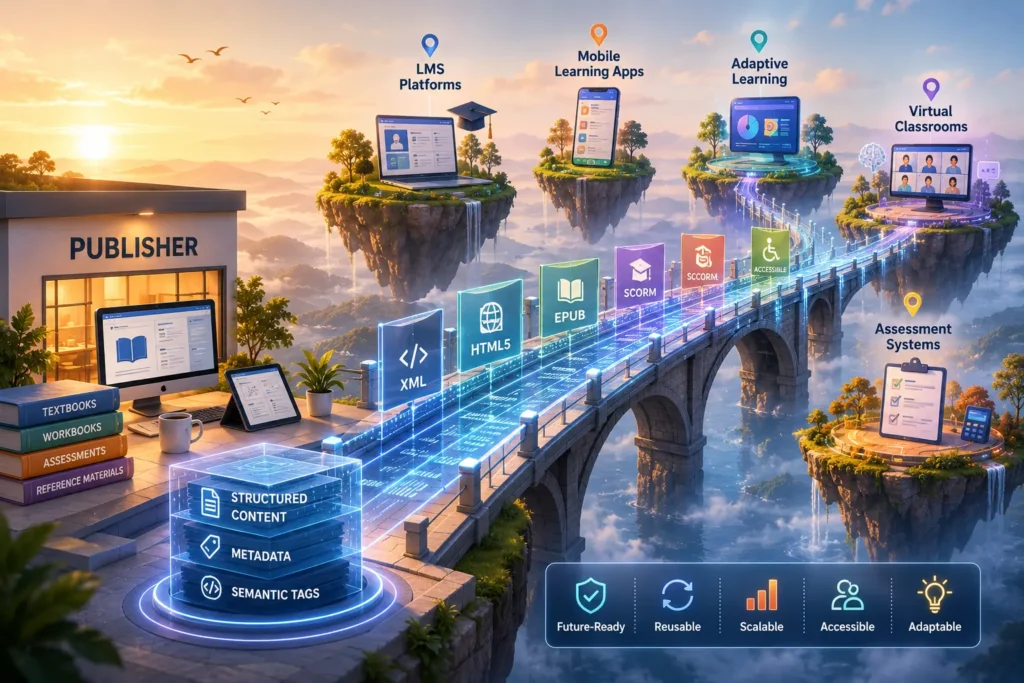
Future-ready publishers increasingly focus on creating platform-agnostic content.

Platform-agnostic content is designed to function across multiple environments without requiring significant redevelopment.

This approach supports:

  • Digital textbooks
  • Learning management systems
  • Mobile learning applications
  • Assessment platforms
  • Online learning portals
  • Future educational technologies

Rather than building content around a single delivery channel, publishers create flexible content assets that can serve multiple purposes.

Building Content Around Structured Architecture

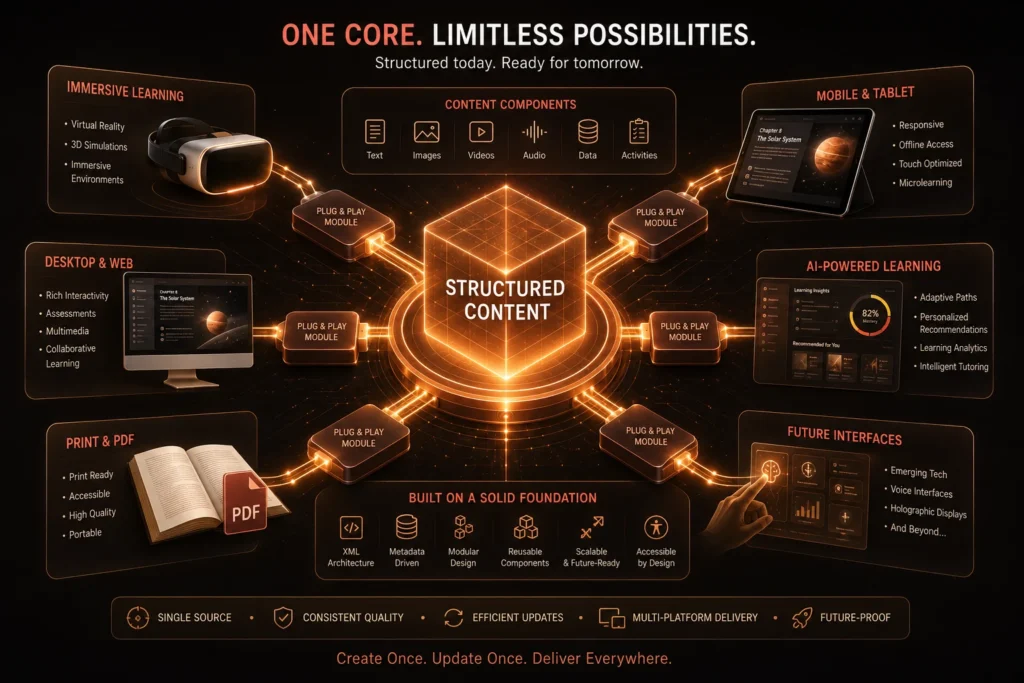
One of the most crucial pillars of publishing that is future-proof is a solid content structure.

Structured content organizes educational components such as:

  • Learning objectives
  • Chapters
  • Assessments
  • Figures
  • Tables
  • References
  • Glossaries

When educational content is structured properly, it becomes easier to:

  • Reuse content
  • Update content
  • Generate multiple outputs
  • Support accessibility
  • Integrate with emerging systems

This structured approach helps publishers respond more efficiently to technological changes.

Supporting Multiple Learning Experiences

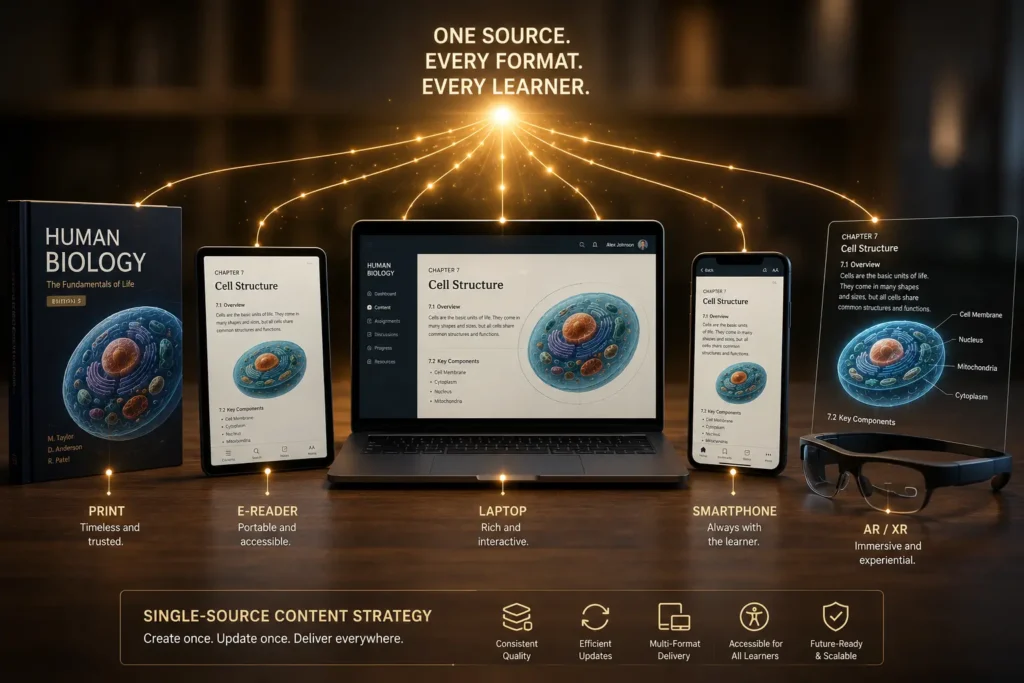
Modern learners interact with educational content in many different ways.

Some may use:

  • Desktop computers
  • Tablets
  • Smartphones
  • Digital classrooms
  • Hybrid learning environments
  • Self-paced learning platforms

Future-proof content should support these experiences without requiring separate content development efforts.

Traditional Publishing Approach

Future-Ready Publishing Approach

Platform-specific content

Platform-independent content

Multiple content versions

Single-source content strategy

Manual format updates

Automated multi-format outputs

Limited scalability

Flexible content reuse

Higher maintenance effort

Long-term content adaptability

This flexibility becomes increasingly valuable as educational technologies diversify.

Accessibility As A Long-Term Requirement

Accessibility is becoming an essential component of future publishing strategies.

Emerging learning platforms increasingly expect content to support:

  • Screen readers
  • Keyboard navigation
  • Adjustable display settings
  • Semantic content structures
  • Assistive technologies

Publishers that incorporate accessibility from the beginning are often better prepared to distribute content across future learning environments.

Accessibility improvements also contribute to improved usability for a broader range of learners.

Preparing Content For Continuous Updates

Educational content rarely remains static.

Publishers frequently update materials due to:

  • Curriculum revisions
  • Academic research developments
  • Policy changes
  • Assessment updates
  • Learner feedback

Future-proof content workflows simplify these revisions by maintaining a central content source.

Instead of updating multiple versions separately, publishers can make changes once and distribute updates across multiple outputs.

This approach improves efficiency while reducing maintenance complexity.

Integrating With Emerging Educational Technologies

New educational technologies continue to expand the possibilities of digital learning.

These may include:

  • Adaptive learning systems
  • Personalized learning environments
  • Learning analytics platforms
  • Interactive assessment systems
  • AI-assisted educational tools
  • Immersive learning experiences

While publishers cannot predict every future technology, they can prepare content to integrate more easily with evolving platforms.

Future innovation is strengthened by flexible content architecture.

The Importance Of Metadata And Discoverability

As content libraries grow, discoverability becomes increasingly important.

Well-structured metadata helps educational content:

  • Appear in search systems
  • Support content recommendations
  • Improve resource organization
  • Enable content filtering
  • Facilitate learning analytics

Metadata improves learning experiences and content management.

Publishers that invest in structured metadata today are often better positioned to support future platform capabilities.

Practical Publishing Scenario

A publisher creates secondary education science resources for print and digital distribution. Initially, the materials are delivered through a single online learning platform.

Over time, schools begin requesting mobile learning access, assessment integration, accessible digital formats, and compatibility with additional learning systems. Because the publisher developed content using structured workflows and reusable content architecture, new outputs can be generated without rebuilding the entire product.

The publisher responds to changing market demands more efficiently while preserving content consistency across all delivery channels.

Building Content That Evolves With Education

Educational technologies will continue to change, but the need for adaptable, high-quality learning content will remain constant. Publishers that invest in structured, reusable, and accessible content workflows are better positioned to support emerging learning platforms without repeatedly rebuilding content assets. Future-proofing is ultimately about creating educational resources that remain valuable, relevant, and ready for whatever learning environments come next.

FAQ

Future-proofing involves creating content that can adapt to new technologies, platforms, and educational requirements without extensive redevelopment.

Platform-independent content provides greater flexibility and reduces the risk of content becoming tied to outdated technologies

Structured content improves content reuse, accessibility, update management, and multi-platform distribution.

Accessibility helps ensure content remains usable across diverse technologies, learning environments, and learner needs.

Publishers can focus on flexible content architecture, structured workflows, metadata management, and reusable content strategies that support adaptation to future platforms