Educational Publishing Trends Shaping the Industry in 2026

Educational publishers are entering 2026 with a significantly different operating environment than they faced just a few years ago. The demand for digital learning resources continues to grow, accessibility expectations are increasing, and institutions are seeking content that can be delivered across multiple platforms and learning environments. At the same time, publishers must manage production efficiency, content quality, and evolving learner expectations.

These changes are influencing not only what publishers create but also how educational content is developed, managed, and distributed. Understanding the major trends shaping the industry can help publishers make informed decisions about future investments and publishing strategies.

Structured Content Is Becoming A Strategic Asset

Publishers are moving away from format-specific production models toward structured content approaches.

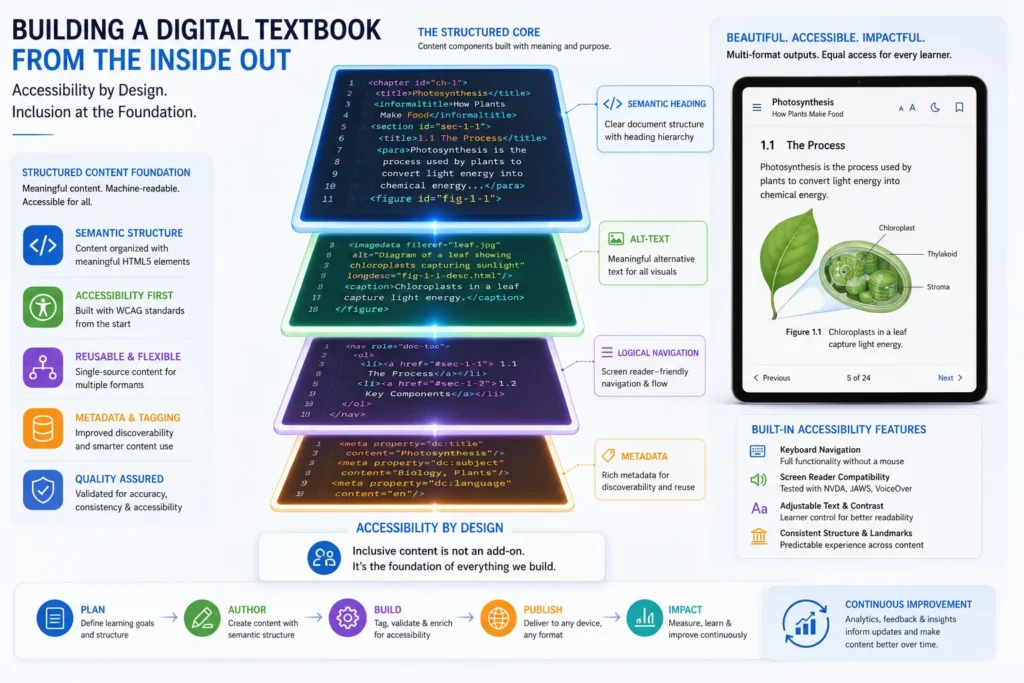
Structured content allows educational materials to be managed as reusable components rather than static pages.

Benefits include:

  • Content reuse across products
  • Faster updates
  • Improved version control
  • Multi-format publishing
  • Greater scalability

Content structured through XML-based workflows and metadata-driven systems is becoming increasingly important for publishers managing large content portfolios.

Digital-First Publishing Continues To Expand

While print remains important in many educational markets, digital delivery has become a central component of publishing strategies.

Educational institutions increasingly expect:

  • Digital textbooks
  • Interactive learning resources
  • Online assessments
  • Mobile-friendly content
  • Learning platform integration

As a result, many publishers are designing products for digital delivery from the beginning rather than adapting print materials later in the process.

Digital-first workflows often improve flexibility and support faster content updates.

Accessibility Is Moving Beyond Compliance

Accessibility is no longer viewed solely as a regulatory requirement.

Many institutions now consider accessibility an essential component of content quality and learner experience.

Publishers are investing in:

  • Semantic content structures
  • Accessible EPUB production
  • Alternative text management
  • Logical navigation systems
  • Accessibility quality assurance

Organizations that incorporate accessibility early in content development often reduce remediation costs while improving content usability for a broader audience.

Compare Traditional Publishing And Emerging Publishing Models

Several industry shifts are changing how educational content is produced and delivered.

Traditional Publishing Model

Emerging Publishing Model

Print-focused workflows

Digital-first workflows

Format-specific production

Structured content workflows

Periodic updates

Continuous content improvement

Accessibility after production

Accessibility by design

Separate content repositories

Centralized content management

These changes are helping publishers improve efficiency while supporting evolving learner needs.

Increased Demand For Multi-Platform Content Delivery

Learners now access educational content through multiple devices and environments.

Common delivery channels include:

  • Learning management systems
  • Web-based learning portals
  • Tablets
  • Smartphones
  • eReaders
  • Classroom technology platforms

Publishers are increasingly creating content that can move seamlessly across these environments.

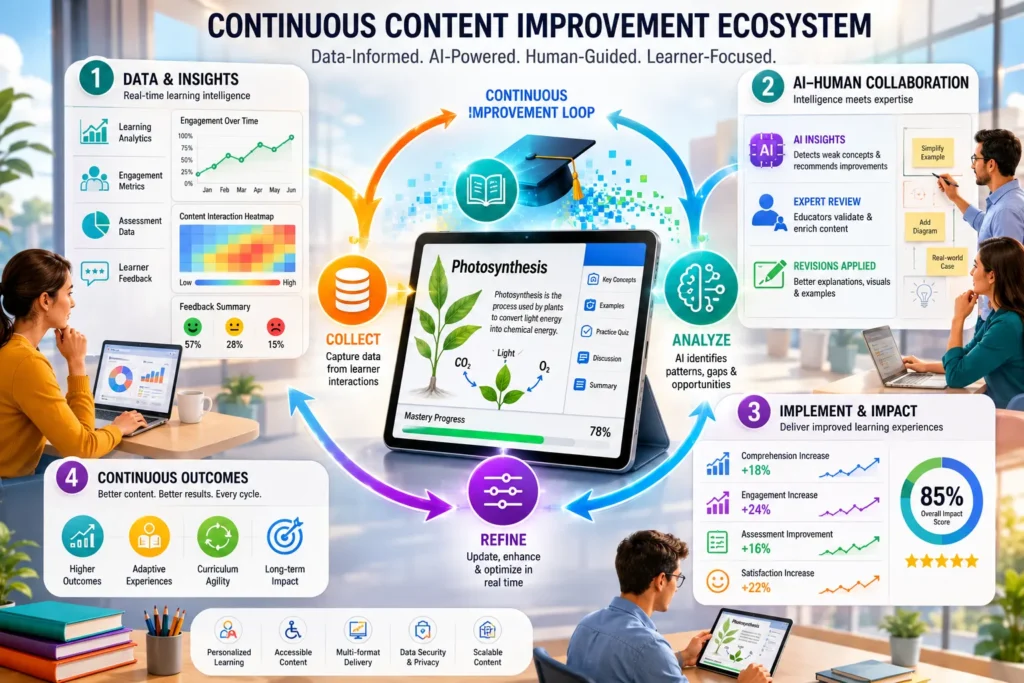
Single-source publishing strategies are helping organizations support multiple outputs without maintaining separate content versions.

Data-Driven Publishing Decisions Are Growing

Educational publishers are placing greater emphasis on data when evaluating content performance.

Analytics can provide insights into:

  • Learner engagement
  • Content usage patterns
  • Assessment performance
  • Resource effectiveness
  • Product adoption trends

These insights help publishers identify opportunities for content improvement and support more informed product development decisions.

As educational ecosystems become more digital, data-driven decision-making is expected to play a larger role in publishing operations.

Content Lifecycle Management Is Gaining Importance

Educational content requires ongoing maintenance rather than one-time publication.

Publishers must manage:

  • Curriculum revisions
  • Standards updates
  • Content corrections
  • Accessibility improvements
  • Digital platform compatibility

Effective content lifecycle management allows publishers to maintain content relevance while reducing production inefficiencies.

Organizations are increasingly adopting workflows that support continuous content updates rather than large-scale revision cycles.

Specialized Production Partnerships Continue To Grow

Many publishers are expanding their use of specialized production partners to support growing content demands.

Frequently outsourced activities include:

  • Typesetting
  • EPUB production
  • XML conversion
  • Accessibility preparation
  • Digital content formatting
  • Quality assurance support

This approach provides access to specialized expertise while allowing publishers to focus internal resources on editorial strategy and product development.

Scalability remains one of the primary reasons publishers pursue external production support.

Artificial Intelligence Is Supporting Publishing Workflows

Artificial intelligence is beginning to influence several areas of educational publishing.

Current applications include:

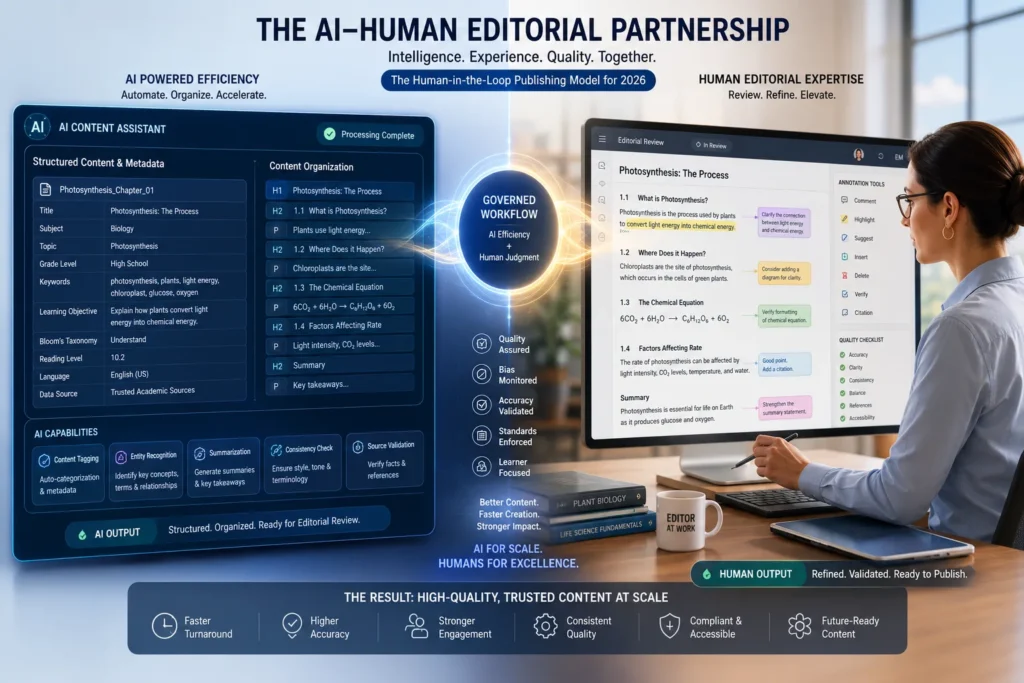
  • Content classification
  • Metadata generation
  • Workflow automation
  • Quality review assistance
  • Content discovery support

While human expertise remains essential for editorial quality and instructional accuracy, AI-assisted workflows may help publishers improve operational efficiency and manage growing content volumes.

The focus in 2026 is likely to remain on practical workflow support rather than fully automated content creation.

Practical Publishing Scenario

A publisher managing K–12 educational resources supports print products, digital textbooks, online assessments, and institutional learning platforms. To meet growing content demands, the organization adopts structured content workflows, integrates accessibility requirements earlier in production, expands digital-first development practices, and uses analytics to evaluate content performance.

Preparing For The Next Stage Of Educational Publishing

The educational publishing industry in 2026 is being shaped by digital-first strategies, structured content management, accessibility integration, data-driven decision-making, and flexible production models. Publishers that adapt to these developments are likely to improve efficiency, strengthen content quality, and better support evolving learning environments. Rather than focusing on individual technologies, successful organizations are building adaptable publishing ecosystems that can respond to future educational needs and market changes.

FAQ

Digital-first publishing combined with structured content management is one of the most significant trends influencing educational publishing operations.

Structured content supports content reuse, faster updates, multi-format publishing, and improved scalability.

Accessibility is increasingly viewed as a quality requirement that improves usability, learner access, and institutional adoption.

Learners use a wide range of devices and learning systems, making flexible content delivery essential for modern educational products.

AI is primarily supporting workflow efficiency through metadata generation, content organization, automation assistance, and publishing process optimization.
