Best Practices for Chemistry, Physics, and Biology Textbook Layouts

Why STEM Textbook Layouts Require More Than Good Design

A science textbook is successful only when students can easily understand complex information. In chemistry, a misplaced bond label can change the interpretation of a molecular structure. In physics, poorly aligned equations can make problem-solving difficult. In biology, overcrowded diagrams can reduce comprehension of essential processes.

For publishers, creating effective STEM textbooks requires a careful balance between scientific accuracy, visual clarity, and learner engagement. Well-structured layouts help students focus on concepts rather than struggle with presentation issues.

STEM Textbook Layouts
Designing for Scientific Readability

Science textbooks contain significantly more visual and technical content than many other educational publications.

Common layout elements include:

  • Equations and formulas
  • Scientific diagrams
  • Charts and graphs
  • Tables
  • Illustrations
  • Cross-references
  • Step-by-step explanations

Every element should support learning while maintaining consistency throughout the publication.

Key Layout Objectives

A strong STEM textbook layout should:

  • Improve comprehension
  • Reduce visual clutter
  • Support logical progression
  • Maintain consistency
  • Enhance accessibility
  • Simplify navigation

These principles apply across chemistry, physics, and biology content.

Best Practices for Chemistry Textbook Layouts

Chemistry publications rely heavily on visual precision.

Prioritize Chemical Structure Clarity

Chemical structures should:

  • Maintain consistent bond thickness
  • Use standardized notation
  • Preserve spacing around labels
  • Avoid overlapping annotations

Students often depend on visual distinctions between compounds, making clarity essential.

Separate Equations from Explanatory Text

Chemical equations should stand apart from surrounding content.

Benefits include:

  • Faster recognition
  • Improved readability
  • Easier review during assessments
  • Better page organization
Use Color Strategically

Color can help distinguish:

  • Elements
  • Reaction pathways
  • Molecular groups
  • Experimental results

However, excessive color usage can create distractions rather than improve understanding.

STEM Textbook Layouts
Best Practices for Physics Textbook Layouts

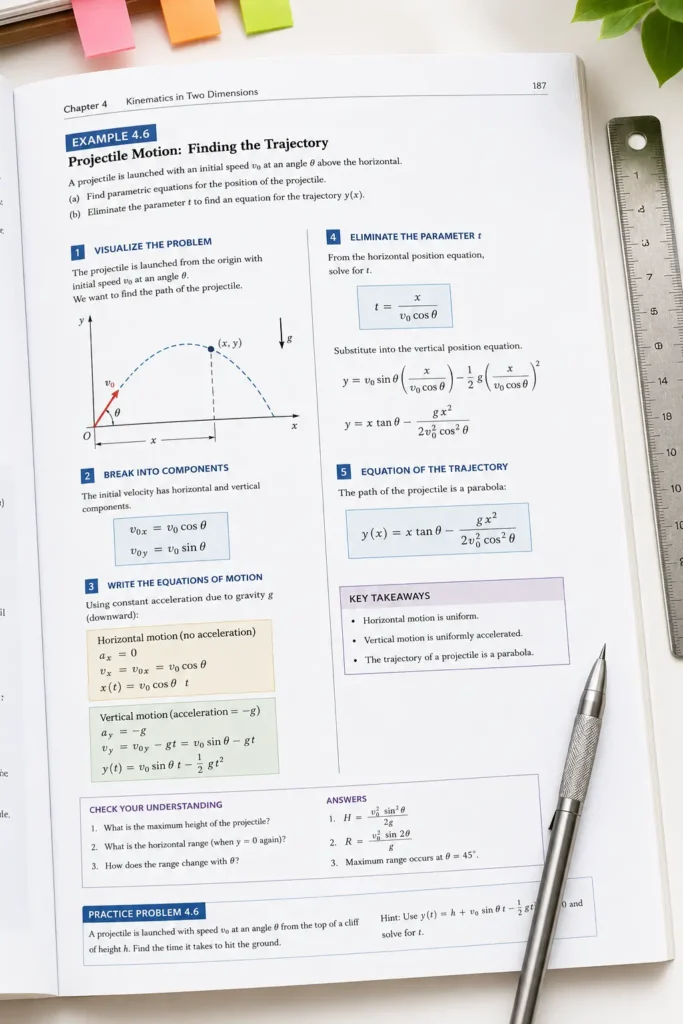
Physics content combines mathematics, diagrams, and conceptual explanations.

Maintain Consistent Equation Formatting

Physics textbooks frequently contain:

  • Vector notation
  • Calculus expressions
  • Matrices
  • Multi-line derivations

Throughout the book, equations should adhere to the same formatting guidelines.

Position Diagrams Close to Related Content

Students should not need to search multiple pages for supporting figures.

Keep:

  • Circuit diagrams
  • Force diagrams
  • Motion illustrations
  • Graphs

as close as possible to their corresponding explanations.

Create Visual Hierarchies

Physics concepts often build upon previous information.

Use:

  • Clearly defined headings
  • Numbered examples
  • Highlighted formulas
  • Structured callout boxes

to guide readers through increasingly complex topics.

Best Practices for Biology Textbook Layouts

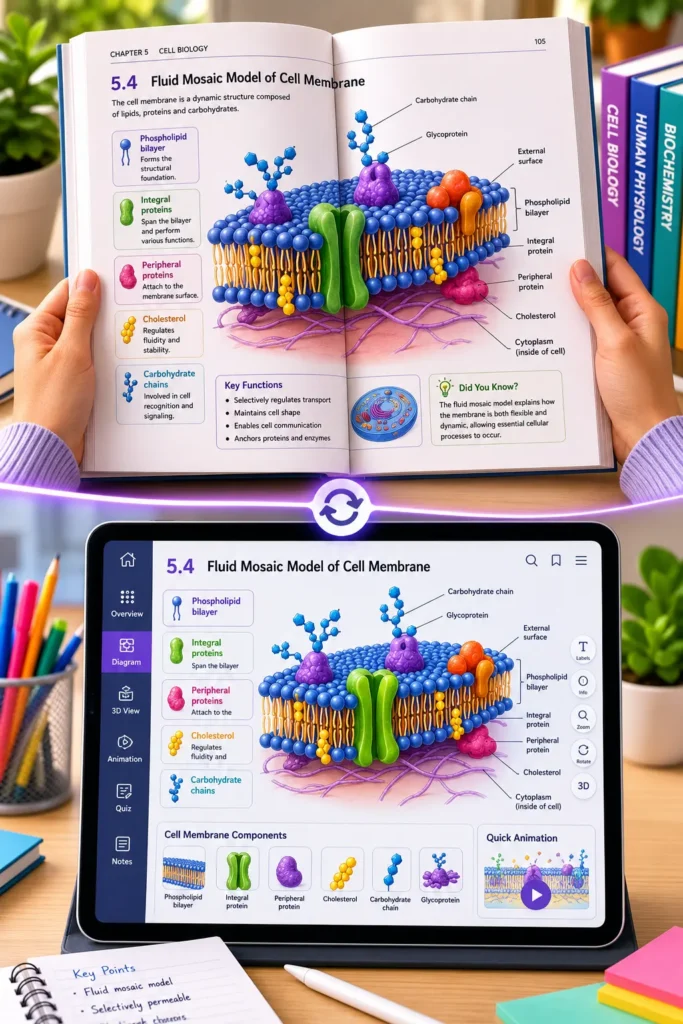
Biology textbooks often contain the largest volume of visual content.

Simplify Complex Illustrations

Biological diagrams may include:

  • Cells
  • Organs
  • Ecosystems
  • Molecular processes
  • Anatomical structures

Overloaded illustrations can overwhelm students.

Effective layouts focus attention on the most important learning points while minimizing unnecessary visual complexity.

Use Consistent Labeling Systems

Biology content frequently includes hundreds of figure labels.

Standardizing:

  • Font styles
  • Leader lines
  • Callouts
  • Captions

improves navigation and comprehension.

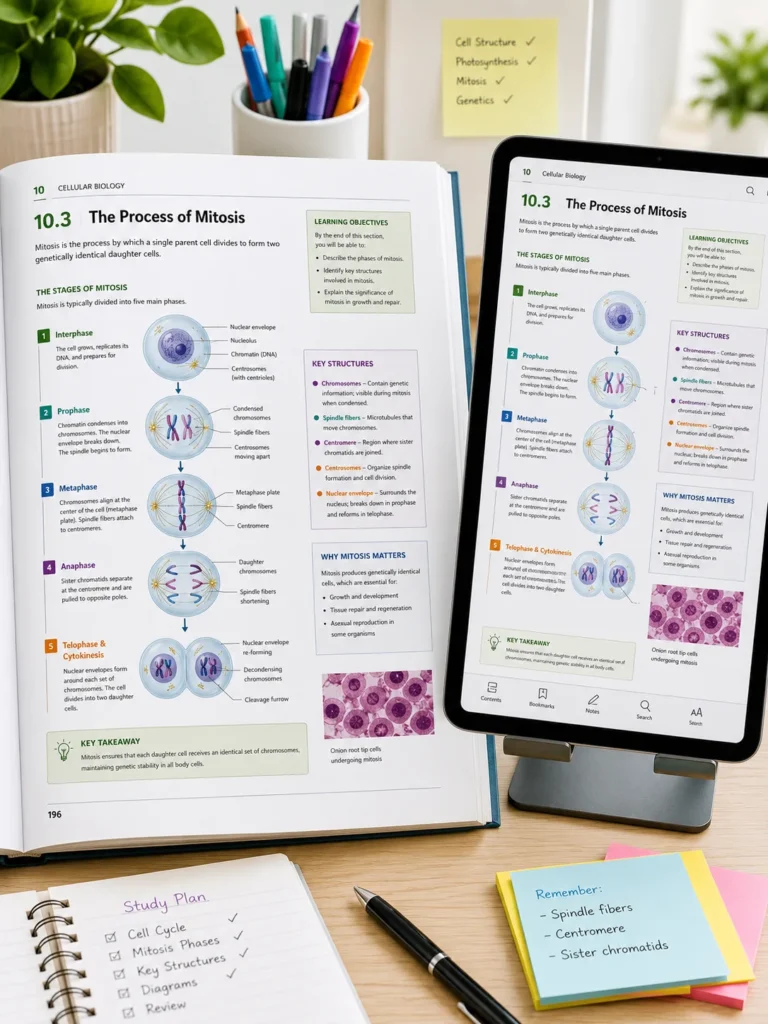
Support Sequential Learning

Many biological processes occur in stages.

Examples include:

  • Cell division
  • Protein synthesis
  • Photosynthesis
  • Developmental cycles

Layouts should visually reinforce these sequences using structured diagrams and step-based presentation.

Compare Effective and Ineffective STEM Layout Approaches

Less Effective Layout

Effective STEM Layout

Dense blocks of content

Clear content hierarchy

Distant figure placement

Figures near explanations

Inconsistent notation

Standardized formatting

Crowded diagrams

Simplified visual presentation

Excessive color usage

Purposeful color coding

Manual numbering systems

Structured reference systems

Small layout decisions can significantly affect student understanding.

Ensuring Consistency Across Print and Digital Formats

Modern educational publishers often deliver content through multiple channels.

These may include:

  • Printed textbooks
  • eBooks
  • Digital learning platforms
  • Interactive learning systems

A structured publishing workflow helps ensure:

  • Consistent typography
  • Accurate figure placement
  • Reliable equation rendering
  • Uniform navigation

Students should encounter the same content quality regardless of the format they use.

STEM Textbook Layouts
A Practical Publishing Scenario

Consider a publisher producing a first-year university science series covering chemistry, physics, and biology.

The project includes:

  • Thousands of equations
  • Hundreds of scientific illustrations
  • Multiple print and digital outputs
  • Annual content updates

By establishing standardized layout guidelines before production begins, the publisher can maintain consistency across all subjects while reducing revision cycles and quality-control issues.

This approach improves efficiency and creates a more effective learning experience for students.

Building Better STEM Learning Experiences

Chemistry, physics, and biology textbooks are designed to communicate complex ideas clearly. Effective layouts help students focus on scientific concepts rather than struggle with formatting inconsistencies or confusing page structures.

Publishers that prioritize visual clarity, consistent formatting, structured navigation, and multi-format compatibility can create STEM textbooks that improve comprehension, support educational outcomes, and remain effective across both print and digital learning environments.

FAQ

A well-designed layout improves comprehension, readability, and navigation while helping students understand complex scientific concepts more effectively.

Chemistry textbooks require precise presentation of chemical structures, reaction equations, laboratory data, and molecular diagrams.

Physics equations should follow consistent alignment, numbering, spacing, and notation standards throughout the publication.

Biology concepts often involve complex structures and processes that are easier to understand through diagrams, illustrations, and visual sequences.

Publishers can establish standardized layout guidelines, typography systems, figure styles, and structured production workflows that apply across chemistry, physics, and biology content.