Digital Publishing & Accessibility

Making Educational Content Reach Every Learner

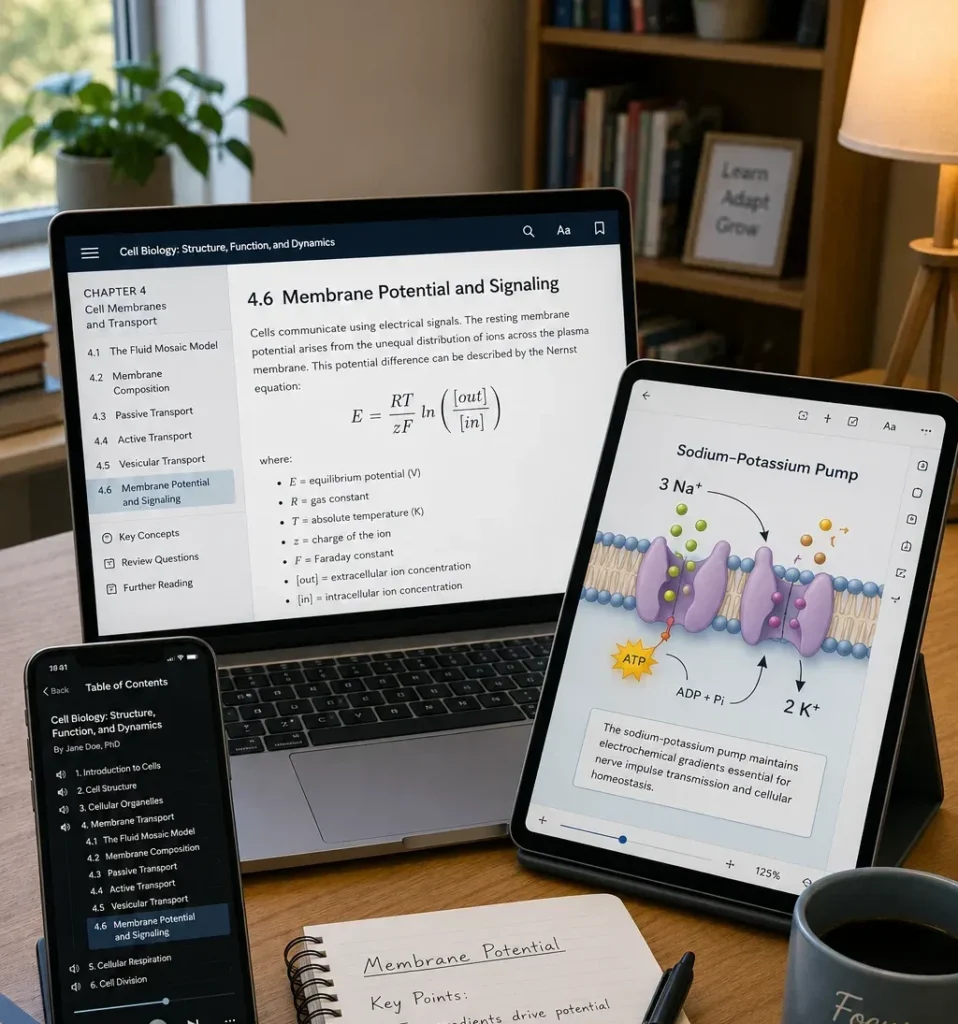
A university student may read a textbook on a laptop, review diagrams on a tablet, and complete assignments on a smartphone. Another learner may depend on screen readers, adjustable text sizes, or keyboard navigation to access the same material. As educational content moves beyond traditional print formats, publishers face a growing responsibility to ensure information remains accessible to all users.

Digital publishing and accessibility are closely connected. Effective digital publishing is no longer just about delivering content online—it is about ensuring that every learner can access, navigate, and understand educational resources regardless of device, location, or accessibility needs.

The Shift From Print-Centric Publishing To Accessible Digital Content

Educational publishing has evolved significantly over the past decade.

Today’s learning resources commonly include:

  • eBooks
  • Digital courseware
  • Learning management systems
  • Mobile learning applications
  • Online assessments
  • Interactive educational platforms

This shift creates new opportunities for learning, but it also requires publishers to think carefully about accessibility from the beginning of the production process.

Content designed only for visual presentation may create barriers for many learners.

Designing Content For Multiple Devices

Modern learners rarely rely on a single device.

Educational content may be viewed on:

  • Desktop computers
  • Tablets
  • Smartphones
  • eReaders
  • Learning platforms

Digital publishing workflows must ensure that content remains readable and functional across all screen sizes.

Important considerations include:

  • Responsive layouts
  • Flexible typography
  • Readable tables
  • Scalable graphics
  • Consistent navigation

These features help maintain a positive learning experience regardless of how content is accessed.

Digital publishing accessibility

What Accessibility Means In Digital Publishing

Accessibility focuses on making content usable for the widest possible audience.

In educational publishing, this often involves ensuring that learners can:

  • Navigate content efficiently
  • Access information using assistive technologies
  • Understand visual and textual content
  • Use materials across multiple devices

Accessibility is particularly important for STEM publications because they frequently contain complex elements such as equations, tables, diagrams, and scientific illustrations.

Key Accessibility Objectives

Accessibility Goal

Publishing Benefit

Easier navigation

Improved user experience

Device compatibility

Wider content reach

Assistive technology support

Inclusive learning

Clear content structure

Better comprehension

Consistent formatting

Reduced user confusion

Digital publishing accessibility

Creating Accessible Scientific And Technical Content

Scientific and technical publications introduce additional complexity.

Publishers must manage:

  • Mathematical equations
  • Chemical structures
  • Engineering diagrams
  • Scientific tables
  • Statistical charts

Accessibility planning should begin during content development rather than after publication.

Important Accessibility Elements

Publishers often focus on:

  • Logical heading structures
  • Alternative descriptions for figures
  • Consistent labeling
  • Clear navigation paths
  • Proper table organization

These practices help learners interact with technical content more effectively.

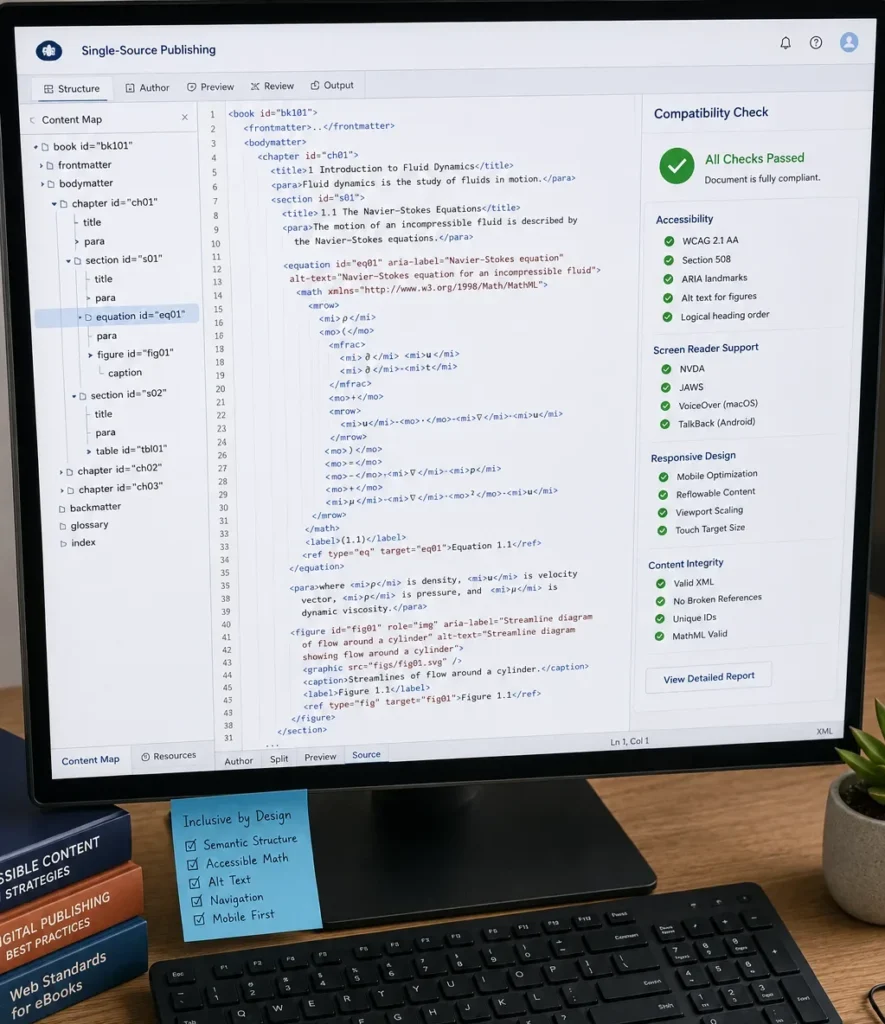
Why Structured Content Supports Accessibility

Structured content plays an important role in digital publishing.

When content follows consistent organizational rules, it becomes easier to:

  • Generate multiple formats
  • Maintain accessibility standards
  • Update content efficiently
  • Support assistive technologies

A structured workflow also simplifies future revisions and content maintenance.

Compare Traditional And Structured Publishing Approaches

Traditional Workflow

Structured Workflow

Separate content versions

Single-source publishing

Manual updates

Centralized content management

Greater inconsistency risk

Improved consistency

Higher maintenance effort

Easier content maintenance

Limited scalability

Better multi-format publishing

Structured publishing supports both operational efficiency and accessibility goals.

Improving Navigation For Digital Learners

Navigation is often overlooked during content development.

However, effective navigation helps learners quickly locate:

  • Chapters
  • Sections
  • Figures
  • Tables
  • Equations
  • References

Accessible navigation improves usability for all learners while providing additional benefits for users of assistive technologies.

Publishers increasingly prioritize intuitive content structures that reduce search time and improve engagement.

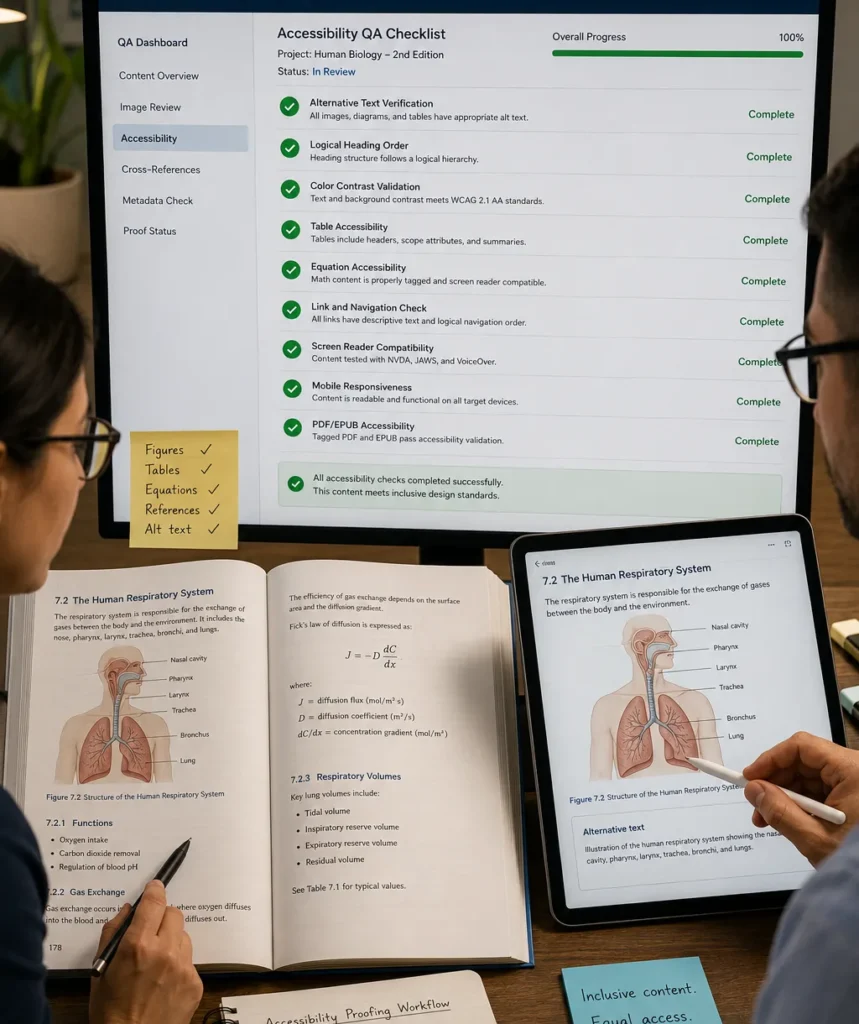
Accessibility And Quality Assurance

Accessibility should be included within quality-control workflows.

Review teams commonly verify:

  • Layout stability
  • Navigation functionality
  • Cross-references
  • Responsive formatting
  • Content hierarchy
  • Consistent labeling

Quality assurance helps ensure accessibility requirements remain intact throughout production and distribution.

Typical Validation Checklist

  • Content structure verification
  • Device compatibility testing
  • Reference validation
  • Navigation review
  • Figure accessibility checks
  • Responsive layout testing
  • Multi-format consistency review

These checks help identify issues before publication.

Digital publishing accessibility

A Practical Educational Publishing Scenario

Consider a publisher producing a digital biology course for higher education.

The project includes:

  • Interactive diagrams
  • Scientific illustrations
  • Assessment modules
  • eBook distribution
  • Mobile access

Without accessibility planning, some learners may struggle to navigate content or access critical information.

By incorporating accessibility requirements during development, the publisher can create resources that remain usable across devices while supporting a wider range of learning needs.

Building Inclusive Learning Experiences

Digital publishing has expanded the reach of educational content, but accessibility determines how effectively that content serves learners. Publishers that combine structured workflows, responsive design, and accessibility-focused quality assurance can create educational resources that are easier to navigate, maintain, and distribute.

As digital learning continues to grow, accessibility will remain a key factor in delivering high-quality educational experiences that support every learner across print-inspired and fully digital environments.

FAQs

Accessibility involves designing digital content so it can be used by people with different abilities, devices, and learning requirements.

It helps ensure that educational resources can be accessed and understood by a broader range of learners.

Structured content supports consistent organization, easier navigation, improved maintenance, and better compatibility across formats.

STEM content often contains equations, diagrams, tables, and scientific notation that require careful planning to remain accessible.

Publishers use quality-assurance processes that evaluate navigation, layout stability, responsive formatting, references, and multi-device compatibility.
