
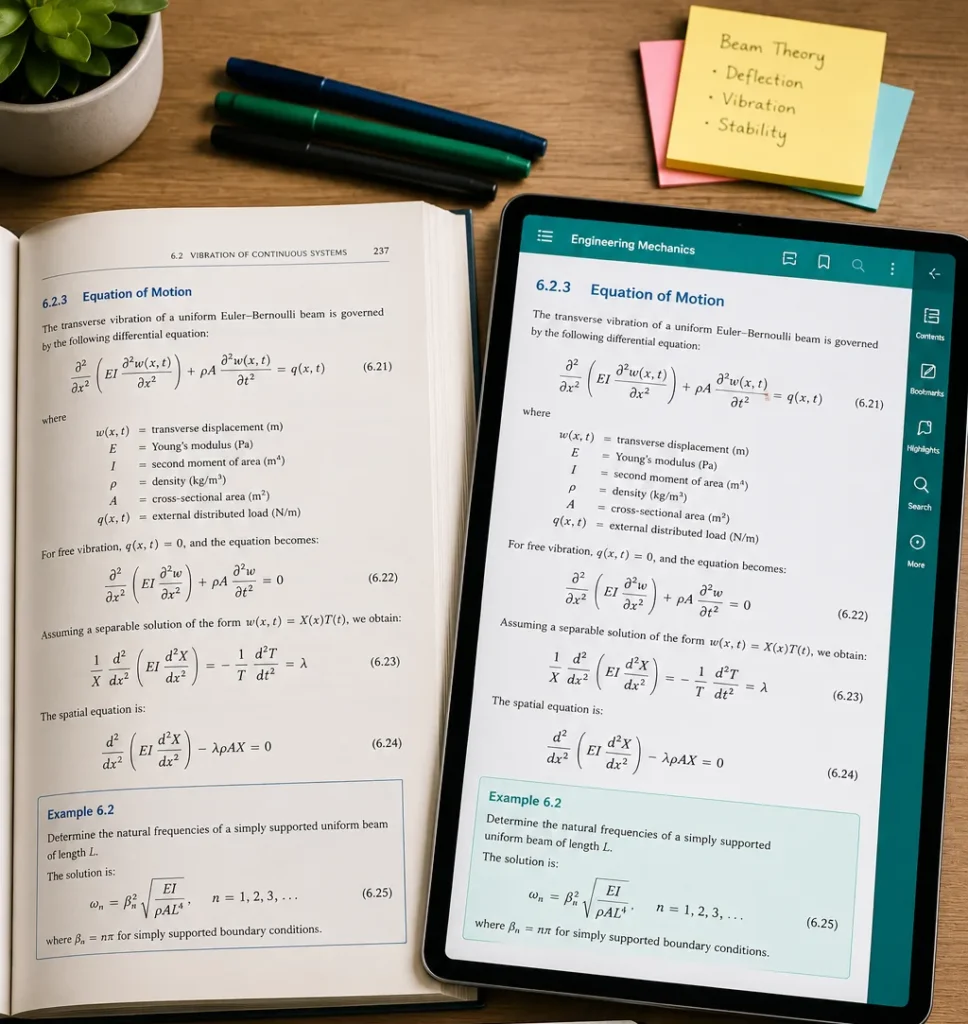

Preparing Scientific Content for Both Print and Digital Platforms

Why Multi-Format Publishing Has Become Essential

Scientific publishers no longer create content exclusively for printed textbooks. Universities, research institutions, educational publishers, and training providers increasingly need content that performs equally well in printed books, eBooks, learning management systems, mobile applications, and online learning platforms.

The challenge is that scientific content contains highly specialized elements such as equations, chemical structures, engineering diagrams, tables, and cross-references. A layout that works perfectly in print may not automatically translate into a digital environment.

Preparing scientific content for both print and digital platforms requires structured workflows that preserve accuracy, readability, and consistency across every format.

The Unique Complexity of Scientific Publishing

Scientific publications contain far more than standard text.

Common content elements include:

  • Mathematical equations
  • Chemical formulas
  • Molecular structures
  • Engineering diagrams
  • Scientific illustrations
  • Statistical tables
  • Graphs and charts
  • Figure references

Each component must remain accurate regardless of screen size, device type, or publication format.

Why Format Conversion Alone Is Not Enough

Simply converting a printed textbook into a digital file often creates problems such as:

  • Broken equations
  • Misaligned tables
  • Distorted diagrams
  • Incorrect figure references
  • Poor mobile readability

Scientific content requires specialized preparation before publication.

Preparing scientific content for print and digital platforms

Managing Equations Across Multiple Formats

One of the most difficult aspects of scientific publishing is mathematical content.

Publishers must ensure:

  • Equation display integrity
  • Symbol rendering
  • Consistent numbering
  • Proper alignment
  • Accurate references

When viewed on tablets, smartphones, and web platforms, an equation that displays correctly in print must have the same structure.

Print-Only Workflow vs Multi-Format Workflow

Print-Focused Workflow

Multi-Format Workflow

Separate production processes

Centralized content management

Manual reformatting

Structured publishing workflows

Higher maintenance effort

Easier updates

Increased inconsistency risk

Greater accuracy

Slower content deployment

Faster publishing cycles

Structured workflows improve both quality and efficiency.

Preparing scientific content for print and digital platforms

Building Content With A Single-Source Approach

Many publishers now use structured content workflows that maintain a single source of truth.

Instead of creating separate versions for:

  • Print
  • eBooks
  • Web platforms
  • Mobile applications

the content is managed centrally and distributed into multiple outputs.

Benefits of Single-Source Publishing

  • Improved consistency
  • Faster updates
  • Reduced duplication
  • Better scalability
  • Easier revision management

This approach is particularly valuable for scientific publications that undergo frequent updates.

Optimizing Tables For Different Devices

Scientific textbooks often contain large datasets and complex tables.

While tables may display comfortably on a printed page, digital environments introduce additional challenges.

Effective publishing workflows focus on:

  • Clear column structures
  • Consistent spacing
  • Responsive layouts
  • Readable typography
  • Accurate data presentation

The goal is to maintain usability without compromising data integrity.

Quality Assurance For Multi-Platform Publishing

Quality control becomes increasingly important when content is distributed across multiple platforms.

Review teams typically verify:

  • Equation numbering
  • Figure references
  • Table consistency
  • Symbol accuracy
  • Layout stability
  • Responsive formatting
  • Navigation functionality
  • Cross-references

These checks help prevent errors from appearing in final publications.

Key Validation Areas

Ensuring Diagram And Figure Consistency

Scientific learning depends heavily on visual communication.

Examples include:

  • Biological illustrations
  • Engineering schematics
  • Physics diagrams
  • Laboratory workflows
  • Chemical structures

Publishers must verify that:

  • Labels remain legible
  • Callouts stay aligned
  • Figure references remain correct
  • Visual hierarchy is preserved

Consistency between print and digital formats helps learners interpret information more effectively.

Preparing scientific content for print and digital platforms

Validation Area

Purpose

Equation Display Integrity

Maintain mathematical accuracy

Symbol Rendering

Ensure notation consistency

Layout Stability

Preserve visual structure

Responsive Formatting

Support multiple devices

Navigation Functionality

Improve user experience

A systematic review process improves publishing reliability.

Supporting Modern Learning Experiences

Students increasingly interact with scientific content through multiple channels.

A typical learner may:

  • Read a printed textbook
  • Review content on a tablet
  • Access assignments online
  • Use mobile learning applications

Preparing content for these environments requires careful planning to ensure a consistent educational experience.

Publishers that support multiple delivery methods can improve accessibility and learner engagement while protecting content quality.

A Practical Publishing Scenario

Consider a publisher developing a university-level biology textbook.

The project includes:

  • 1,200 figures
  • 500 tables
  • Interactive digital content
  • Print and eBook editions

Without a structured publishing workflow, maintaining consistency across formats becomes difficult and time-consuming.

By adopting a centralized content management approach, the publisher can update content once and distribute accurate versions across all platforms while preserving layout integrity and scientific accuracy.

Supporting The Future Of Scientific Publishing

Scientific content must be accurate, accessible, and adaptable to different learning environments. Preparing content for both print and digital platforms requires more than format conversion—it demands structured workflows, rigorous quality control, and careful management of technical content.

Organizations that invest in multi-format publishing strategies can improve consistency, streamline production, reduce maintenance effort, and deliver scientific content that remains reliable across every platform where learners engage with it.

FAQs

Scientific publications contain equations, diagrams, tables, and technical notation that require specialized handling to remain accurate across platforms.

Single-source publishing uses one centrally managed content source to generate multiple outputs such as print, eBooks, websites, and mobile applications.

To confirm equation rendering and numbering, they employ quality assurance tests, validation procedures, and organised publication workflows.

Quality assurance helps identify issues related to layout, references, symbols, tables, and navigation before publication.

Benefits include improved accessibility, better consistency, faster updates, easier maintenance, and support for modern learning environments.