

Why STEM Content Requires Specialized Typesetting Expertise

When Formatting Errors Become Learning Barriers

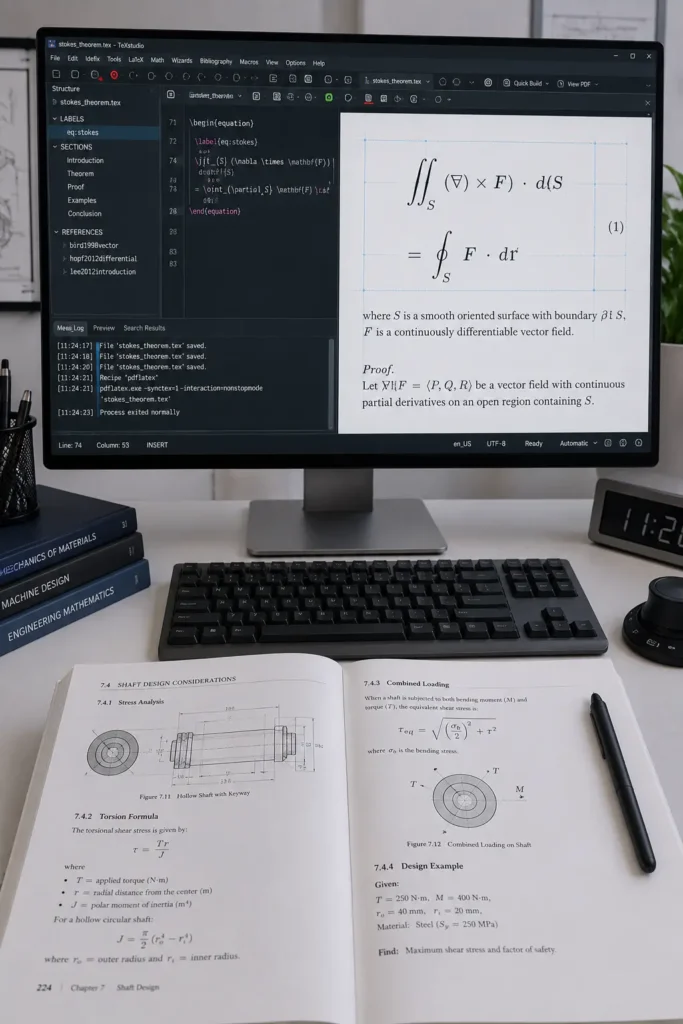
A mathematics equation that shifts by a single character can change an entire solution. A misplaced chemical bond can alter the meaning of a molecular structure. An engineering diagram with incorrect alignment can create confusion for students, researchers, and professionals. These challenges explain why STEM content production requires far more than standard page layout services.

Publishers, educational institutions, assessment providers, and scientific organizations often manage complex content containing equations, formulas, tables, diagrams, graphs, and technical illustrations. Producing this material accurately demands specialized typesetting expertise that combines subject knowledge, publishing skills, and technical precision.

The Unique Complexity of STEM Publishing

Unlike general text-based publications, STEM content contains highly structured information that must remain accurate across print and digital formats.

Common STEM publishing elements include:

  • Mathematical equations
  • Scientific notation
  • Chemical structures
  • Engineering diagrams
  • Statistical tables
  • Graphs and charts
  • Technical illustrations
  • Cross-references and citations

Each element must maintain consistency, readability, and accuracy throughout the publication lifecycle.

Why Standard Typesetting Methods Often Fall Short

Traditional document formatting tools are designed primarily for continuous text. STEM publications require specialized handling of:

Standard Documents

STEM Documents

Paragraph-heavy content

Formula-heavy content

Simple tables

Complex scientific tables

Basic graphics

Technical diagrams

Minimal notation

Extensive symbols and equations

Linear reading flow

Multi-layered references

Because of these differences, STEM projects often require dedicated production workflows

Mathematical Content Demands Exceptional Precision

Mathematics is one of the most demanding areas of educational publishing.

A small formatting issue involving:

  • Superscripts
  • Subscripts
  • Fractions
  • Integrals
  • Matrices
  • Greek symbols

can significantly impact comprehension.

For example, incorrect spacing within an equation may alter the visual hierarchy students rely on when interpreting mathematical expressions. Specialized typesetters understand how equations should be structured, aligned, and displayed to support learning outcomes.

This precision becomes even more important for higher education textbooks, competitive examination materials, and digital learning platforms

Scientific Content Requires Accurate Visual Representation

Scientific publications rely heavily on visual communication.

Content may include:

  • Chemical formulas
  • Molecular structures
  • Laboratory diagrams
  • Biological illustrations
  • Data visualizations
  • Research figures

The challenge is not simply placing these elements on a page. They must remain clear, scalable, and consistent across multiple formats.

Whether content is delivered through print textbooks, eBooks, learning management systems, or assessment platforms, scientific visuals must retain their integrity and readability

Engineering and Technical Publications Present Additional Challenges

Engineering content often combines text, mathematics, technical drawings, and reference documentation within the same publication.

Specialized typesetting expertise helps manage:

Complex Technical Layouts

Engineering manuals frequently contain:

  • Multi-level numbering systems
  • Technical specifications
  • Large tables
  • Component diagrams
  • Workflow illustrations

Maintaining structure across hundreds or thousands of pages requires disciplined production processes.

Consistent Standards Compliance

Many technical publications must follow organizational, academic, or industry-specific formatting requirements.

Specialized typesetting teams ensure consistency while supporting quality-control and review workflows.

Supporting Multi-Format Publishing Workflows

Modern STEM content rarely exists in a single format.

Publishers often need content delivered as:

  • Print-ready PDFs
  • eBooks
  • Digital learning modules
  • Web-based educational content
  • Assessment platforms
  • Accessible learning materials

Specialized typesetting supports structured workflows that allow content to move efficiently between formats while preserving equations, diagrams, and technical notation.

This approach improves scalability and reduces production effort during future updates and revisions.

Why Accuracy Directly Impacts Educational Outcomes

The purpose of STEM publishing is not simply presentation. It is communication.

Poorly formatted content can lead to:

  • Misinterpretation of formulas
  • Student confusion
  • Increased review cycles
  • Publishing delays
  • Quality-control issues

Well-typeset STEM materials improve:

  • Readability
  • Knowledge retention
  • Assessment accuracy
  • Content consistency
  • Learner confidence

For educational publishers, accuracy is closely linked to both product quality and user experience.

A Practical STEM Publishing Scenario

Consider a publisher producing a university-level engineering textbook.

The project includes:

  • 1,200 equations
  • 300 diagrams
  • 150 technical tables
  • Print and digital outputs

Using specialized STEM typesetting workflows allows the publisher to maintain consistency across every chapter while reducing formatting errors during production. The same structured content can then be adapted for eBook platforms and future editions without rebuilding layouts from scratch.

This improves efficiency while protecting content accuracy

The Value of Specialized Expertise

STEM publishing combines educational objectives with technical precision. Mathematics, science, and engineering content require careful handling of notation, diagrams, formulas, and structured data.

Organizations that invest in specialized typesetting expertise can improve quality, support multi-format publishing, reduce production risks, and create learning materials that communicate complex concepts clearly and accurately.

FAQ

STEM typesetting is the process of formatting mathematics, science, engineering, and technical content using specialized publishing techniques that support equations, diagrams, formulas, and structured data.

Regular typesetting focuses mainly on text formatting, while STEM typesetting manages complex notation, scientific visuals, equations, and technical layouts.

Even minor formatting errors can change the meaning of equations, formulas, diagrams, or scientific data, affecting learning and research outcomes.

Benefits include improved consistency, reduced errors, better readability, efficient multi-format publishing, and stronger quality control.

Dedicated workflows help manage large volumes of technical content while maintaining accuracy across print, digital, and assessment-based publishing platforms
