
How Publishers Can Improve Margins Through Production Outsourcing

Educational publishers face increasing pressure to control costs while maintaining quality, meeting accessibility requirements, and supporting multiple content formats. Rising operational expenses, fluctuating production volumes, and tighter publication schedules can significantly impact profitability.

Many publishers are improving margins not by reducing quality, but by optimizing how production work is managed. Strategic production outsourcing allows organizations to reduce operational costs, improve resource utilization, and scale efficiently without expanding internal teams.

Why Publishing Margins Are Under Pressure

Modern educational publishing involves far more than creating print textbooks.

Publishers often manage:

  • Print production
  • Digital content development
  • EPUB creation
  • Accessibility compliance
  • Assessment materials
  • Multi-country adaptations
  • Ongoing content updates

As production complexity increases, maintaining large internal teams can become expensive.

Common Margin Challenges

Challenge

Business Impact

Fixed staffing costs

Reduced flexibility

Production bottlenecks

Delayed releases

Specialized skill shortages

Higher recruitment costs

Multiple content formats

Increased workload

Seasonal production peaks

Resource inefficiencies

These factors can directly affect profitability if not managed efficiently.

Reducing Fixed Operational Costs

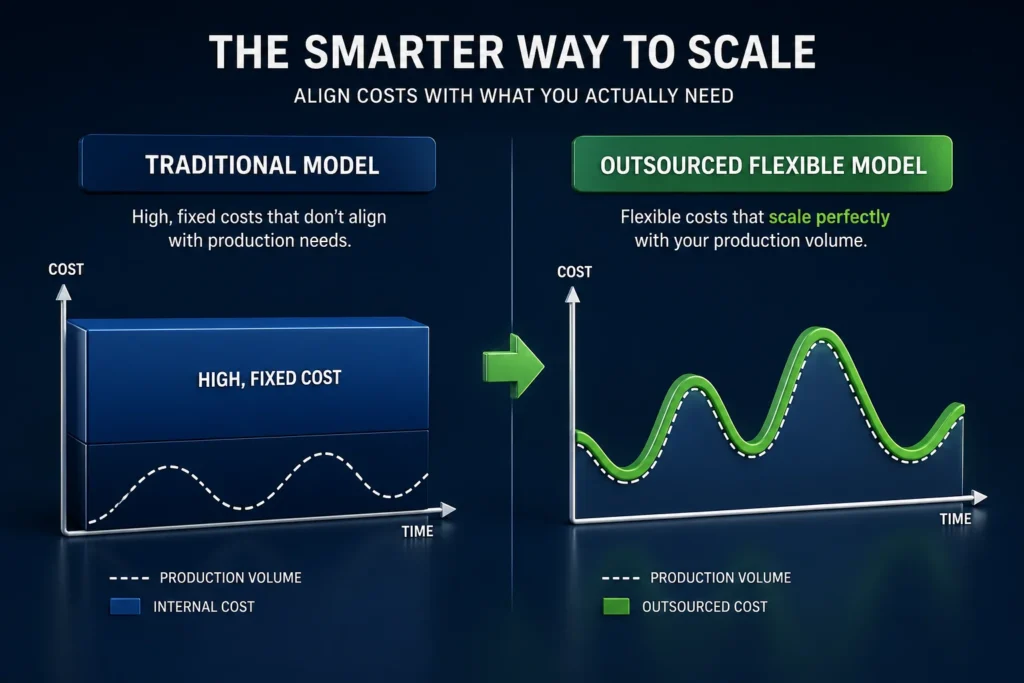
One of the biggest financial advantages of outsourcing is the ability to convert fixed costs into variable costs.

Instead of maintaining large permanent production teams, publishers can scale resources based on actual project demand.

Cost Structure Comparison

In-House Model

Outsourced Model

Fixed staffing costs

Project-based costs

Recruitment expenses

Ready-to-deploy expertise

Ongoing training investment

Specialized external resources

Infrastructure maintenance

Reduced operational overhead

Capacity limitations

Flexible scalability

This flexibility can improve overall cost efficiency.

Improving Production Efficiency

Experienced production partners often use established workflows, specialized tools, and dedicated teams.

Benefits may include:

  • Faster turnaround times
  • Reduced production bottlenecks
  • Better resource utilization
  • Streamlined project management

Improved efficiency helps publishers complete more work without proportionally increasing costs.

Understanding Production Outsourcing

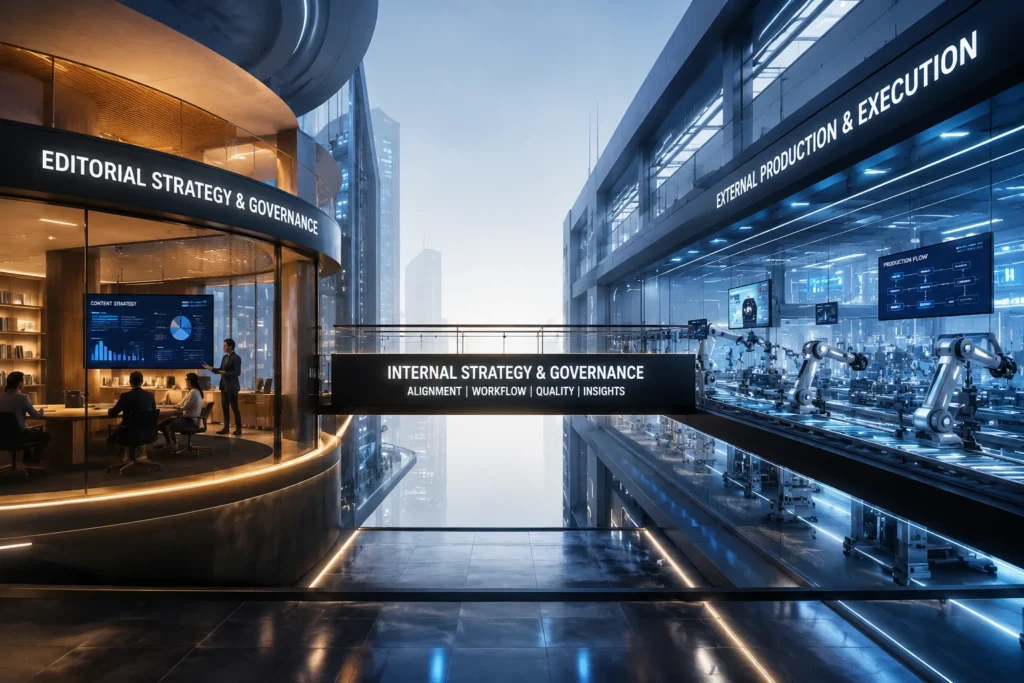
Production outsourcing involves assigning specialized publishing tasks to external production partners while retaining editorial and strategic control internally.

Common outsourced activities include:

  • Typesetting
  • Page layout
  • XML conversion
  • EPUB production
  • Accessibility remediation
  • Quality assurance
  • Illustration support

This approach allows publishers to focus internal resources on content development, curriculum strategy, and market growth.

Accessing Specialized Expertise

Educational publishing increasingly requires technical skills that may not be needed year-round.

Examples include:

  • Accessibility compliance
  • XML workflows
  • EPUB development
  • Multi-format publishing
  • Large-scale typesetting

Hiring and maintaining specialists internally can be expensive. Outsourcing provides access to these capabilities when needed.

Managing Seasonal Production Peaks

Educational publishing workloads often fluctuate throughout the year.

Peak periods may include:

  • Curriculum revisions
  • Back-to-school publishing cycles
  • Assessment development programs
  • Digital content launches

Rather than hiring additional permanent staff, publishers can use outsourced production capacity to handle temporary workload increases.

Traditional vs Flexible Capacity

Traditional Approach

Flexible Outsourcing Approach

Hire additional staff

Scale production resources

Long-term overhead

Demand-based capacity

Resource idle periods

Better utilization

Higher operating costs

Improved cost control

This model supports margin improvement through more efficient resource allocation.

Reducing Rework Through Quality Processes

Production errors can significantly increase costs.

Strong outsourcing partners often implement:

✔ Structured quality checks

✔ Multi-stage reviews

✔ Accessibility validation

✔ Standardized production procedures

✔ Documented workflows

Reducing correction cycles helps improve both efficiency and profitability.

Choosing The Right Outsourcing Strategy

Not every production activity needs to be outsourced.

Many publishers achieve strong results through hybrid models that combine:

  • Internal editorial leadership
  • External production execution
  • Shared quality governance
  • Centralized project oversight

This approach balances control with scalability.

Supporting Multi-Format Publishing Economically

Educational content frequently requires delivery in:

  • Print formats
  • Digital textbooks
  • EPUB files
  • Learning platforms
  • Accessible versions

Producing each format independently can increase costs.

Many production partners use structured workflows that support multiple outputs from shared content sources, reducing duplicated effort and improving operational efficiency.

Areas That Often Deliver Strong ROI

Publishers frequently see measurable benefits when outsourcing:

  • High-volume typesetting
  • XML conversion projects
  • Accessibility remediation
  • Multi-format publishing
  • Large curriculum programs
  • Content migration initiatives

The greatest value often comes from repetitive, process-driven production activities.

Strengthening Profitability Through Smarter Production Models

Improving publishing margins is not solely about reducing costs. It is about creating a production model that supports efficiency, scalability, and consistent quality. By strategically outsourcing specialized production functions, educational publishers can optimize resources, manage demand fluctuations more effectively, and focus internal efforts on activities that drive long-term growth and educational value.

Frequently Asked Questions

It reduces operational overhead, improves resource flexibility, and provides access to specialized expertise without long-term staffing costs.

Typesetting, XML conversion, EPUB production, accessibility services, illustration support, and quality assurance are frequently outsourced.

When managed properly with clear standards and quality controls, outsourcing can help maintain or improve production quality.

No. Small and mid-sized publishers often benefit from flexible production capacity and specialized expertise.

High-volume, process-driven activities such as typesetting, digital conversion, accessibility remediation, and multi-format publishing often provide the strongest ROI.
