Best Practices for Mathematics and STEM Book Typesetting

Why STEM Publishing Requires Specialized Typesetting

A mathematics or STEM textbook is far more than a collection of text and images. Students must navigate equations, graphs, scientific diagrams, tables, formulas, and technical explanations while building a logical understanding of complex concepts.

Even small formatting issues can create confusion. A misplaced equation, poorly aligned diagram, or inconsistent notation may interrupt the learning process and reduce comprehension. For educational publishers, effective STEM typesetting plays a critical role in ensuring that technical content remains accurate, readable, and accessible.

Applying proven typesetting practices helps publishers create learning materials that support both teaching objectives and student success.

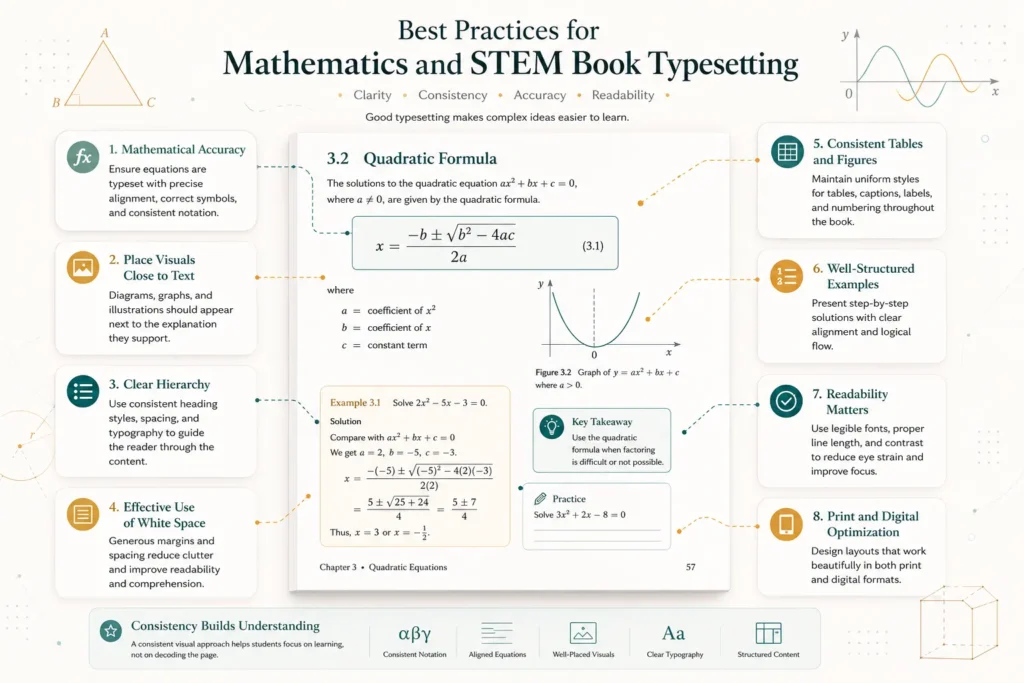
Prioritize Mathematical Accuracy And Consistency

Mathematics content depends heavily on precision.

Common challenges include:

  • Misaligned equations
  • Inconsistent symbols
  • Incorrect superscripts and subscripts
  • Variable spacing issues
  • Formula numbering errors

Students often rely on visual consistency when interpreting mathematical expressions. Any variation can lead to misunderstanding.

Best Practice

Maintain standardized rules for:

  • Mathematical notation
  • Equation alignment
  • Symbol usage
  • Numbering systems
  • Formula presentation

Consistency improves both readability and academic accuracy.

Position Diagrams Close To Related Explanations

STEM learning often combines visual and textual information.

Examples include:

  • Physics diagrams
  • Engineering illustrations
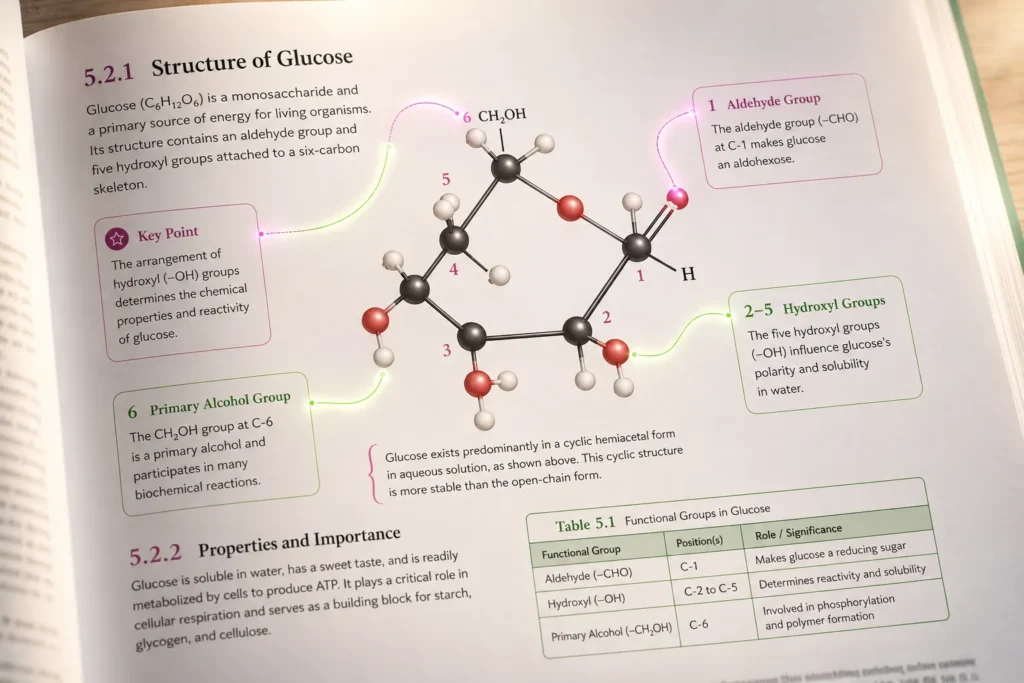
  • Biological structures
  • Chemical processes
  • Scientific workflows

When visuals are separated from the accompanying explanation, students must constantly shift their attention between locations.

Best Practice

Place diagrams immediately adjacent to the relevant content whenever possible.

This improves visual flow and helps learners connect concepts more efficiently.

Create A Clear Information Hierarchy

STEM publications often contain multiple layers of information.

These may include:

  • Definitions
  • Theorems
  • Examples
  • Worked solutions
  • Key concepts
  • Practice exercises
  • Summary sections

Without a clear hierarchy, pages can quickly become overwhelming.

Best Practice

Differentiate content types through:

  • Consistent heading levels
  • Structured callout boxes
  • Visual separation
  • Controlled typography
  • Organized page layouts

A clear hierarchy helps students understand the purpose of each content element.

Use White Space Strategically

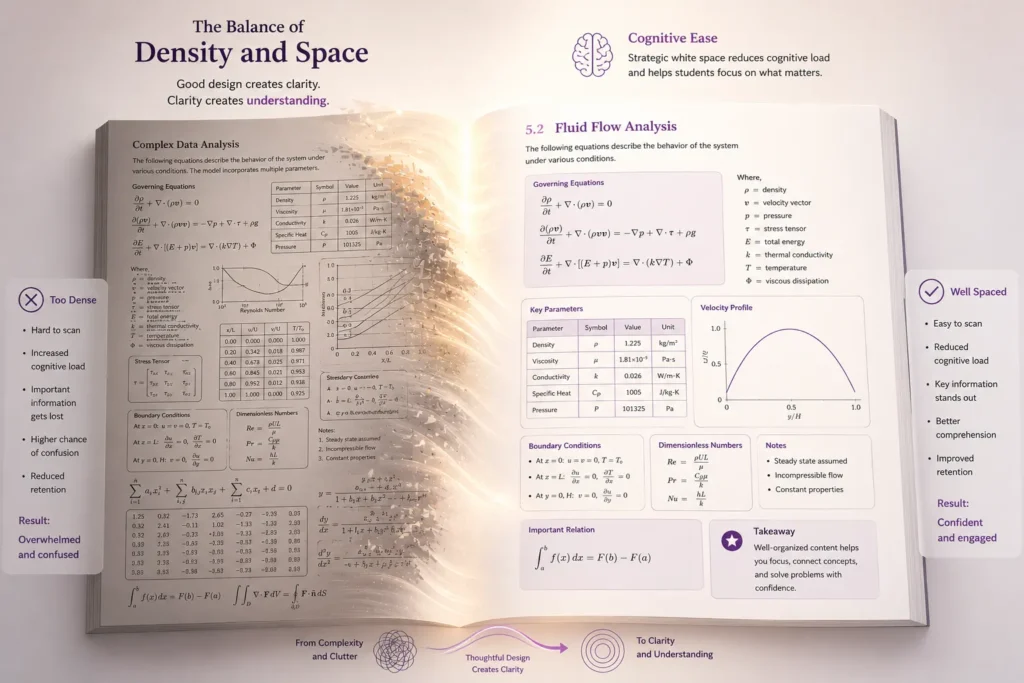
A common mistake in technical publishing is attempting to maximize content density.

While publishers may seek to reduce page counts, crowded layouts can make complex material harder to understand.

Comparison Of Layout Approaches

Dense Layout

Balanced Layout

Limited white space

Comfortable reading experience

Visual clutter

Clear content separation

Harder navigation

Easier scanning

Higher cognitive load

Better focus

Reduced readability

Improved comprehension

Best Practice

Use white space to separate:

  • Equations
  • Examples
  • Diagrams
  • Exercises
  • Technical explanations

This helps students process information more effectively.

Maintain Consistency Across Figures, Tables, And Graphs

STEM books often contain hundreds of visual elements.

Inconsistencies can occur in:

  • Figure captions
  • Table layouts
  • Graph labeling
  • Measurement units
  • Data presentation styles

These variations may distract students and reduce the professional quality of the publication.

Best Practice

Develop standardized templates for:

  • Charts
  • Tables
  • Figures
  • Captions
  • Graph annotations

Template-driven consistency supports a better learning experience.

Optimize For Both Print And Digital Formats

Modern STEM publications are increasingly distributed through multiple channels.

Students may access content through:

  • Printed textbooks
  • Digital textbooks
  • Tablets
  • Learning platforms
  • Online course materials

Best Practice

Plan layouts that remain effective across different formats by ensuring:

  • Readable typography
  • Responsive visual structures
  • Clear navigation
  • Consistent figure placement
  • Accessible content organization

Publishers should consider multi-format delivery during the initial production stage rather than adapting content later.

Design Worked Examples For Easy Understanding

Worked examples are among the most valuable elements in STEM education.

Students frequently learn by following a problem-solving process step by step.

Best Practice

Ensure that worked examples contain:

  • Clear problem statements
  • Sequential solution steps
  • Consistent formatting
  • Logical progression
  • Distinct answer sections

Well-structured examples improve learning and reduce confusion.

Strengthen Quality-Control Procedures

Technical educational content requires extensive review.

A single formatting error may affect:

  • Calculations
  • Scientific interpretation
  • Formula accuracy
  • Assessment questions

Best Practice

Quality-control reviews should verify:

  • Equation formatting
  • Figure placement
  • Symbol consistency
  • Reference accuracy
  • Page structure
  • Assessment formatting

A structured review process helps identify issues before publication.

Building Better STEM Learning Resources

Effective STEM book typesetting is about more than visual presentation. It directly influences how students interact with technical information, interpret complex concepts, and develop subject understanding. By prioritizing consistency, visual flow, readability, and accuracy, educational publishers can create mathematics and STEM resources that support stronger learning outcomes while maintaining high publishing standards.

Frequently Asked Questions

Most frequent questions and answers

STEM books contain technical content such as equations, diagrams, tables, and scientific illustrations that require precise formatting for accurate understanding.

Equation alignment and inconsistent mathematical notation are among the most common formatting challenges.

Properly placed diagrams improve visual flow and help students connect explanations with supporting visuals more efficiently.

White space reduces visual clutter, improves readability, and helps learners focus on individual concepts.

Using standardized formatting guidelines, specialized review procedures, and comprehensive quality-control checks can significantly improve publication accuracy.
