
How InDesign Helps Standardize Multi-Author Educational Publishing Projects

Large educational publishing projects rarely involve a single author. A typical curriculum program may include subject matter experts, instructional designers, editors, reviewers, assessment specialists, and production teams working simultaneously on different sections of the same publication. While this collaborative approach brings valuable expertise, it also introduces a significant challenge: maintaining consistency across content created by multiple contributors.

Without a structured production system, educational resources can quickly develop formatting inconsistencies, conflicting design approaches, and uneven learner experiences. This is one reason why many educational publishers use Adobe InDesign as a central platform for managing multi-author publishing projects.

Why Multi-Author Projects Often Create Production Challenges

When several authors contribute to a curriculum, each individual may have different writing habits, document structures, and content presentation preferences.

Common issues include:

  • Different heading styles
  • Inconsistent activity formats
  • Varying table designs
  • Uneven image placement
  • Different assessment structures
  • Conflicting page layouts

Even when the educational content is accurate, these inconsistencies can make a publication appear fragmented and difficult for learners to navigate.

The larger the project, the greater the risk of design variation.

The Hidden Cost of Inconsistent Educational Content

Many publishers initially focus on content creation and only discover consistency issues during final production.

At this stage, teams often spend considerable time:

  • Correcting formatting differences
  • Rebuilding layouts
  • Standardizing graphics
  • Updating page structures
  • Revising assessment sections

These late-stage corrections can delay publishing schedules and increase production costs.

For curriculum programs that span multiple grade levels, these challenges become even more difficult to manage.

Creating a Common Publishing Framework

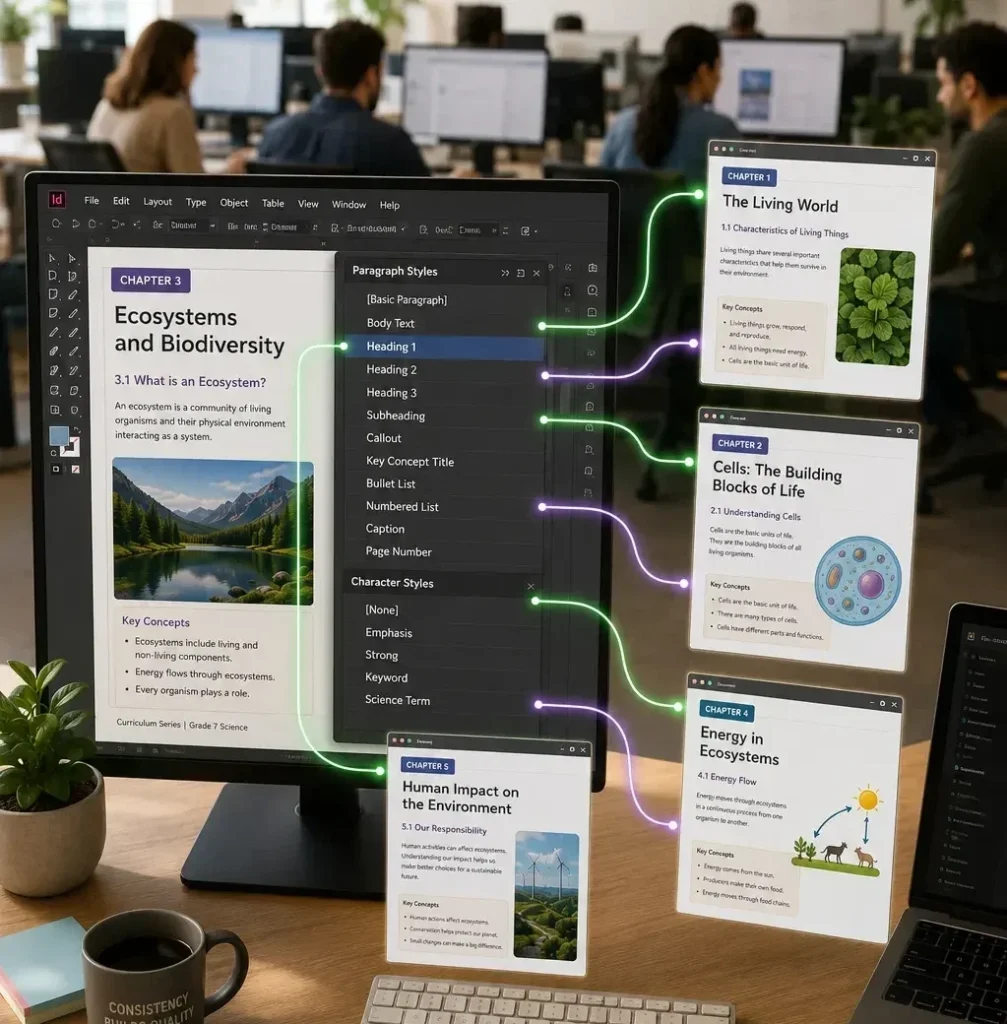
One of the most effective ways to standardize multi-author projects is to establish a shared design framework before content development begins.

InDesign supports this process through structured templates that define:

  • Chapter layouts
  • Lesson structures
  • Assessment formats
  • Learning activity designs
  • Figure and table placement
  • Navigation elements

Instead of every contributor creating content differently, teams work within a predefined publishing structure.

This approach promotes learning resource standardization throughout the project lifecycle.

Managing Revisions Across Multiple Contributors

Educational publishing projects often undergo several review cycles before publication.

Authors may update lesson content while editors revise language and instructional designers adjust layouts. Without a centralized system, managing these revisions can become difficult.

InDesign helps production teams maintain control by allowing updates to be applied through shared styles and document structures.

Traditional Multi-Author Process

Structured InDesign Workflow

Individual formatting decisions

Standardized templates

Repeated manual corrections

Centralized style management

Inconsistent page structures

Unified layout framework

Higher revision effort

Controlled document updates

Greater production risk

Improved publishing governance

This structured approach helps reduce formatting conflicts during revision cycles.

Keeping Student and Teacher Resources Aligned

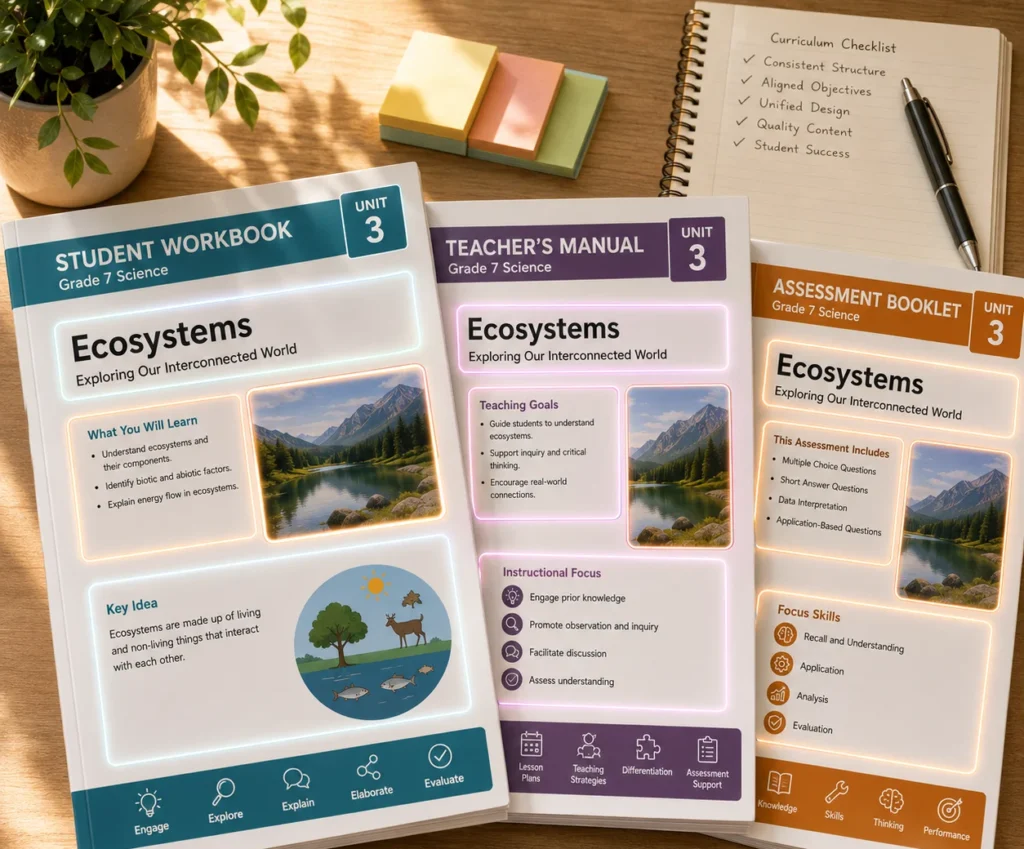
Many curriculum programs include multiple related resources such as:

  • Student workbooks
  • Teacher guides
  • Assessment booklets
  • Practice activities
  • Digital supplements

A common challenge is ensuring that design standards remain consistent across every resource.

Using shared templates and style systems, publishers can maintain alignment between these materials while still allowing each resource to serve its specific educational purpose.

This is particularly valuable when curriculum updates affect several documents simultaneously.

Supporting Long-Term Curriculum Maintenance

Educational content is rarely static. Learning objectives, standards, and assessment requirements often change over time.

Publishers that lack standardized design systems may need to redesign sections of their content whenever revisions occur.

By contrast, organizations using structured InDesign workflows can update content within an established framework, reducing disruption during curriculum maintenance projects.

This supports more efficient content lifecycle management and helps preserve consistency across future editions.

A Practical Publishing Scenario

Consider a publisher developing a national science curriculum involving ten authors, three editors, and multiple assessment specialists.

Without standardized templates, each contributor may submit content using different structures and formatting approaches. The production team would then need to spend significant time correcting inconsistencies before publication.

By implementing shared InDesign templates, paragraph styles, and page frameworks from the start, the publisher creates a common production environment. Contributors focus on content development while the design system maintains consistency across the entire curriculum.

Building Greater Control Into Educational Publishing Programs

Successful multi-author publishing projects depend on more than effective collaboration. They require clear standards, structured production processes, and consistent design governance. By providing a shared framework for content creation and layout management, InDesign helps educational publishers maintain quality, reduce production complexity, and deliver cohesive learning resources across large curriculum programs.

Frequently Asked Questions

Different contributors often use varying formatting styles, content structures, and presentation methods, creating inconsistencies throughout a publication.

It provides shared templates, style systems, and layout frameworks that guide contributors toward a common publishing standard.

Yes. Publishers frequently use it to manage student resources, teacher materials, assessments, and supplementary learning content within a unified design system.

Consistent templates and styles reduce manual formatting corrections and simplify content updates during review cycles.

Consistent layouts help learners navigate educational materials more easily and create a more cohesive learning experience.