The Importance of Quality Assurance in InDesign-Based Learning Content Development

Creating educational content involves much more than writing accurate information. A textbook, training manual, eLearning workbook, or digital learning resource must also be structured correctly, visually consistent, and free from formatting errors. Even minor layout issues can affect readability, learner engagement, and the overall learning experience.

As educational publishers and content development companies increasingly rely on Adobe InDesign to produce learning materials, quality assurance (QA) has become a critical part of the production process. A well-designed QA workflow helps ensure that learning content is accurate, accessible, and ready for both print and digital distribution.

Key Areas of Quality Assurance in InDesign Projects

Content Accuracy Verification

The first step in quality assurance is validating the content itself. Editors and reviewers verify:

  • Facts and data
  • Grammar and spelling
  • Learning objectives
  • Assessment questions
  • References and citations

Accurate content forms the foundation of effective educational materials.

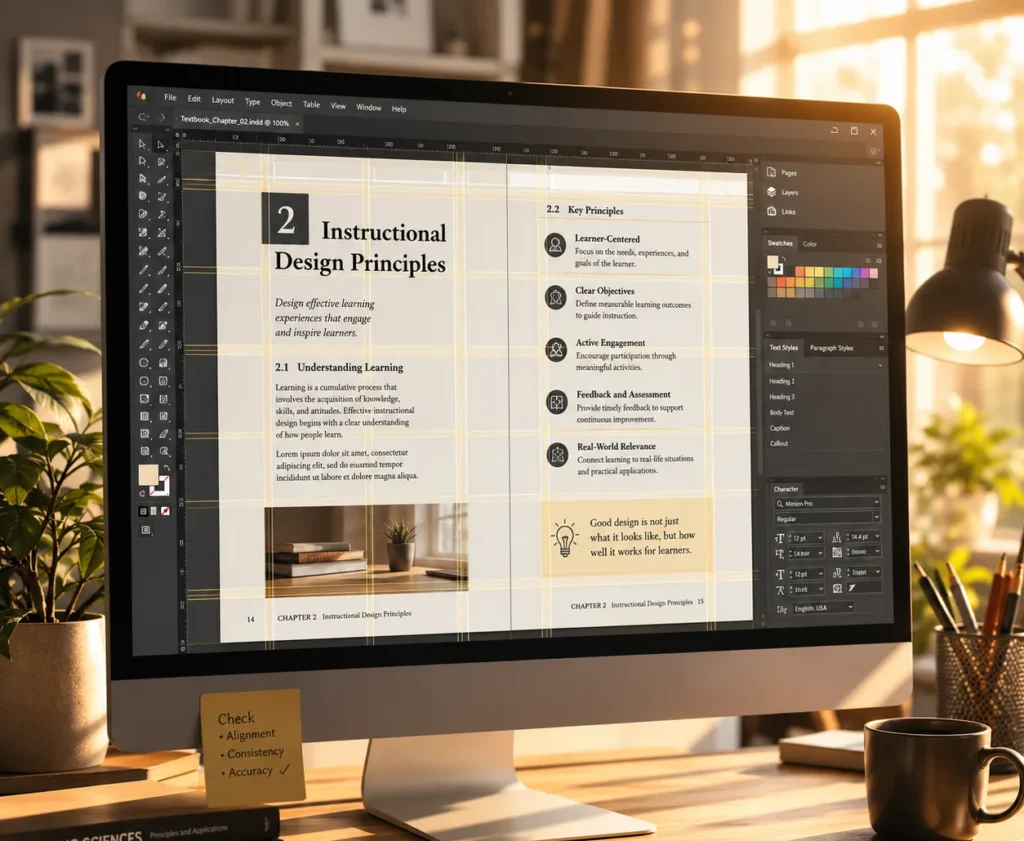
Layout And Formatting Consistency

Consistency is essential in learning resources. Students and educators expect a predictable structure throughout a document.

QA teams review:

  • Heading hierarchy
  • Paragraph styles
  • Fonts and typography
  • Margins and spacing
  • Color usage
  • Table designs

Standardized formatting improves readability and creates a professional appearance.

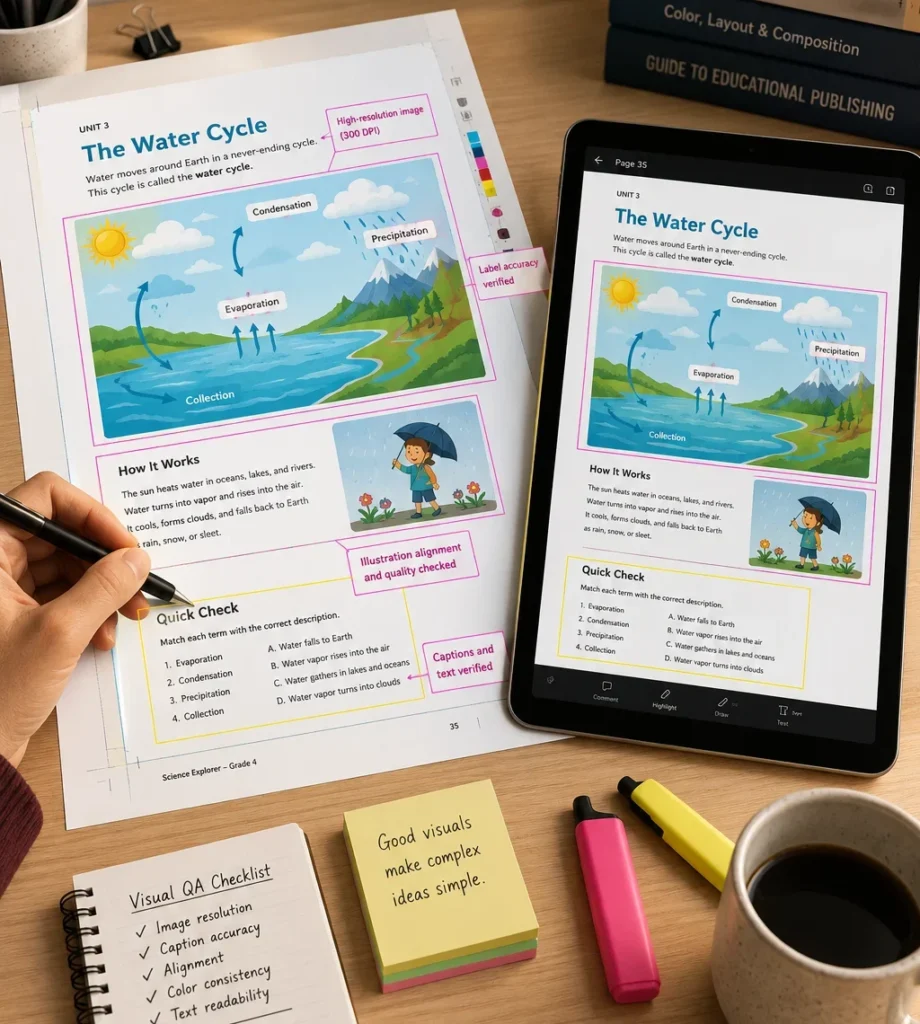
Graphic And Visual Element Validation

Learning materials often contain diagrams, charts, illustrations, and screenshots.

Quality assurance verifies that:

  • Images are high resolution
  • Graphics match the content
  • Captions are accurate
  • Visual elements are properly aligned
  • Interactive elements function correctly in digital formats

This review helps prevent confusion and supports learner comprehension.

Common Issues Found in InDesign-Based Learning Materials

InDesign provides powerful tools for creating structured learning content, but large projects can still contain hidden errors.

Common quality issues include:

  • Incorrect page numbering
  • Inconsistent heading styles
  • Missing images or graphics
  • Text overflow and overset text
  • Broken cross-references
  • Table formatting inconsistencies
  • Incorrect captions and labels
  • Spacing and alignment problems
  • Accessibility compliance gaps

Identifying these issues before publication helps improve both content quality and production efficiency.

Quality Assurance For Print And Digital Publishing

Modern educational content is frequently distributed in both print and digital formats. Each format requires separate validation.

Print Publishing Checks

Digital Publishing Checks

Page layout verification

Responsive content review

Print-ready image quality

Interactive feature testing

Color consistency

Hyperlink validation

Bleed and margin checks

Device compatibility testing

PDF output review

Accessibility verification

A comprehensive QA process ensures content performs well regardless of how learners access it.

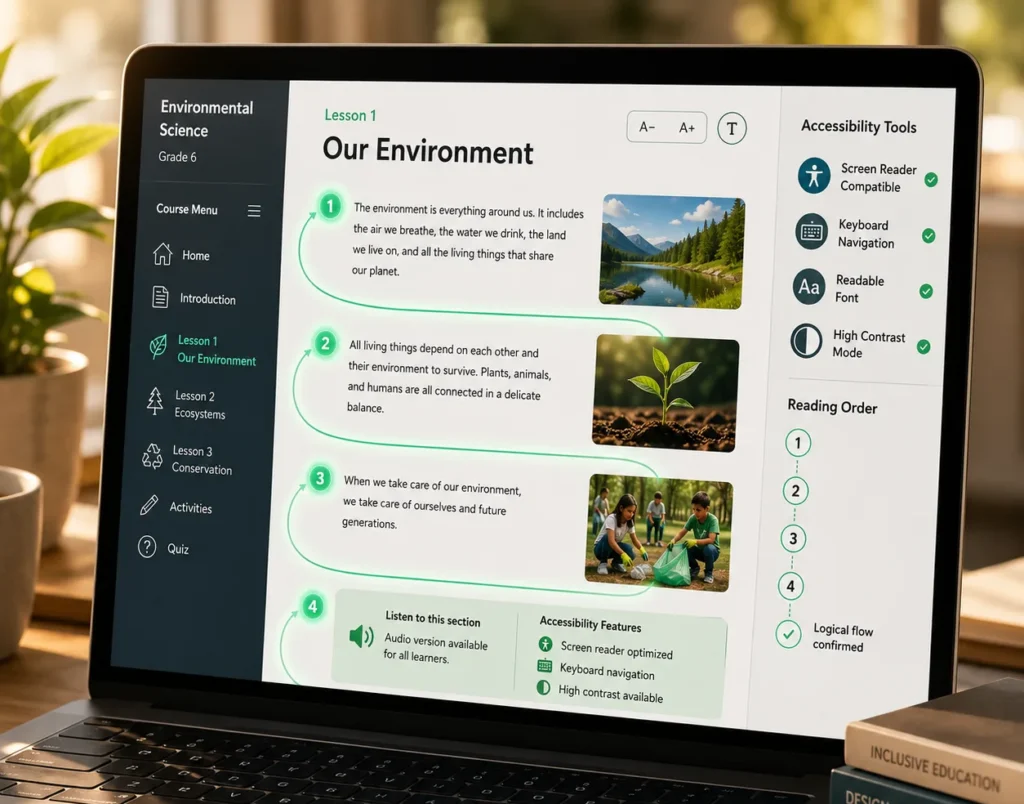
Accessibility Reviews Are Becoming Essential

Accessibility has become an important requirement in educational publishing.

Quality assurance teams evaluate whether content supports learners with diverse needs by reviewing:

  • Alternative text for images
  • Reading order structure
  • Accessible PDF settings
  • Color contrast
  • Navigation elements
  • Screen reader compatibility

Addressing accessibility requirements helps educational organizations reach a broader audience while meeting compliance expectations.

How Structured QA Improves Publishing Efficiency

Some organizations view quality assurance as an additional production step. In reality, effective QA often reduces overall project costs and timelines.

Benefits include:

  • Fewer post-publication corrections
  • Reduced rework
  • Faster approval cycles
  • Improved stakeholder confidence
  • Better learner experiences
  • Consistent brand presentation

A structured review process allows teams to identify issues early, when corrections are faster and less expensive.

A Practical Learning Content Development Scenario

Consider a publisher producing a multi-level educational course consisting of student books, teacher guides, and digital learning resources.

Without a dedicated QA process, inconsistencies may appear across chapters, graphics may be misplaced, and digital navigation links may fail.

By implementing systematic InDesign quality checks at every production stage, the publisher can maintain consistency across all materials, improve publishing efficiency, and deliver a better learning experience for educators and students.

Strengthening Learning Content Before Publication

High-quality educational content depends on more than strong writing and instructional design. Careful quality assurance ensures that learning materials are accurate, visually consistent, accessible, and ready for distribution. As InDesign continues to play a central role in educational publishing, organizations that invest in structured QA processes can improve content quality, reduce production risks, and deliver more effective learning experiences.

Frequently Asked Questions

Quality assurance is the process of reviewing educational materials to ensure accuracy, consistency, usability, and publishing readiness before release.

It helps identify formatting issues, content errors, layout inconsistencies, and accessibility gaps before publication.

Consistent formatting improves readability, enhances learner engagement, and creates a professional learning experience.

Accessibility reviews help ensure learning materials can be used effectively by a wider range of learners, including those using assistive technologies.

Quality assurance should be integrated throughout the content development process rather than being limited to the final review stage.