How InDesign Improves Consistency in Large-Scale Educational Publishing Projects

Why STEM Publishing Demands a Different Production Approach

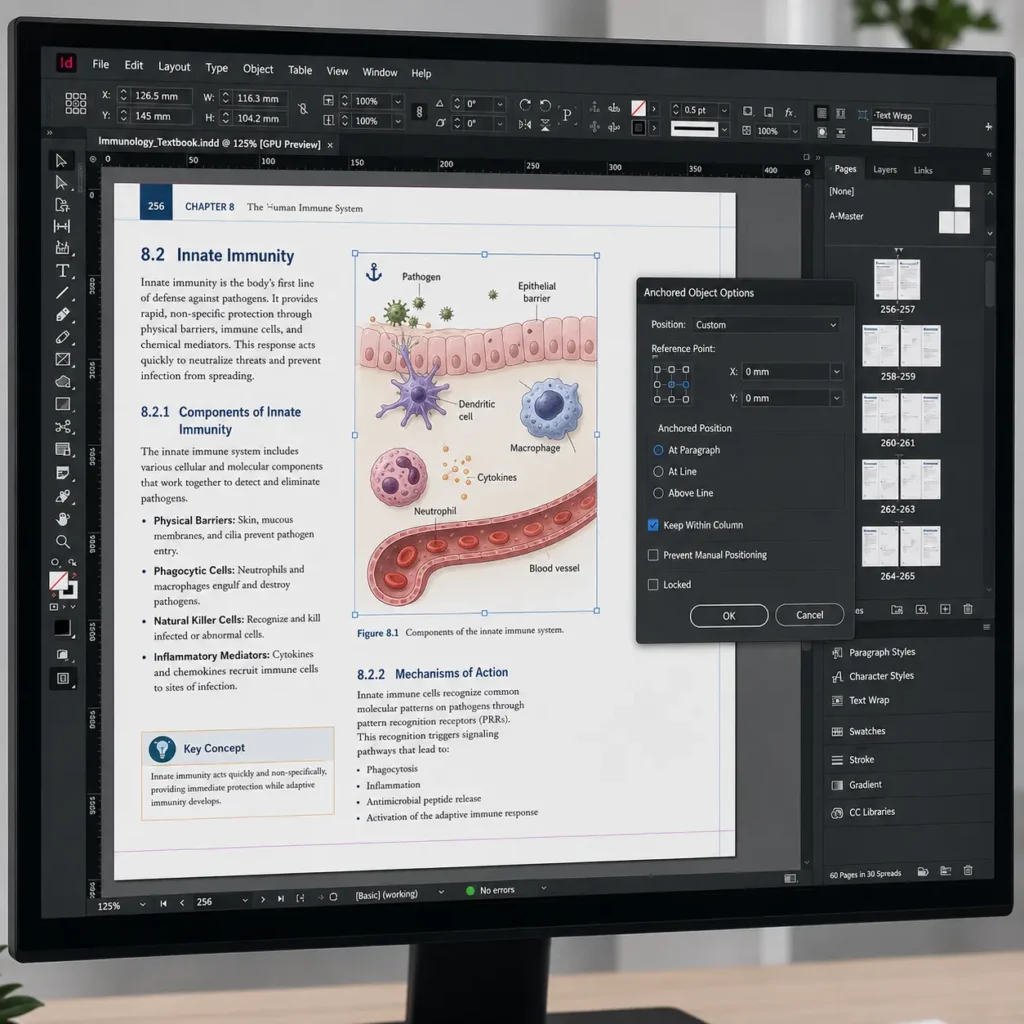
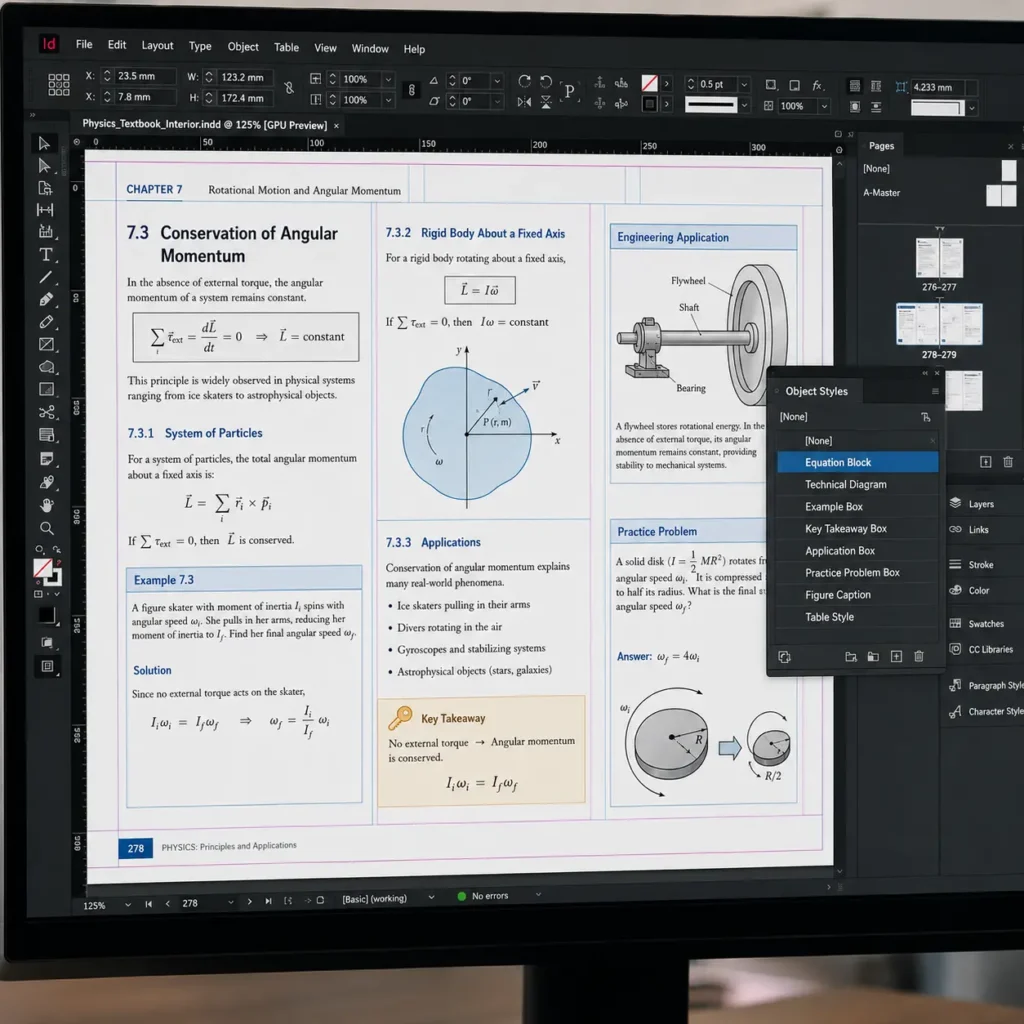
Producing educational content for Science, Technology, Engineering, and Mathematics (STEM) subjects is often more demanding than developing general educational materials. STEM publications typically contain complex diagrams, technical illustrations, mathematical expressions, scientific tables, data visualizations, laboratory activities, and structured assessments that require precise formatting and organization.

For educational publishers, the challenge extends beyond content creation. The real complexity lies in transforming highly technical material into learning resources that are accurate, visually clear, and easy for students to navigate.

As STEM content portfolios continue to grow, efficient production workflows have become essential for maintaining both quality and publishing speed.

The Unique Complexity of STEM Learning Materials

Unlike many educational subjects, STEM resources often combine multiple content elements on a single page.

A typical STEM textbook chapter may include:

  • Scientific diagrams
  • Engineering illustrations
  • Mathematical equations
  • Data tables
  • Laboratory procedures
  • Step-by-step problem-solving examples
  • Assessment activities
  • Technical references

Managing these components consistently across hundreds of pages requires a structured production process.

Without standardized workflows, formatting and layout management can quickly become time-consuming

Why Visual Organization Matters in STEM Education

STEM subjects rely heavily on visual communication.

Students often learn through:

  • Process diagrams
  • Technical illustrations
  • Graphs and charts
  • Scientific models
  • Comparative tables
  • Structured problem-solving frameworks

Poorly organized layouts can make complex concepts harder to understand.

Thus, educational publishers concentrate on developing distinct visual hierarchies that help students navigate technical content without becoming overwhelmed.

A well-structured design helps students focus on learning rather than interpreting the page itself.

Managing Large STEM Publishing Projects

Many STEM publishing programs extend far beyond a single textbook.

A complete educational package may include:

  • Student textbooks
  • Workbooks
  • Teacher resources
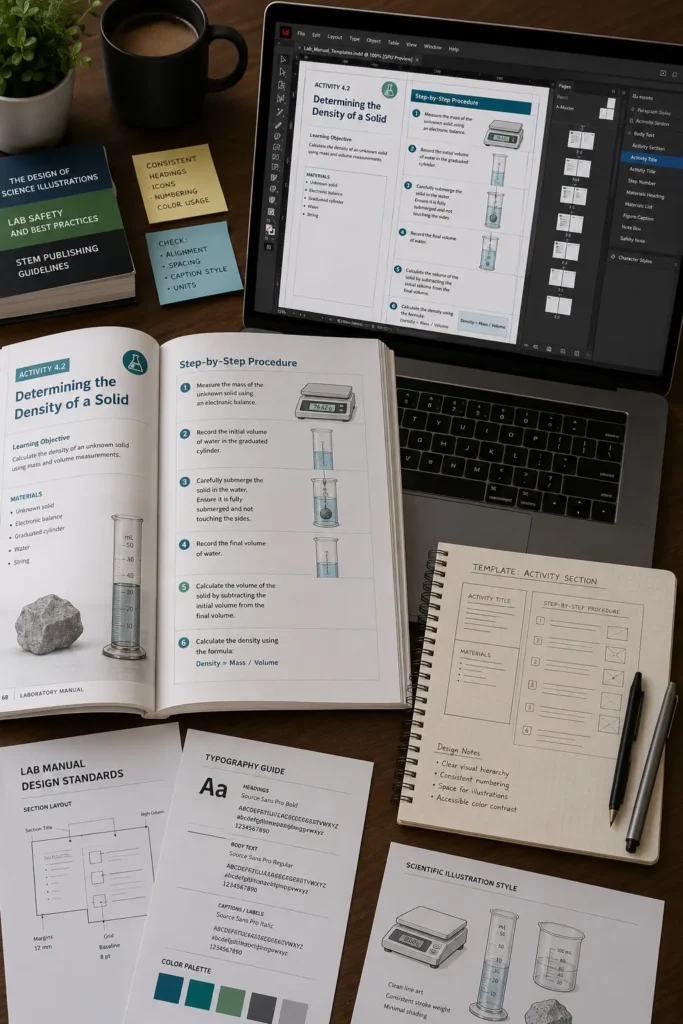
  • Laboratory manuals
  • Assessment materials
  • Digital learning guides

Because these resources often share common diagrams, terminology, and instructional structures, maintaining consistency becomes a critical production requirement.

Structured publishing workflows help ensure that content remains aligned across all materials within a curriculum series.

Supporting Frequent Content Updates

STEM disciplines evolve continuously.

Publishers regularly update materials to reflect:

  • New scientific discoveries
  • Emerging technologies
  • Revised educational standards
  • Updated engineering practices
  • New data and research findings

When content updates occur, production teams need efficient methods for implementing revisions without disrupting the entire publication.

Standardized layouts and template-driven workflows help simplify this process by reducing the amount of manual reformatting required

Why Publishers Use InDesign for STEM Content Production

 it supports:

  • Complex page layouts
  • Large document management
  • Scientific illustration placement
  • Structured template systems
  • Consistent formatting standards
  • Multi-format publishing requirements

These capabilities help publishers organize technical content while maintaining professional presentation standards.

Building Scalable STEM Publishing Workflows

As demand for science, technology, engineering, and mathematics education continues to grow, publishers must manage increasingly complex content while maintaining accuracy and consistency. Efficient production workflows play a critical role in achieving these goals. By supporting structured layouts, standardized design systems, and large-scale content management, InDesign helps educational organizations develop STEM learning materials that are both professionally produced and educationally effective

FAQ

STEM materials often contain diagrams, equations, technical illustrations, scientific data, and structured learning activities that require careful organization and formatting.

Consistent layouts help students focus on understanding technical concepts rather than navigating different page structures and presentation styles

Many organizations use structured workflows, standardized templates, and centralized production processes to maintain consistency across multiple resources.

Yes. Many publishers develop STEM content that can be adapted for textbooks, digital learning materials, assessment resources, and instructor guides.

InDesign supports complex layouts, large documents, and structured production workflows that help publishers manage technical educational content more efficiently.