How InDesign Supports Multi-Language Educational Content Development

Expanding Educational Content Beyond a Single Language

Educational publishers are increasingly creating learning materials for audiences across multiple countries and regions. A textbook developed for one market may later be adapted for learners in Germany, France, Spain, Italy, or other regions where the same educational concepts need to be delivered in a different language.

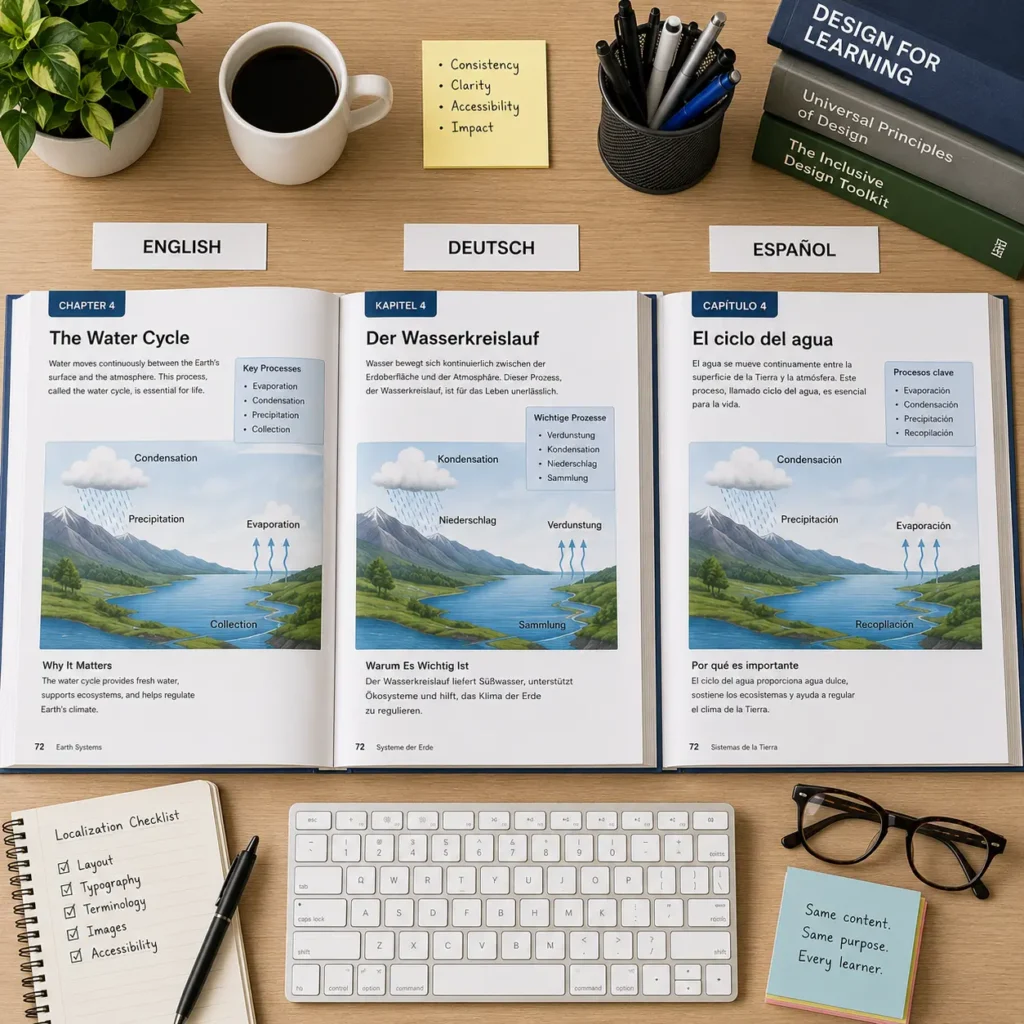
While translation is an important part of this process, successful multilingual publishing involves much more than replacing one language with another. Publishers must maintain consistent layouts, preserve learning structures, manage content updates, and ensure that every language edition delivers the same educational experience.

For organizations managing large educational projects, maintaining this balance between localization and consistency can become a significant production challenge.

Why Multi-Language Publishing Is Complex

Imagine an educational publisher producing a science textbook series for several European markets.

The English version has already been reviewed, approved, and designed. The content is now being translated into German, French, and Spanish. Although the subject matter remains unchanged, each language affects the publication differently.

Challenges may include:

  • Text expansion and contraction
  • Changes in line breaks and page flow
  • Different terminology requirements
  • Localized educational standards
  • Updated diagrams and references
  • Multiple review cycles

Without a structured publishing process, each language edition can gradually develop inconsistencies that increase production effort and quality-control risks.

Maintaining a Consistent Learning Experience

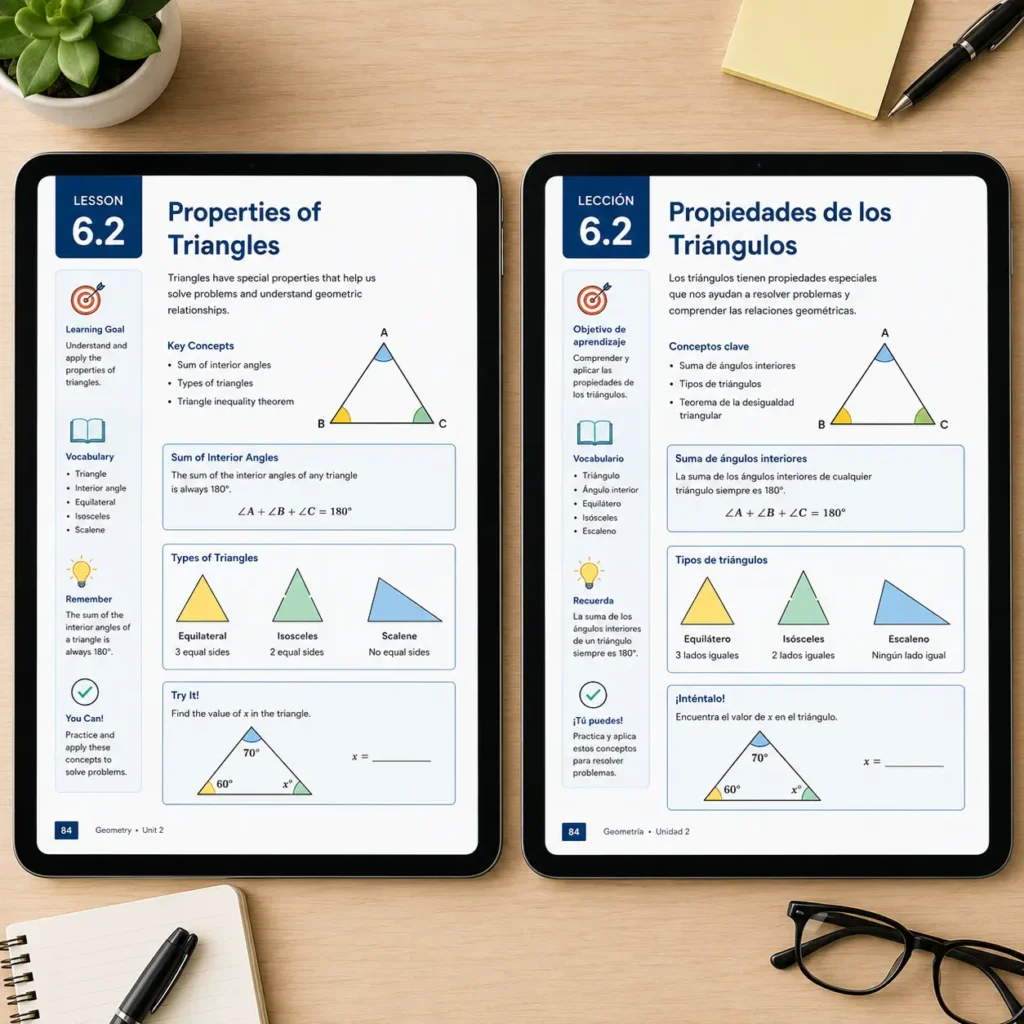
Students using different language editions should encounter the same learning journey.

Whether a learner is reading the English, German, French, or Spanish version of a textbook, they should experience:

  • The same chapter sequence
  • Consistent learning objectives
  • Identical assessment structures
  • Similar visual hierarchy
  • Uniform navigation elements
  • Comparable instructional design

Maintaining this consistency becomes increasingly important as educational content libraries expand.

How InDesign Fits Into MultiLanguage Publishing Workflows

Many educational publishers use InDesign as part of their content production process because it helps establish a structured framework that can be reused across multiple language editions.

Building From Standardized Templates

Large publishing projects often begin with a master template.

This template may define:

  • Chapter layouts
  • Typography systems
  • Assessment formats
  • Sidebar structures
  • Illustration placement
  • Page organization

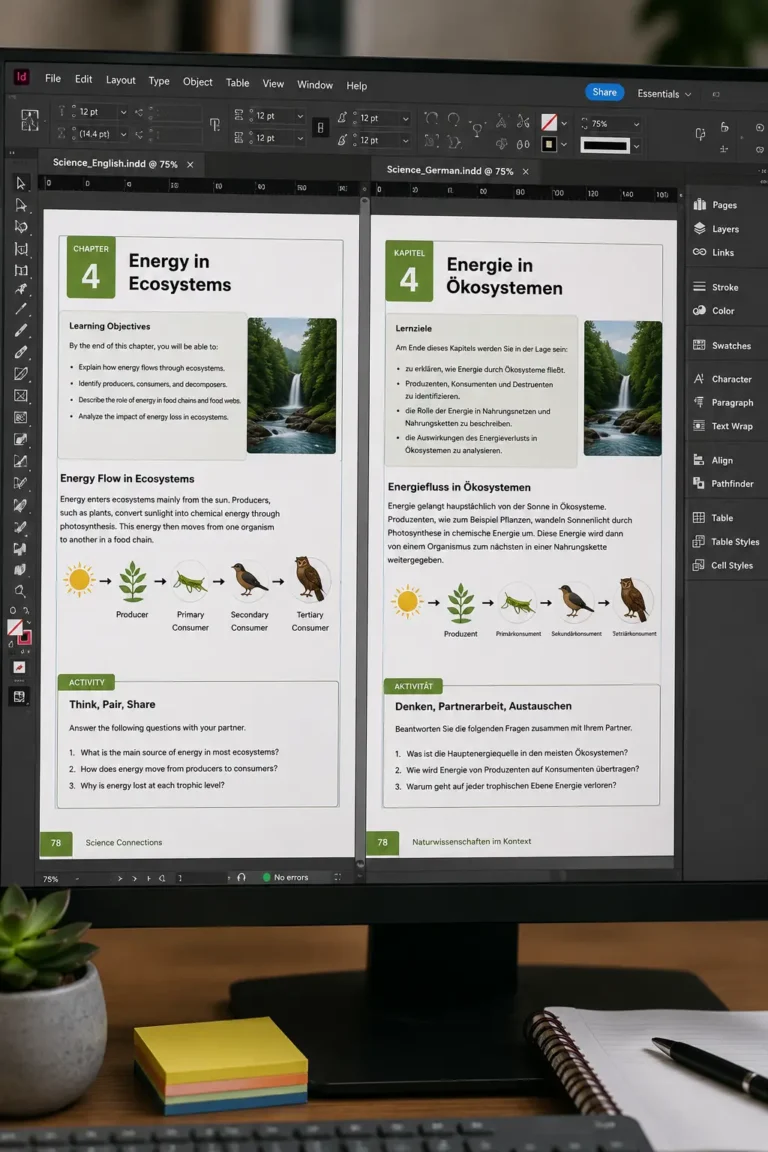
By starting every language edition from the same template, publishers can maintain visual consistency while allowing translators and editors to adapt the content for local audiences.

Managing Text Expansion Efficiently

One of the most common challenges in multilingual publishing is text expansion.

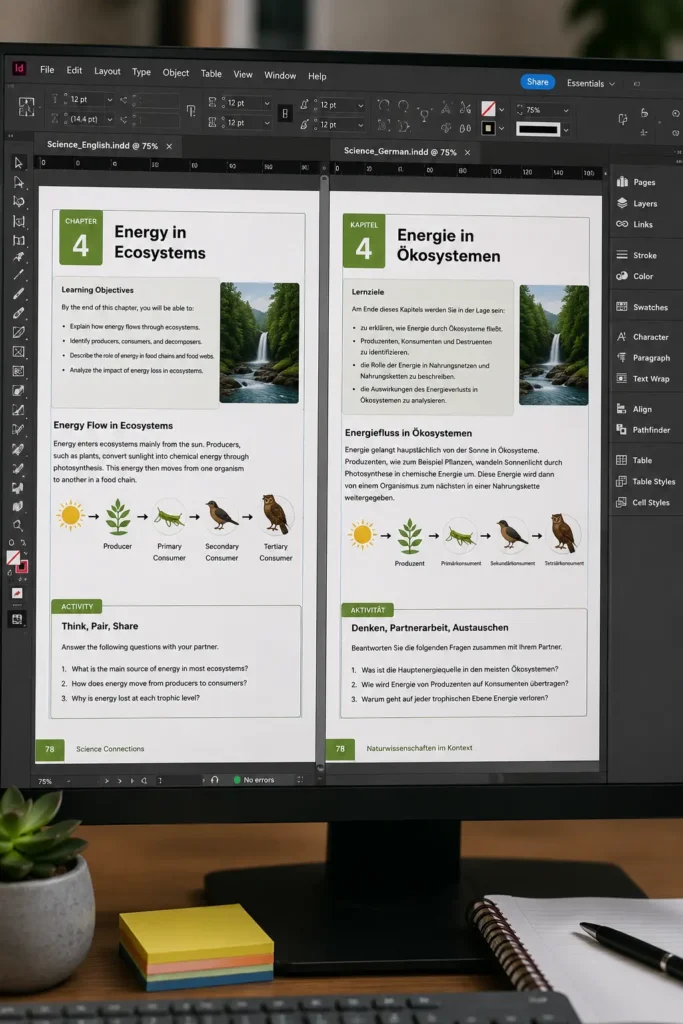
For example, German educational content often requires more space than its English equivalent. French and Spanish translations may also increase paragraph length and affect page layouts.

Flexible layout systems help publishers accommodate these changes without redesigning entire chapters.

Supporting Multiple Contributors

A multilingual educational project often involves:

  • Translators
  • Subject matter experts
  • Editors
  • Reviewers
  • Designers
  • Production specialists

Because multiple teams may work on different language editions simultaneously, maintaining a centralized design structure helps ensure consistency across every version.

A Real-World Publishing Scenario

Consider a publisher developing a secondary-school biology textbook for international distribution.

The original English edition contains hundreds of pages, diagrams, assessments, and instructional activities. After publication, the organization decides to release German, French, and Spanish editions.

Rather than rebuilding every publication from scratch, the production team works from an established publishing framework. Designers maintain the same page structures, chapter hierarchy, and visual standards while language specialists focus on localization.

As a result, learners across different markets receive educational materials that feel familiar and consistent, even though the content has been translated.

Benefits for Educational Publishing Teams

Organizations managing multilingual content often seek to achieve:

  • Faster localization cycles
  • Consistent educational experiences
  • Reduced formatting errors
  • Easier content maintenance
  • Improved collaboration between teams
  • Simplified revision management
  • More efficient production workflows

These benefits become especially valuable when content is updated regularly or distributed across multiple regions.

Best Practices for Multi-Language Educational Publishing

Successful publishers often follow several common practices:

Create Language-Neutral Templates

Templates should be flexible enough to accommodate varying text lengths while preserving the overall design structure.

Plan for Localization Early

Considering translation requirements during the design phase helps avoid costly adjustments later.

Standardize Educational Components

Learning objectives, activities, assessments, and reference sections should follow the same structure across all language editions.

Establish Clear Review Processes

Multilingual projects benefit from dedicated review workflows that verify both educational accuracy and design consistency.

Maintain Centralized Design Standards

Shared design guidelines help ensure that every language version reflects the same publishing quality.

Creating Consistent Learning Experiences Across Languages

Developing educational content for multiple languages requires careful coordination between translation, design, editorial review, and production teams. Publishers must ensure that localized content remains educationally accurate while preserving a consistent learning experience for every audience. By supporting structured templates, scalable design systems, and collaborative publishing workflows, InDesign helps organizations manage multilingual educational projects more efficiently and maintain high-quality standards across every language edition.

FAQ

Translation changes the language, but publishers must also manage layout adjustments, design consistency, review processes, and educational standards across multiple editions

It provides a structured publishing framework that supports standardized templates, consistent layouts, and scalable production workflows.

Yes. By using standardized templates and centralized design systems, publishers can preserve visual consistency while adapting content for local audiences.

Managing language-specific changes without disrupting the overall educational structure and publishing workflow.

Templates reduce repetitive work, improve consistency, and make it easier to manage updates across multiple language editions.