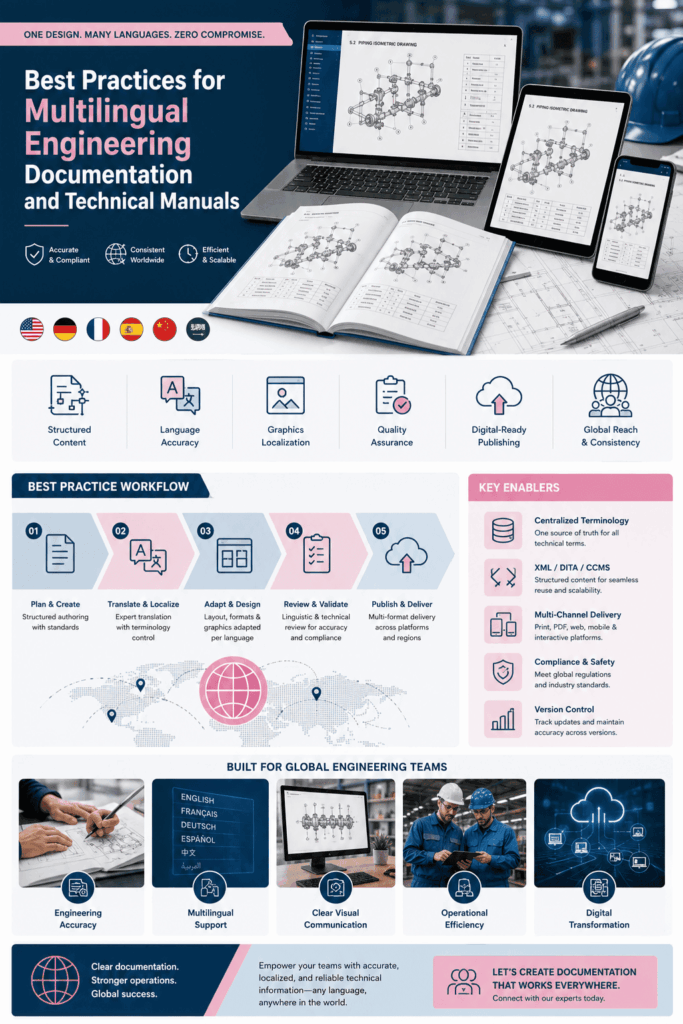
Best Practices for Multilingual Engineering Documentation and Technical Manuals
Engineering Communication Fails When Translation Ignores Structure
Technical manuals are designed to guide action. In engineering environments, a poorly translated instruction, unclear warning label, or misaligned diagram can create operational confusion, maintenance delays, or safety risks.
As manufacturing, energy, automotive, and industrial companies expand internationally, multilingual engineering documentation has become a core operational requirement rather than an optional publishing task.
However, successful multilingual documentation involves far more than direct language translation.
Engineering manuals must preserve technical clarity, layout consistency, symbol accuracy, and usability across multiple languages, regions, and regulatory environments.
Why Multilingual Engineering Content Is Difficult to Manage
Engineering documents contain tightly structured information systems. Every annotation, specification, dimension, and instruction is connected to operational precision.
When technical manuals are adapted into multiple languages, organizations often encounter:
- Text expansion issues
- Broken layout alignment
- Misplaced callouts
- Inconsistent terminology
- Symbol interpretation conflicts
- Font compatibility problems
- Diagram overlap issues
- Regulatory translation mismatches
Without structured publishing workflows, multilingual technical documents quickly become difficult to standardize.
The Most Effective Practices for Multilingual Technical Documentation
Build Documentation Around Structured Layout Systems
Flexible layouts help engineering content adapt across languages without damaging readability or diagram positioning.
Instead of manually adjusting every translated version, structured publishing templates create scalable consistency.
Standardize Technical Terminology Early
Engineering terminology should remain controlled across all languages and departments.
Creating centralized terminology libraries helps reduce translation inconsistencies between manuals, maintenance guides, safety documents, and training materials.
Prioritize Visual Clarity Over Dense Formatting
Technical readers often rely more on diagrams, symbols, and structured navigation than long paragraphs.
Clean spacing, readable tables, and properly aligned callouts improve usability across multilingual environments.
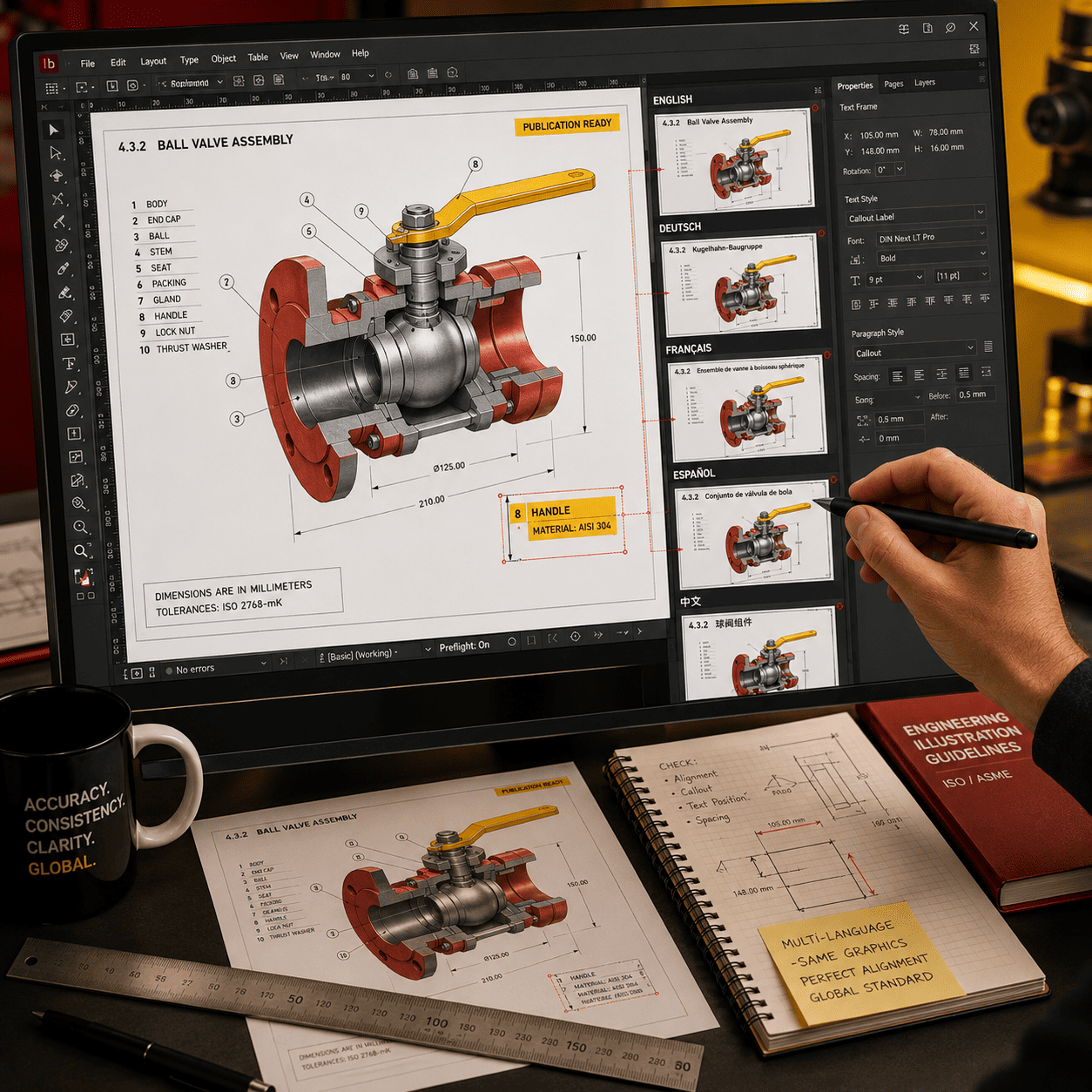
Keep Engineering Graphics Language-Aware
Many organizations focus only on translating text while ignoring technical illustrations.
Annotations, labels, legends, flow indicators, and dimension references inside diagrams must also support multilingual adaptation.
Design Documentation for Both Print and Digital Platforms
Modern engineering documentation must function consistently across:
- Printed manuals
- Mobile devices
- Interactive PDFs
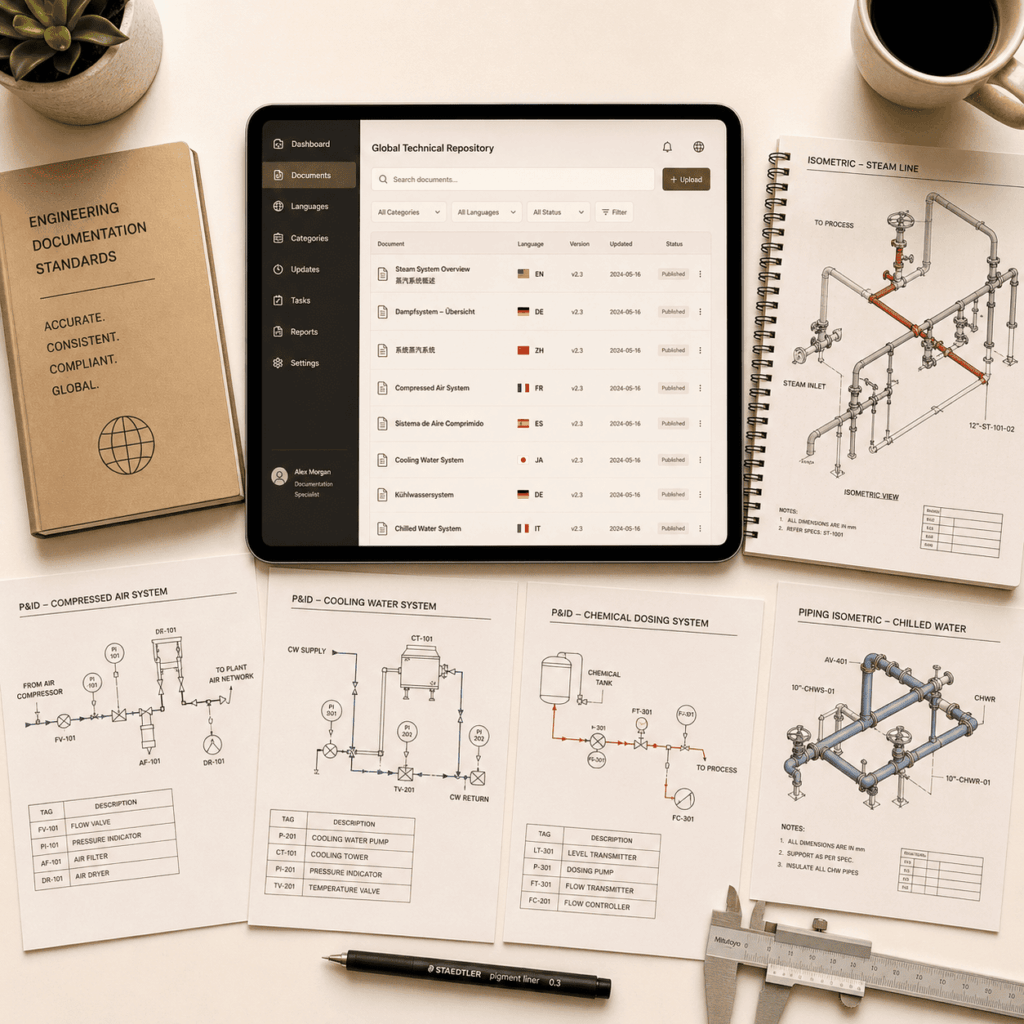
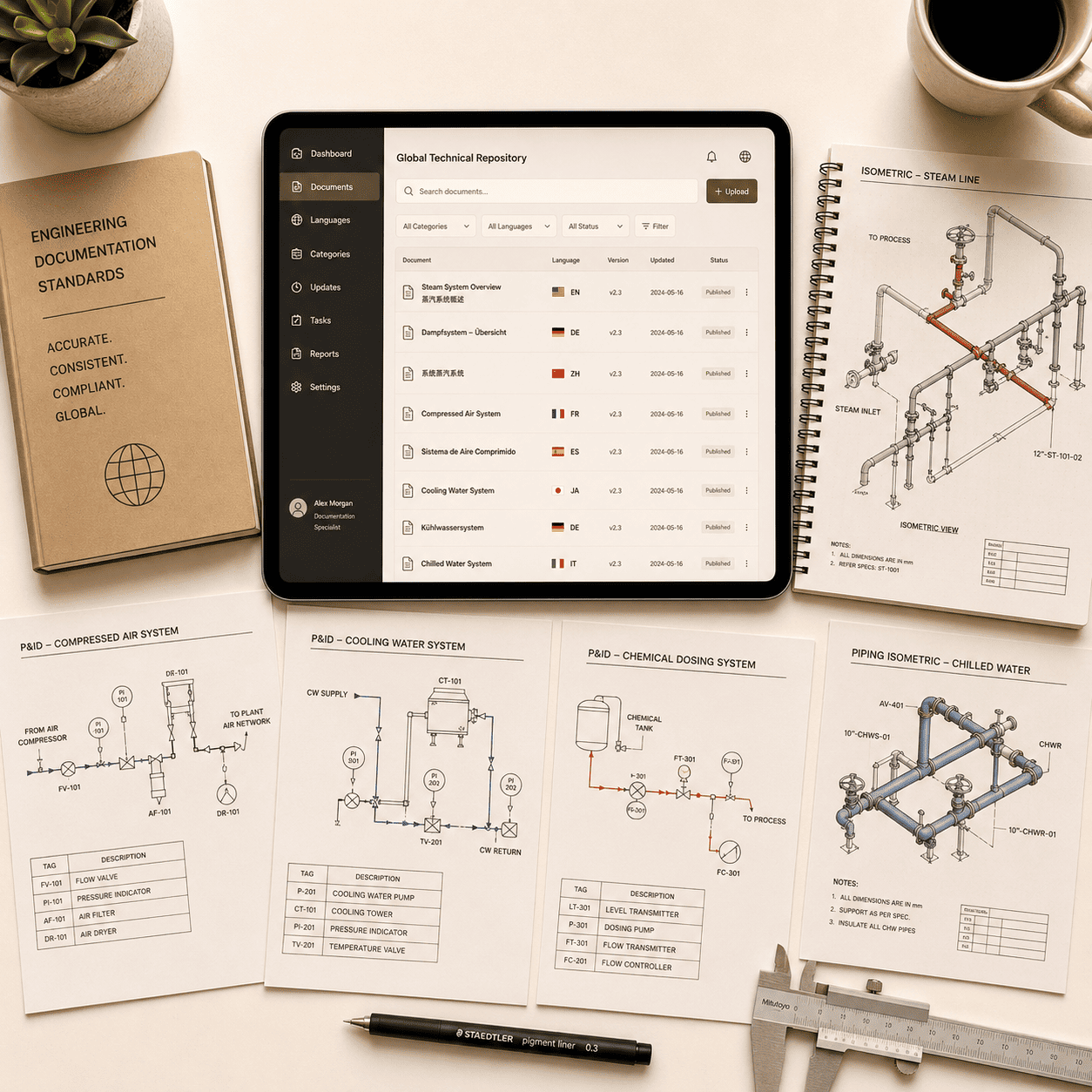
- Technical repositories
- XML publishing systems
- Field-service tablets
Responsive formatting improves accessibility across global operations.
Multilingual Documentation Requires Cross-Department Coordination
The strongest multilingual documentation systems involve collaboration between:
- Engineering teams
- Technical writers
- DTP specialists
- Localization experts
- Compliance departments
- Quality assurance reviewers
When departments work independently, documentation inconsistencies increase rapidly across languages and versions.
Integrated publishing workflows reduce these risks significantly.
Digital Engineering Publishing Is Reshaping Global Documentation
Today’s technical publishing environments are moving beyond static manuals.
Modern multilingual documentation systems now support:
- Intelligent content reuse
- Centralized version control
- XML-based publishing
- Cloud collaboration
- Multi-device synchronization
- Automated update distribution
- Searchable engineering repositories
These systems help organizations scale documentation more efficiently across international markets.
Clear Technical Documentation Supports Global Operations
Well-structured multilingual manuals improve far more than readability.
Professional engineering publishing workflows help organizations:
- Reduce operational misunderstandings
- Improve technician efficiency
- Support international manufacturing teams
- Simplify compliance communication
- Improve maintenance accuracy
- Accelerate onboarding and training
- Maintain consistent engineering standards globally
In complex technical industries, documentation quality directly affects operational performance.
Building Documentation for a Global Engineering Workforce
Engineering organizations no longer communicate within a single language environment. Technical information now moves across international suppliers, field teams, production facilities, contractors, and service networks simultaneously.
Multilingual engineering documentation must therefore balance technical precision with global accessibility.
Organizations that invest in structured multilingual publishing workflows create documentation systems that remain scalable, reliable, and easier to manage over time.
FAQ
Most frequent questions and answers
It is the process of creating and managing engineering manuals, technical guides, and operational documents across multiple languages while preserving technical accuracy and formatting consistency.
Engineering documents contain complex diagrams, symbols, annotations, and structured layouts that can become distorted during translation and formatting adaptation.
Manufacturing, aerospace, automotive, energy, industrial equipment, infrastructure, and technical product industries frequently require multilingual documentation.
They help maintain translation consistency across departments, regions, manuals, and technical product lines.
Yes. Modern publishing workflows optimize documentation for printed manuals, mobile devices, interactive PDFs, and digital engineering repositories.
They improve layout consistency, technical readability, translation accuracy, diagram alignment, and long-term document scalability across global operations.

ValueDocs India offer the most competent multilingual typesetting services that are best in the industry. Typesetting services includes all aspects of designing a book.