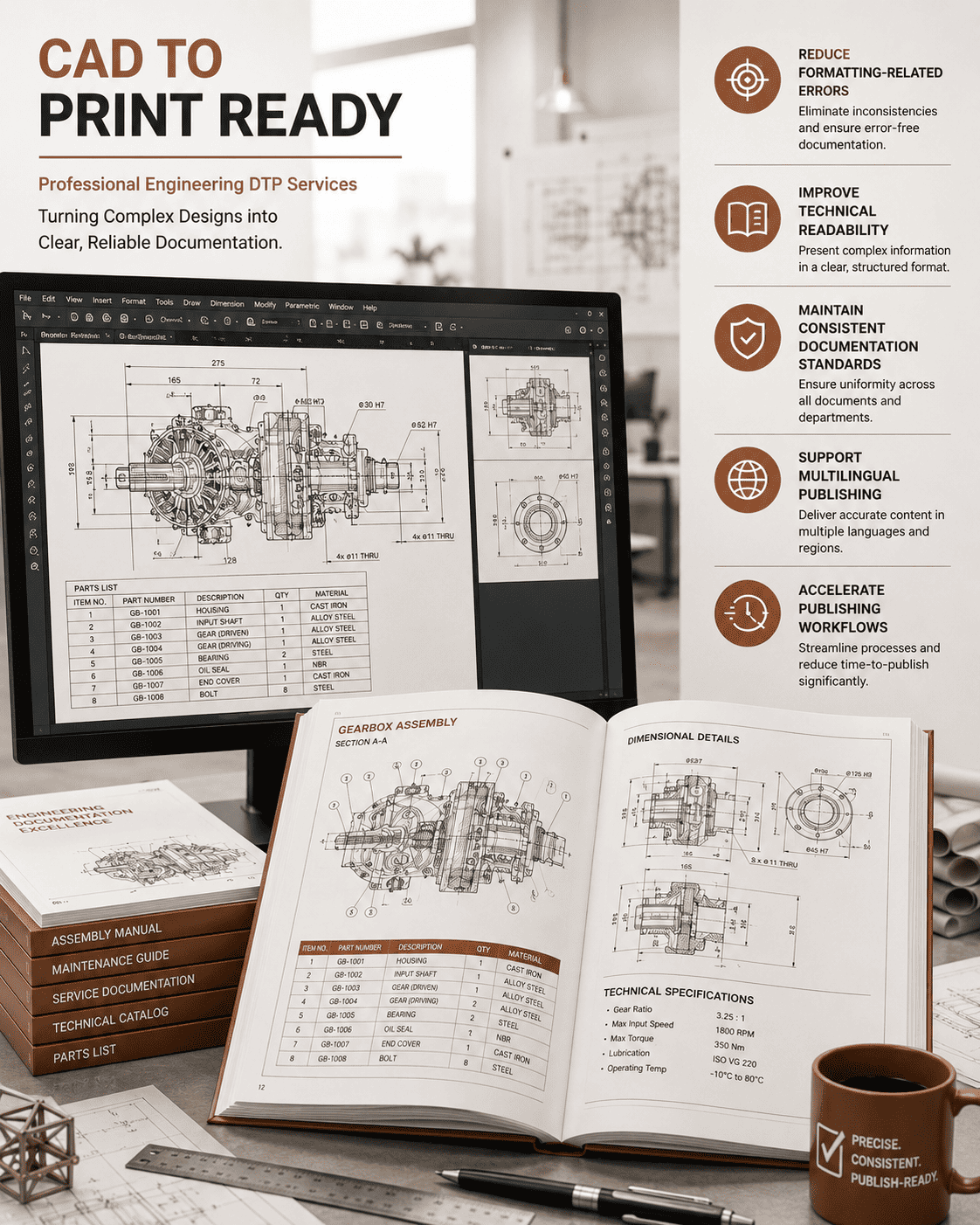
CAD to Print Ready: The Importance of Professional Engineering DTP Services

Turning Technical Drawings into Reliable Communication

A CAD drawing may contain the engineering intelligence behind a product, machine, or infrastructure system — but without proper publishing preparation, that information often remains difficult to distribute, review, print, or standardize across teams.

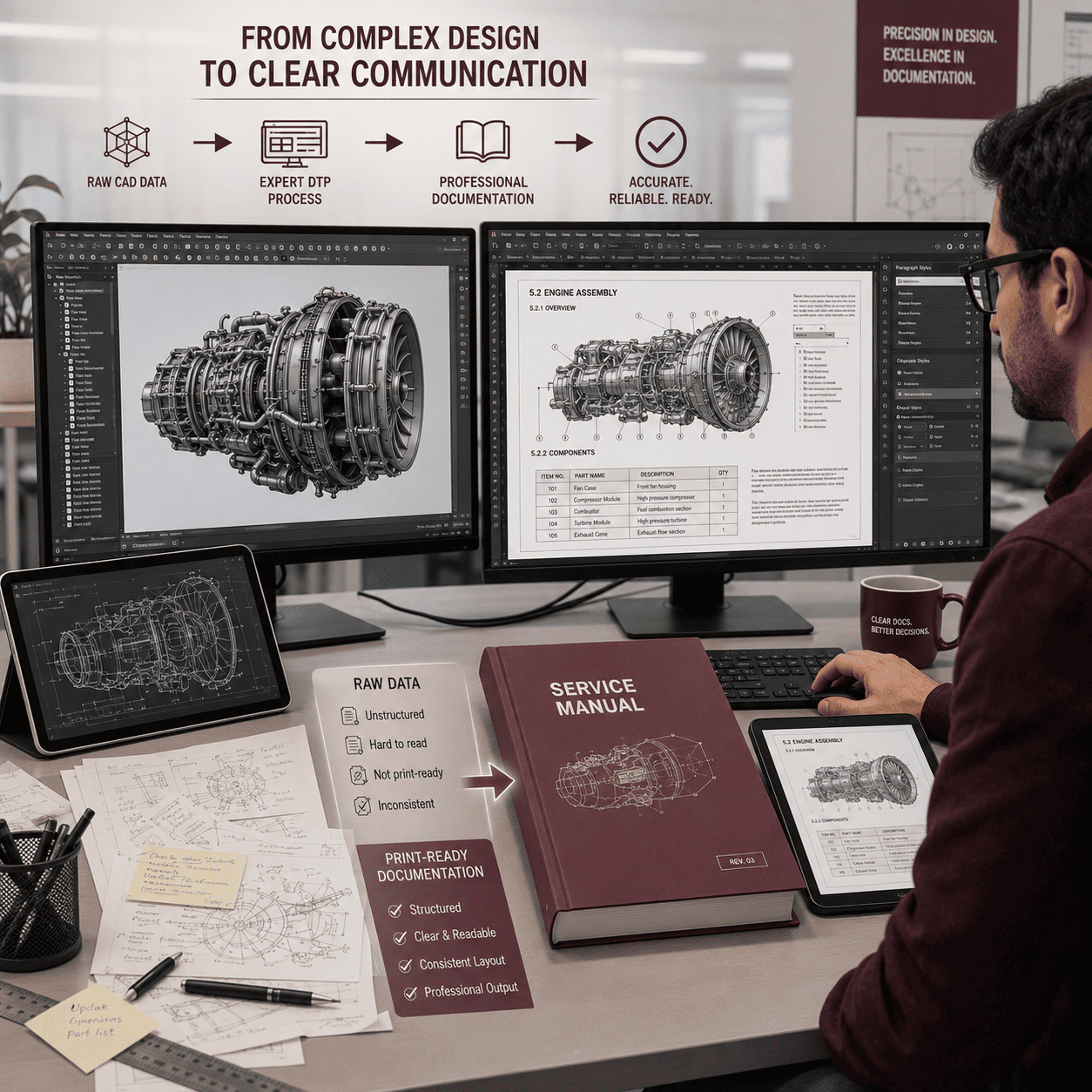
Modern engineering environments generate enormous amounts of technical data through CAD platforms, 3D modeling systems, schematics, annotations, and layered engineering files. However, converting those raw engineering assets into clean, readable, print-ready documentation requires far more than exporting a PDF.

This is where professional Engineering DTP (Desktop Publishing) services become essential.

Engineering DTP bridges the gap between technical design environments and professional communication systems, helping organizations transform CAD-based information into structured documents ready for manufacturing, compliance, maintenance, training, and global distribution.
Engineering DTP Services

Why CAD Files Alone Are Not Enough

CAD software is designed for engineering creation — not necessarily for publication-ready communication.

When raw technical files move directly into documentation workflows, organizations often encounter:

  • Inconsistent layouts
  • Oversized technical drawings
  • Broken annotation alignment
  • Poor print scalability
  • Difficult multilingual adaptation
  • Unstructured page formatting
  • Missing cross-references
  • Visual readability problems

As engineering projects expand globally, these documentation issues can create operational delays and communication gaps across departments, vendors, and customers.

Engineering DTP Services

Why CAD Files Alone Are Not Enough

Professional Engineering DTP services organize complex engineering information into readable, standardized publishing formats without compromising technical precision.

Instead of simply “designing pages,” DTP specialists restructure technical content for clarity, accessibility, and production accuracy.

CAD Illustration Refinement

Large engineering schematics and vector drawings are optimized for scalable print and digital presentation.

Technical Layout Structuring

Rearranging complex technical data into standardised page formats enhances navigation and readability.

Annotation and Label Accuracy

Callouts, dimensions, notes, and symbols are carefully aligned to maintain engineering integrity.

Multi-Output Publishing Preparation

Documents are adapted for manuals, technical catalogs, maintenance guides, compliance files, and digital publishing platforms.

Cross-Team Communication Support

Standardised layouts facilitate uniform information interpretation for engineers, technicians, production teams, and international stakeholders.

Where Engineering DTP Creates Operational Value

Professional engineering publishing workflows support far more than documentation aesthetics. They directly improve operational efficiency across technical industries.

Manufacturing Documentation

Production manuals, assembly guides, and process documents require structured layouts that remain accurate across facilities and production lines.

Infrastructure and Construction Projects

Large-scale engineering projects depend on coordinated technical documentation for contractors, consultants, and compliance authorities.

Product Lifecycle Management

Engineering DTP supports revision tracking, document version control, and long-term technical archive management.

International Technical Distribution

Multilingual formatting and standardized publishing structures improve communication across global engineering operations.

Service and Maintenance Systems

Clear technical documentation helps reduce interpretation errors during equipment servicing and field operations.

Common Problems Solved by Engineering DTP Specialists

Many technical teams underestimate how much poor formatting affects usability.

Professional DTP workflows help resolve:

  • Cluttered engineering diagrams
  • Unreadable large-format drawings
  • Inconsistent typography and spacing
  • Misaligned technical tables
  • Print scaling issues
  • Formatting incompatibility between systems
  • Manual correction bottlenecks
  • Difficulty updating legacy documents

By organizing information more effectively, engineering DTP improves both technical clarity and workflow scalability.

Engineering Publishing Is Becoming More Demanding

Today’s technical documents are expected to function across multiple environments simultaneously:

  • Print-ready manuals
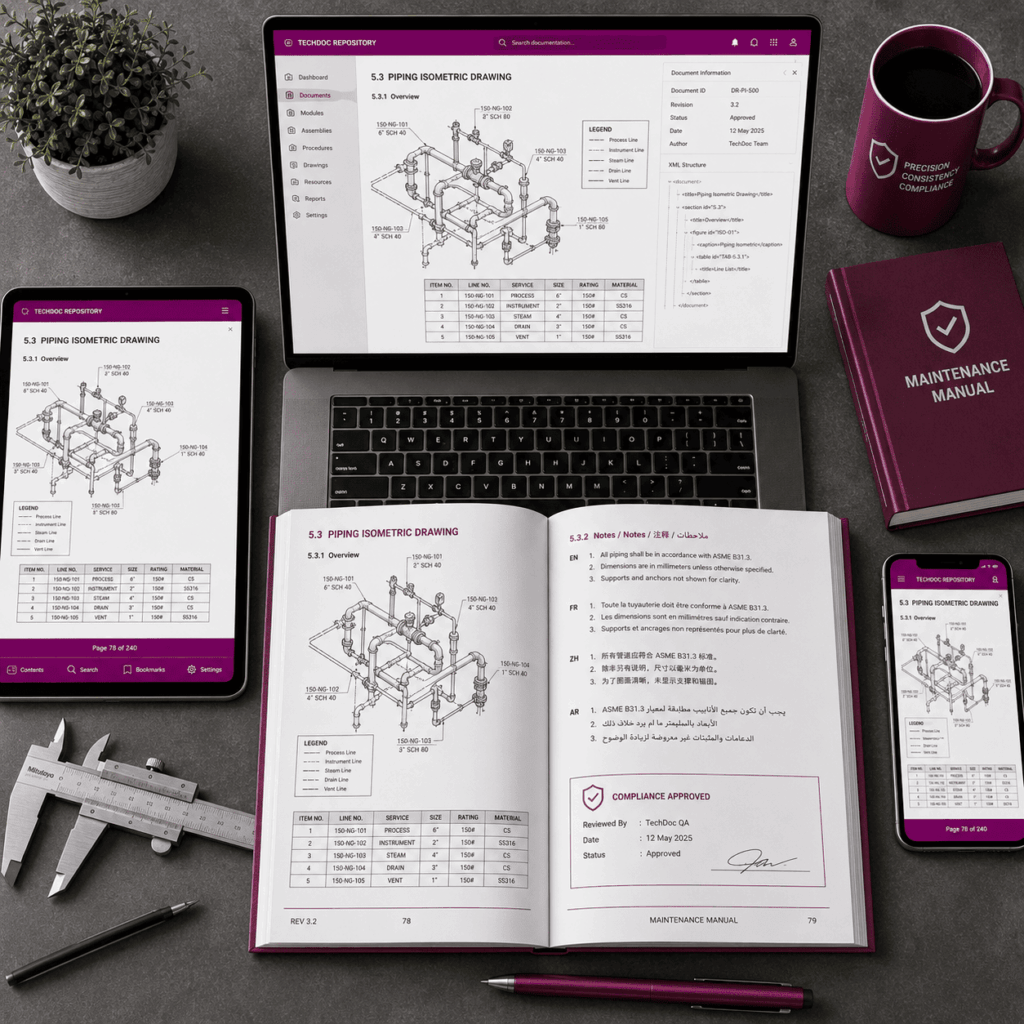
  • Mobile-responsive PDFs
  • Digital engineering repositories
  • XML publishing systems
  • Interactive documentation platforms
  • Multilingual technical libraries

This shift requires documentation systems that combine engineering precision with publishing intelligence.

Professional DTP services help organizations manage that transition efficiently while preserving technical reliability.

Better Documentation Supports Better Engineering Decisions

Technical communication is no longer considered an auxiliary business activity. Manufacturing efficiency, operational safety, maintenance performance, and international cooperation are all directly impacted by the quality of documentation in contemporary engineering settings.

Professional Engineering DTP services help organizations transform raw CAD outputs into refined, production-ready communication systems designed for real-world engineering use.

From design files to final print-ready layouts, structured publishing workflows ensure technical information remains accurate, scalable, and ready for global distribution.

FAQ

Most frequent questions and answers

Engineering DTP services involve professionally formatting and organizing technical engineering content for print, digital publishing, and operational documentation.

Raw CAD files are optimized for design work, not for structured documentation, readability, multilingual publishing, or print-ready communication.

Manufacturing, infrastructure, industrial engineering, energy, construction, aerospace, and technical product industries commonly use these services.

Yes. Professional DTP workflows support multilingual formatting while maintaining technical consistency and layout accuracy.

Assembly manuals, technical catalogs, compliance documents, maintenance guides, service manuals, engineering reports, and product documentation are commonly handled.

It improves layout organization, print readability, annotation consistency, technical clarity, and cross-platform publishing compatibility.