The Role of Engineering DTP Services in Technical Documentation

In high-stakes engineering environments, the way information is presented is just as critical as the information itself. A poorly formatted technical manual, an inconsistent parts catalogue, or a non-compliant regulatory submission can delay product launches, increase liability, and damage client confidence.

This is where Engineering Desktop Publishing (DTP) Services make a measurable difference.

Engineering DTP transforms raw technical content schematics, specifications, safety procedures, and maintenance guides into professionally structured, standards-compliant documentation. For businesses in aerospace, automotive, oil and gas, medical devices, and industrial manufacturing, this is not a luxury. It is an operational necessity.
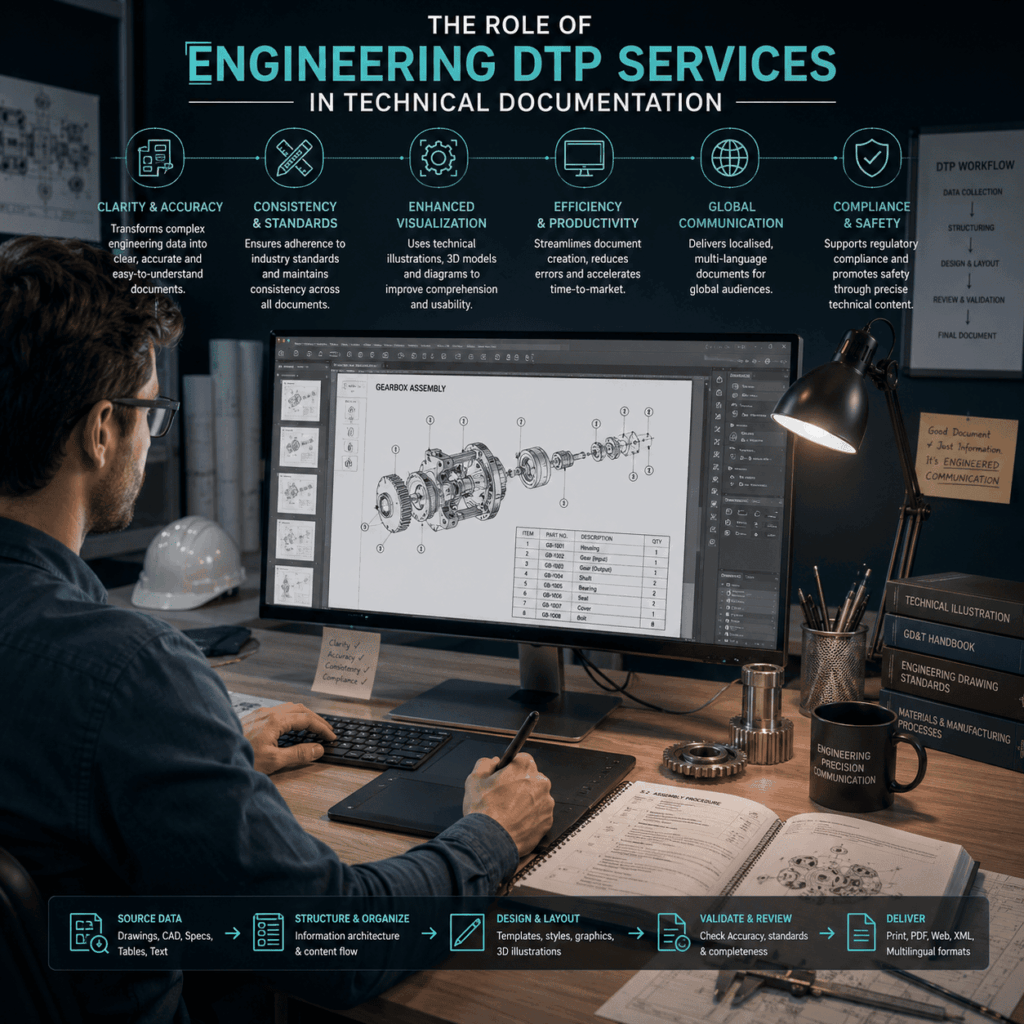
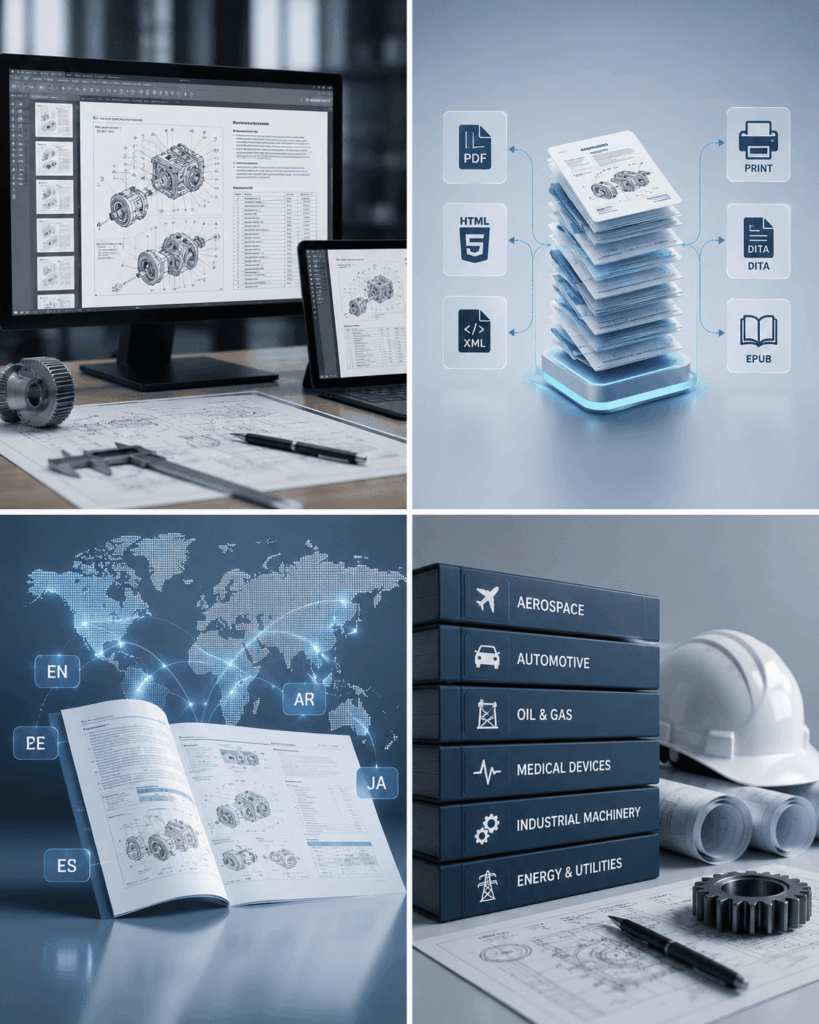
Engineering DTP Services in Technical Documentation

What Are Engineering DTP Services?

Engineering DTP services refer to the specialist formatting, layout, and production of technical documents using advanced publishing tools such as Adobe FrameMaker, InDesign, Arbortext, and DITA-based authoring platforms.

Unlike general desktop publishing, engineering DTP requires a deep understanding of:

  • Technical drawing standards (ISO, ASME, MIL-SPEC)
  • CAD and schematic integration
  • Structured authoring and XML workflows
  • Regulatory documentation requirements
  • Multi-format output for print and digital distribution

The result is documentation that is not only visually professional but functionally precise built to serve engineers, technicians, procurement teams, and compliance auditors alike.

Key Benefits for Engineering Businesses

  1. Standards Compliance Without the Overhead

Compliance with Standards Consistent formatting, accurate numbering hierarchies, and traceable change histories are necessary to meet ISO, CE, FDA, or ATEX documentation standards without the overhead. By applying these standards methodically, engineering DTP professionals lower the risk of non-compliance and the expense of rework. Faster Time-to-Market

Delays in documentation can hold up product certification, customer delivery, and after-sales support. Professional DTP teams work to tight deadlines and structured workflows, keeping your projects on schedule.

  1. CAD and Drawing Integration

Technical documents often depend on engineering drawings, exploded views, and schematics. DTP specialists handle the integration of CAD outputs from AutoCAD, SolidWorks, and similar platforms directly into publication-ready layouts without quality loss.

  1. Multilingual Documentation at Scale

Global businesses require documentation in multiple languages. Engineering DTP providers reflow content for translated text, adapt layouts for right-to-left languages such as Arabic, and ensure that diagrams and labels remain accurate across all language versions.

  1. Multi-Format Output

Engineering DTP services guarantee that your documentation reaches every audience through every channel without the need for constant reformatting, from print-ready PDFs and interactive HTML5 to XML, EPUB, and DITA-structured material.

Industries That Rely on Engineering DTP Services

Engineering DTP is not a one-size-fits-all solution. It is purpose-built for industries where technical precision directly impacts safety, compliance, and commercial performance:

  • Aerospace and Defence – flight manuals, maintenance procedures, illustrated parts catalogues
  • Automotive – service manuals, technical training guides, warranty documentation
  • Oil and Gas – equipment operating manuals, HAZOP reports, process safety documents
  • Medical Devices – regulatory submissions, instructions for use, clinical documentation
  • Industrial Machinery – installation guides, operator manuals, spare parts documentation
  • Energy and Utilities – asset management documentation, inspection reports, compliance records

If your business operates in any of these sectors and manages significant volumes of technical content, outsourcing engineering DTP is one of the most cost-effective decisions you can make.

Engineering DTP Services in Technical Documentation

Why Outsource Engineering DTP?

Maintaining an in-house DTP capability requires investment in specialist staff, software licences, and ongoing training. For most engineering businesses, this is neither efficient nor scalable.

For a fraction of the price of developing that expertise internally, outsourcing to a specialized engineering DTP provider gives you instant access to seasoned experts, enterprise-grade tools, and tested procedures.

The business case is clear: better documentation quality, lower production costs, and faster turnaround times with the flexibility to scale up or down based on project demand.

FAQ

Most frequent questions and answers

Standard DTP focuses on general layout and design for marketing or publishing materials. Engineering DTP is a specialist discipline that combines technical knowledge with publishing expertise handling complex content such as engineering drawings, parts lists, regulatory submissions, and structured XML documentation that general DTP providers are not equipped to manage.

Engineering DTP specialists work with tools including Adobe FrameMaker, InDesign, Illustrator, Arbortext, MadCap Flare, and XML/DITA authoring environments. CAD outputs from AutoCAD and SolidWorks are routinely integrated into document layouts.

Engineering DTP specialists work with tools including Adobe FrameMaker, InDesign, Illustrator, Arbortext, MadCap Flare, and XML/DITA authoring environments. CAD outputs from AutoCAD and SolidWorks are routinely integrated into document layouts.

Regulatory frameworks such as FDA, CE, and ATEX have specific formatting requirements for technical submissions. Engineering DTP teams apply these requirements consistently ensuring correct heading structures, compliant table formats, numbered revision histories, and audit-ready document builds that meet submission standards.

Yes. Outsourcing removes the overhead of specialist hiring, software licensing, and training. Mid-sized engineering firms typically reduce documentation production costs significantly while gaining access to higher-quality output and faster turnaround than in-house teams can provide.

Take the Next Step Toward Smarter Documentation

Technical documentation is not a back-office function it is a front-line business asset. Every manual that reaches a technician, every compliance report submitted to a regulator, and every parts catalogue delivered to a client carries your company’s name and reputation.

The structure, consistency, and polished presentation that complicated technical content requires are provided by engineering DTP services. Working with a professional engineering DTP supplier is a strategic decision, not just an operational one, whether you are expanding operations internationally, breaking into new regulated markets, or just attempting to cut down on the time and expense of document production.

The businesses that get documentation right do not just meet standards. They set them.